14 novembre 2012

Jab Tak Hai Jaan: prima mondiale

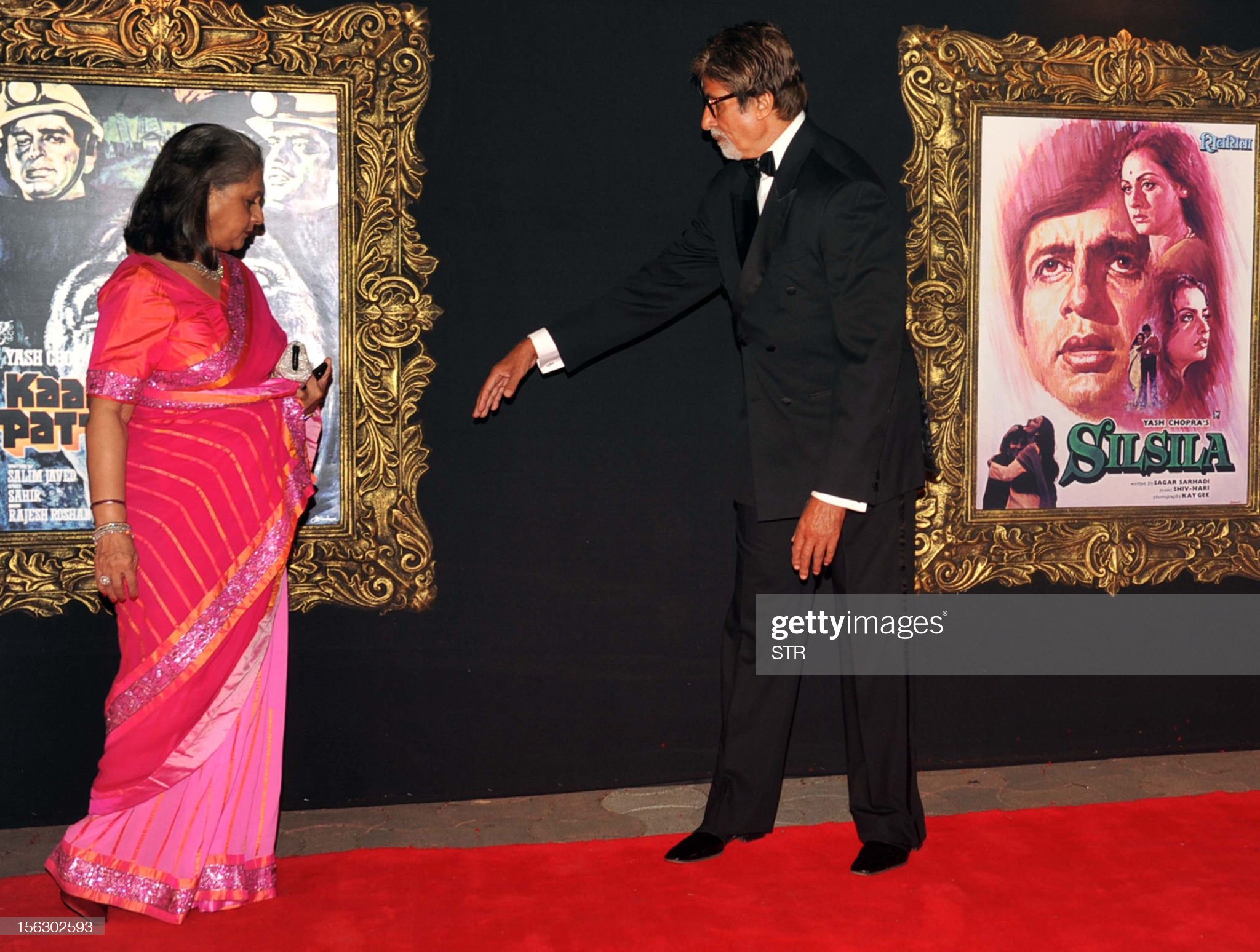
Il 12 novembre 2012 a Mumbai ha avuto luogo una prima mondiale davvero indimenticabile. In occasione della proiezione speciale di Jab Tak Hai Jaan, gli studi di Yash Raj Films si sono trasformati in una gigantesca sala cinematografica, decorata con le locandine di tutti i titoli diretti dal compianto Yash Chopra. È stato organizzato un red carpet calcato dalle celebrità più note di Bollywood. Ha fatto scalpore la partecipazione delle superstar Salman Khan e Aamir Khan (con Kiran Rao) ad una prima di una pellicola interpretata da Shah Rukh Khan. Amitabh Bachchan era accompagnato dalla moglie Jaya Bhaduri, dal figlio Abhishek e dalla nuora Aishwarya Rai. C'erano anche Akshay Kumar (con Twinkle Khanna) e Hrithik Roshan. E poi Shahid Kapoor, Anil Kapoor, Sonam Kapoor, Ranveer Singh e altri ancora. Molti registi, fra cui Karan Johar, Ashutosh Gowariker, Rajkumar Hirani, Imtiaz Ali, Zoya Akhtar, Dibakar Banerjee, Kabir Khan e Shekhar Kapur. Numerose le eroine dei film di Chopra, fra cui Madhuri Dixit, Sridevi (con Boney Kapoor), Rani Mukherjee, Rekha e Preity Zinta. Quanto a Kajol, l'eroina numero uno, protagonista di Dilwale Dulhania Le Jayenge, il più grosso successo prodotto da Yash Raj Films (diretto da Aditya Chopra, figlio di Yash e ora nuovo boss), la diva ha snobbato il red carpet e, secondo quanto rivelato da Hindustan Times, accompagnata dallo schivo Aditya avrebbe raggiunto gli studi da una porta secondaria. Tutti i riflettori erano comunque puntati sul trio di attori di Jab Tak Hai Jaan: Shah Rukh Khan, Katrina Kaif e Anushka Sharma (che ha sfoggiato una magnifica nuova acconciatura e un abito Cavalli). Video ufficiali: prima, seconda, terza e quarta parte. Ammetto che al caldo abbraccio scambiato da Aishwarya e Hrithik mi sono un po' emozionata...


13 novembre 2012

Vogue Italia: Sonam Kapoor

Milano 2012
Vi segnalo una breve intervista concessa da Sonam Kapoor ad Arianna Pietrostefani, pubblicata ieri da Vogue Italia:

'Capita spesso che i figli d’arte intraprendano la carriera dei propri genitori. A volte per sfida, altre volte perché lo si ha nel sangue. Sonam Kapoor appartiene ad una delle famiglie più ricche di Bollywood. Per chi non lo conoscesse, suo padre è Anil Kapoor, uno degli attori e produttori più famosi di Bollywood. Sin da piccola segue il padre sul set e gioca con le pellicole in disuso, costruendosi braccialetti e coroncine. (...) È lei a salutarci per prima, ci sorride e con movenze regali si accomoda guardando fissa nell’obiettivo. Siede composta come su un trono, muove le mani con lentezza e le pone l’una sull’altra, come a dire: "È così che si sta sedute". "Faccio cinema da sempre, non ricordo quando ho cominciato. Da piccola il cinema era il gioco, poi il lavoro di mio padre, ora il mio. Ho sempre guardato quelle donne bellissime di Hollywood, sognando di diventare una di loro. A Bombay il cinema non è solo un’industria, è stata la svolta". Le chiedo quanto la moda sia importante nel suo Paese e cosa rappresenti per lei. "Le donne indiane amano vestirsi da principesse. Si va ancora al mercato a scegliere i tessuti, si commissionano abiti su misura e si va con le amiche per la prova dell’abito. Quello che fanno le spose, noi lo facciamo tutti i giorni. Il pronto moda è arrivato anche qui, certo, ma quando si può, si cerca ancora l’abito perfetto. Amo la moda italiana, lo stile che gli italiani hanno nel sangue. Nessuno è come loro".'

Midnight's Children in Italia

La regista Deepa Mehta ci ha gentilmente inviato un tweet nel quale ci informa che Midnight's Children verrà distribuito nelle sale italiane a fine marzo 2013: 'We have a fab distributor in Italy. They plan to release it March end. Love Italy. Spent last summer in Ravello - heaven!'. Grazie a Deepa per la cortesia.
Vedi anche I figli della mezzanotte in Italia, 17 marzo 2013

Aiyyaa : Recensione

[Blog] Recensione di Aiyyaa (2012), divertente commedia romantica con Rani Mukherjee e Prithviraj.

9 novembre 2012

Irrfan Khan: Khan rises in the West

Vi segnalo l'intervista concessa da Irrfan Khan a Sudhish Kamath, pubblicata da The Hindu il 2 novembre 2012. Khan rises in the West:

'How are you enjoying your stint with Hollywood?
I have to restrain myself, resist the temptation because I keep getting all kinds of films from Hollywood. Because my survival is not based out of Hollywood. So this is a very privileged position for me. I do films sometimes for survival in India. I choose projects in Hollywood that are challenging... that have something new to offer to me. Whether it is The Namesake or In Treatment... If I have to define In Treatment, it was not TV, it was not theatre, it was not cinema... It was something else. I look for challenges and areas that I haven’t got a chance to explore with Hollywood.
So do you work with a different kind of remuneration with Hollywood to be able to do these roles?
Remuneration is not very lucrative for me. It’s not even one-fourth of what I get in India. Just because you see them making multi-million dollar films, it does not mean they will pay Irrfan Khan millions of dollars. The film business is run in a way that you get paid according to whatever your importance is. (...)
How has your understanding of cinema changed over the years?
When I came into cinema, I was mesmerised by a few actors and when I saw them, I thought they were experiencing something special. That’s what attracted me to films. Initially, it was more about fame. But later it changed. Fame is just an ego-massaging exercise. I’m fortunate to be in this line. I’m in a medium where I can connect with a person who doesn’t understand a single word of the language I speak. But he’s touched by my performance. I become a part of his emotional psyche. And that’s the kind of ability you have as an actor.
So Life Of Pi was one such experience?
No, that was my journey before Life Of Pi. The challenges in Life Of Pi were completely different, something I have never experienced as an actor. The film is dealing with complicated issues. Whoever wants to look at these issues would interpret them in their own way. It will entertain a child who is watching as much as it will entertain an intellectual person. This film will leave you with so many interpretations. And it cannot be achieved unless and until you are aware of it. You have to work towards it. That was the challenge.
What was the biggest take-home for you from Life Of Pi?
Watching Ang. The way he conducts himself, his personality... If you see him, it seems like he has just eliminated all the unnecessary things from his personality... you don’t see a kind of baggage that you would expect from one of the most important directors of our times. The way he’s passionate about his work, the way he is so concerned and very personal. He’s available to everybody and at the same time, also keeps to himself.
What kind of roles are you looking at doing here post Paan Singh Tomar here?
I am getting more or less the same kind of roles. I am looking at films that are different yet have the ability to make money. All things in this world are a product of contradictions. Like art and commerce. Even in life, there are two opposite forces that are colliding all the time in our universe. And something new emerges when they collide.
Are you excited and confident that films such as Paan Singh Tomar are getting recognised today?
I was confident even 10 to 12 years ago when I did Haasil. I knew people wanted to see something different. They wanted films where entertainment would be redefined. The entertainment industry cannot afford to keep repeating a formula. It needs to keep evolving and redefining itself. Am I pushing the boundaries? Is it good for cinema? Is it entertaining and engaging? Is it suited for cinema or better suited for a book or news? Is it smuggling the issues smartly enough without being in your face? These are things I look for when I choose films'.

Irrfan Khan: Everything has come to me late in my life

Vi segnalo l'intervista concessa da Irrfan Khan a Garima Sharma, pubblicata da The Times of India il 24 ottobre 2012. Everything has come to me late in my life: Irrfan:

'In all honesty, with the international recognition that has come to you post Slumdog Millionaire, there must have been some point when success went to your head?
If success would have come early in life, it would have. But, everything came to me a little late. It’s a pattern with me - things always come late to me. When I was doing TV, I longed to do films. I was even ready to become a henchman. At that time, if I would’ve got the role of a villain, I would’ve wasted my life just playing villains. But, I think destiny is taking care of me, even if it is giving me things later in life, even if it is testing me. I have never been in a situation where success could go to my head.
Has Hollywood impacted your Bollywood prospects?
An actor looks for recognition. And when you do work like this, it creates a perception about you in the audience’s mind. That’s it. But, it gives me a choice to do stories which I would’ve never got here. I would’ve never got those directors and stories to explore here. I don’t want to find a formula for success and keep repeating that. (...)
You don’t get such work in Bollywood?
They don’t ask variety from you. I am just fortunate that I don’t need to, for my bread and butter, depend on Hollywood. For me, it’s a luxury. I choose films, which give me what I am looking for. That’s why I am not living in Hollywood. If I go and stay there, I would be shooting all year long. But I don’t want to do that. For me, as an actor, I need challenges where you can trust your director and take a plunge. It’s exactly like Pi, who has been thrown in this sea with these animals, and he doesn’t even know how to row a boat and he has to find his shore.
How important is Bollywood to you today?
It’s very important because that’s where I earn my living from. This industry is everything to me. When I dreamt of becoming an actor, I thought of being popular in India and not anywhere else.
Cliched as it gets, was the role of Pi the toughest of your career?
Yes. The contract just said they needed 10 days from me. But, you can’t ask them, ‘No, I have to prepare for two months or three months, so you pay me for that’. It was literally only 10 days of work, but it took me so many months of preparation. Ang was also exploring it with me, so initially he told me to find a French-Canadian-Indian accent. I kept trying for months, and it was really torturous, and finally he chose not to use that! But, it was an experience that I learnt a lot from. This is one of my most challenging roles, even though it may not be that much on screen. I did stuff earlier which was mostly for adult audiences. I want to now do films which are for children as well as grown-up audiences. I long to do films, which my children can also watch. Whenever my kids pick up my DVDs, be it The Namesake or Maqbool, they can’t watch those. (...)
It was said that you were unhappy with the way your role turned out in The Amazing Spiderman?
I never said that. Whoever spoke to me, I just said that the director told me what scenes they were eliminating and why they were eliminating, and I had no problem with that. I could understand why they were doing it. They did that even in Slumdog Millionaire, so I had no problem with it. I never said I was unhappy with the role.
After all your preparation, was it easy to understand your director Ang Lee’s vision?
What’s special about Ang is that when he dreams a film, it tries to go deep and find something from it. Relentlessly, he is trying to create something new in his project, to find some relevance in today’s time, and that’s what I call brave. He is a brave person. It’s like there is a playground he is exploring, which he is not very familiar with, but he will take the plunge. When you work with him, you feel like he is trying to pull out something new, something unexplored from the ground, something which people in today’s time can relate to. And yet, with this kind of a story, which is only about an Indian family, he retains all the complexities, and yet tries to give it an international connect. As far as vision goes, it cannot be a like a picture which I show to you and you can understand. He brought his world, I brought mine, I tried to relate to what he was saying and then I poured my entire being into the film. That’s where dynamism comes. That’s what Hollywood understands'.

Festival Internazionale del Film di Roma 2012

L'edizione 2012 del Festival Internazionale del Film di Roma si svolge dal 9 al 17 novembre. Unico lungometraggio indiano in cartellone: Tasher Desh di Q (alias Qaushik Mukherjee), in concorso nella sezione CINEMAXXI.

Aggiornamento del 21 novembre 2012: vi segnalo di seguito alcune recensioni.
- CineClandestino: 'Tasher Desh irrompe (...) con la deflagrante potenza distruttrice di un ordigno nucleare: (...) il film di Q è una delle materializzazioni possibili dell'idea stessa di kermesse propugnata da Marco Müller, quella che vede il festival come un luogo che accorpi nella stessa anima ricerca e intrattenimento, sperimentazione visiva e racconto popolare, innovazione e classicità. (...) La classe registica di Q, in grado di lavorare sulle geometrie della messa in scena e su un utilizzo quanto mai fertile e creativo della scenografia (la natura dello Sri Lanka, dove il film è stato girato, si mescola alla perfezione con la particolare ricreazione dello spazio voluta dal regista), si abbandona fin dall'incipit in bianco e nero (...) a una furibonda apocalisse visiva. Il montaggio sincopato, la narrazione ellittica e sconnessa, la recitazione urlata, le inquadrature sghembe fanno di The Land of Cards un elogio della frenesia e del caos che evidenzia, prima ancora che lo faccia il testo in sé e per sé, l'anima profondamente libertaria e antifascista del film. Una scheggia impazzita che attraversa la prassi cinematografica missando al proprio interno la cultura occidentale e quella indiana. (...) Q pone la firma in calce a un'opera orgogliosamente post-punk, in cui anche il colore è utilizzato in modo eversivo (...) e un incontro di ping pong dalla brevissima durata può essere risolto registicamente con otto inquadrature diverse. Spiazzante ed esaltante allo stesso tempo, The Land of Cards rammenta a coloro che ne avessero smarrito la memoria quanto il cinema possa essere rivoluzionario nell'utilizzo stesso delle tecniche e degli stili'.
- CineFatti: 'Tasher Desh è un capolavoro di rara bellezza e raffinatezza (...): Q può diventare il regista simbolo del cinema del XXI secolo, con le sue idee, con la sua fusione di stili e con i brividi di grande cinematografia classica inseriti in un vortice d’innovazione. (...) Sono uomini e donne, attori eccezionali che recitano come fossero in un'opera di teatro contemporaneo. È la regia di Q a rendere tutto diverso, movimentato, emozione pura, Cinema. (...) Gioia per uno dei film migliori visti fino ad oggi qui al Festival Internazionale del Film di Roma, il migliore della sezione CinemaXXI in cui concorre. Duro da sopportare, difficile da digerire in molti momenti, ma le vere sfide vengono dai lavori difficili se si ha voglia di capirli e viverli per quello che vogliono essere. Momenti di puro cinema, cinema del futuro, quello che vorremmo vedere prevalere, simbolo del nuovo che tanto farebbe bisogno al mondo intero, perché si deve capire che le barriere vanno abbattute e spazio va lasciato alle nuove possibilità e ricerche'.
Area del profilo Facebook di Q dedicata alle fotografie scattate a Roma.

Aggiornamenti del 23 agosto 2013 - A partire da oggi, Tasher Desh viene finalmente distribuito in alcune aree in India in sale selezionate. Nell'intervista concessa da Q a Box Office India, pubblicata il 17 agosto 2013, si legge:
'The film travelled to the Rome Film Festival. How was it received there?
I was very happy with the response there. It was screened in a section called Cinema 21 and that was brilliant since I was in competition with people who I have looked up to all my life. My life was made that day. More importantly, I was happy knowing that critics were watching those films, which were not really cinema but playing with form. They were not looking for narrative, so I was overwhelmed. 90 per cent of them liked my film and equated it with an art installation project with lines and music. The narrative was always a problem so I was criticised there. But everybody who loved it also hated the fact the narrative was not joined'.
Vi segnalo anche la recensione di Raja Sen (giudizio 3,5), pubblicata oggi da Rediff, recensione che, nella versione integrale, include inaspettatamente più di un riferimento a David Bowie:

'The thing about building a house of cards - indeed, a country of cards - is that its very existence is rooted in caprice. With Tasher Desh, radical filmmaker Q takes on Rabindranath Tagore’s play and interprets a familiar text with much vim and great style, and yet the fact that the end results are uneven - and uneven they certainly are - seems as much an inevitability as a matter of choice. Discordance was always, well, on the cards. (...) This is a bizarre film, one that unapologetically meanders through most of its first hour, giving us a hint of its characters while soaking us in a psychedelic cauldron of ennui. It’s the same one Q’s protagonists sip from. On one hand is a bespectacled writer who wants to mount a production of Tasher Desh, but is overwhelmed by the relentlessness of the world around him. He escapes into the pages, where we meet the play’s hero, a restless Prince weary of his luxurious cage. And as the story flip-flops between these two, the teller and the doer, the film’s visuals take over our heads. (...) The surreal, madcap imagery is captivating, and many an image remains lodged in my head. Even a few that I found tiresome at the time. A primary reason for the tenacity of these strong, strange images - an Oracle with David Bowie cheekbones, a toddler prince with a sword larger than himself, clockwork squirrels going around in circles - is how violently they’re juxtaposed, not just against each other in immediate contrast, but along with the music. The soundtrack takes the songs from Tagore’s original musical and keeps the lyrics the same, and while the music is edgy and eclectic and defiantly modern, it is the classic lyrical heft that propels the film’s narrative. The filmmakers have done an artful job of subtitling these words, often sacrificing literality for inferred meaning, which helps greatly in grasping the film. This happens with dialogue too, when characters repeat the same lines and words over and over but the subtitles ascribe different meanings, or emphasise different parts of the translated line. (...) Clearly influenced by Lewis Carroll, Tagore conjured up a fascistic nation of people dressing up as playing cards, giving his musical its name. Q revels in this opportunity for structured mayhem, and his uniformed card soldiers (who come this close to actual goose-stepping) are a work of art, with their faces painted white and a tiny logo, of the suit they belong to, on their lips. The effect is striking - more Terry Gilliam than Tim Burton, thankfully - and with this highly theatrical approach, the film takes on a comic-book appearance. The colours pop, the subtitles are more stylised, and the cards yell out Bengali chopped into staccato syllables. “Progress?” is translated as “égobo?” but screamed “É!”, “Go!” and “Bo!”. (...) The Prince and his friend, cornered by gun-toting cards for having the temerity to laugh, come up with a delicious origin story and begin to sow seeds of revolution by appealing to the card-women. Good move, that. Suggestions of liberty from the outsiders intrigue the women in the ranks, and soon there is a full-blown sexual revolution. And here it is that the film becomes a highly erotic one, throbbing with abstract yet earthy sensuality. (...) Meanwhile, over on the other side of reality, the Writer too is grappling with matters of sexual urgency. “If it’s a riot you want...”, promises a queen ominously, her Bangla obfuscated and rendered exotic by a strange accent. There is a mighty mish-mash of tongues and nationalities amid the cards, hidden by white paint. It is a clever trick, in a film where the cast is mostly impressive. Rii Sen is a striking heroine, Tillotama Shome is evocative as the Prince’s mother, and all the cards get it very right indeed. Anubrata Basu (the hero of Q’s last film, Gandu) is well-suited to the part of the friend, even pulling off a Che Guevara look quite deftly in one scene, and Soumyak Kanti De Biswas is highly compelling as the Prince, especially when he looks fourth-wall-searingly through the camera. Tagore’s 1932 play is a remarkably progressive one, and Q’s adaptation starts off slow and visceral and then - after they land on the island halfway through the film - changes gears to become a racy, lucid, sexy adventure. This gamble doesn’t entirely pay off - the first half has several boring stretches; the film exasperatingly ends just when it hits its most enjoyable stride - but the film is staggeringly original, and far too much of it stays back in the head. To haunt and to enchant. The music plays a huge part, and the critical decision to use Tagore’s original songs - with Q singing on many of the tracks - is one that makes this effort magical, even when it misfires. But who’s to say any of the misfires were unintentional? Tasher Desh is more experience than film, more blank verse than story, and more poetry than anything else'.

Vedi anche:


Q - Roma, 2012

Q - Roma, 2012

7 novembre 2012

International Film Festival of India 2012

La 43esima edizione dell'International Film Festival of India si svolgerà a Goa dal 20 al 30 novembre 2012. Il titolo di apertura è Life of Pi di Ang Lee. Nel cast Irrfan Khan, nel ruolo di Pi adulto e quindi del narratore, Tabu e Adil Hussain. Una curiosità: Ayan Khan, il figlio di Irrfan, in Life of Pi interpreta il fratellino di Pi. La pellicola verrà distribuita nelle sale del nostro Paese il 20 dicembre 2012 col titolo Vita di Pi. Trailer in italiano. Vi segnalo l'intervista concessa da Ang Lee a Karan Johar, pubblicata da Hindustan Times il 4 novembre 2012. Karan Johar interviews Ang Lee:
'Karan: Irrfan and Tabu are established names. Was it interesting to work with them?
Ang: Yes. They have so much respect from me. They are not the ones who said ‘yes’ to everything I said. They always made sure that what they were asked to do was okay. So I told them that it’s India, so you have to let me know. They are established actors. That’s why I don’t have anything to worry about. My main anxiety is that the reading is almost like a fable. I have worked on that story for the film and the script has been romanticised in the end. Since India is not home for me, my main anxiety is how people will receive the movie here. Will they raise their eyebrows or will they adore it? I don’t know'. 
Vedi anche:


Irrfan Khan, Tabu e Ang Lee

Kiss & Telly

Il 22 settembre 2012 Box Office India ha pubblicato l'articolo Kiss & Telly, dedicato alle aggressive attività promozionali televisive, attuate dai produttori cinematografici, a sostegno delle nuove pellicole in distribuzione. Non solo interviste: le star bollywoodiane offrono spesso dei cameo nelle soap più amate. 'According to the FICCI-KPMG media and entertainment report 2012, India is the third largest TV market after the US and China, registering 146 million TV households. Experts reveal that television is the largest medium for media delivery in India in terms of revenue and it represents 45 per cent of the total media industry. Here’s a different perspective: 623 TV channels are watched by people across the country every day. It’s an opportunity just begging to be exploited'.

La biblioteca Salaborsa e il cinema hindi

Vi segnalo che la biblioteca Salaborsa di Bologna offre un catalogo di film hindi in dvd.

Le prime del 13 novembre 2012: Jab Tak Hai Jaan

Il Diwali 2012 dovrebbe incoronare Yash Chopra re del botteghino. Jab Tak Hai Jaan possiede infatti tutte le carte in regola per conquistare folle oceaniche di spettatori. Chopra è tornato alla regia, dopo otto anni dal deludente (spero nessuno mi spari) ma amatissimo Veer-Zaara, con una nuova storia d'amore creata per esaltare la figura dell'eroe romantico per eccellenza del cinema indiano: Shah Rukh Khan. Ad affiancarlo Katrina Kaif, l'attrice attualmente più quotata al botteghino, e la spumeggiante Anushka Sharma. Location incantevoli, eccellente fotografia, sguardi, sorrisi, drammi e batticuore, coreografie e abiti da sogno. La colonna sonora, piuttosto classica, è composta dal premio Oscar A.R. Rahman. JTHJ offre uno Shah Rukh anche in versione ruvida, con barba incolta da uomo che non deve chiedere (chissenefrega dell'eroe romantico: *Lui* rende molto meglio nei panni dello sciupafemmine, e spero che Yash non abbia esagerato con lo zucchero). Da non sottovalutare l'ondata di commozione suscitata dal decesso improvviso di Yash Chopra,  avvenuto il 21 ottobre 2012, e che ha etichettato JTHJ come l'ultimo lavoro dell'uomo più potente di Bollywood. Le aspettative sono dunque altissime, e, a meno che il film non si riveli orribile, il concorrente Son of Sardaar dovrà faticare parecchio per farsi notare. Vi propongo, oltre al trailer, i video dei brani Jiya Re, Saans, Challa, Ishq Shava e Heer.
Vedi anche Jab tak Hai Jaan: prima mondiale, 14 novembre 2012

Aggiornamento del 15 novembre 2012: come sta procedendo la sfida del Diwali? È ancora presto per decretare il vincitore, ma in rete è già stato diffuso qualche dato certo. La contesa relativa al numero delle sale si è conclusa con 2.500 sale per JTHJ e 2.000 per SOS. Entrambi i titoli stanno incendiando il botteghino, e l'industria cinematografica di Mumbai ha un motivo in più per celebrare. È un testa a testa che vede primeggiare alternativamente JTHJ e SOS. Nei circuiti multisala sembra avvantaggiarsi JTHJ, nei cinema monosala è invece SOS ad avere la meglio. All'estero JTHJ ha strozzato il rivale (pare che in Nuova Zelanda sia entrato direttamente al numero uno nella classifica dei titoli più visti, battendo le pellicole locali e quelle hollywoodiane), ed anche negli USA i numeri generano entusiasmo. Ma SOS ha bruciato sul tempo JTHJ in Pakistan, ridisegnando la storia di Bollywood nel Paese confinante. Sembra inoltre che entrambi i titoli abbiano segnato il record di incassi nel primo giorno di distribuzione per entrambi gli attori protagonisti. Le recensioni, però, non sono proprio entusiastiche. Per JTHJ, il decesso improvviso di Yash Chopra ha indotto i critici a limitare il sarcasmo e ad addolcire il giudizio finale. Il risultato? Pezzi monotoni e tediosi. Traspare che JTHJ non sia piaciuto poi molto, ma, agganciato al filone del classico film romantico d'altri tempi, gli vengono perdonati diversi passi falsi.
- Recensione di Raja Sen, Rediff, 13 novembre 2012, ***: 'A Yash Chopra drama that treads very familiar territory slickly - and a fair bit too slowly - but does so with an old-world sincerity that somehow makes most of it bearable. Rather like its leading man, who is often made to balance entire scenes on his dimples, grinning so wide his eyes appear closed. There are times in JTHJ when it's hard not to feel embarrassed for Shah Rukh Khan having to work with material this tedious - and yet he, despite the exaggerated show of youngness, manages inexplicably to charm. This is his film, and, against all odds, he works it well. (...) Katrina is the film's big surprise, providing a solidly competent performance in a role that could well have been reduced to farce. The lazy screenplay makes sure she kisses more than she gets to speak, which isn't a bad thing because she turns out pretty good with the silent moments. The actress brings a tenderness to the proceedings and emotes strongly, making sure her character - while unlikely, untimely and irrational - ends up real enough to root for. And yet it's not her film. Or even Yash Chopra's, really. JTHJ is all Shah Rukh, all the time. His character seems larger than the film, and Khan himself is in fine form even when the script deserves far less. There are times he seems out of place, certainly, but these are made up for by times where he grounds the narrative with one glare, with one scowl, with one kiss. The dude abides. As a swan-song for the master director, JTHJ might only be a middling effort. But then, sometimes, all we need is a Khan-song'.
- Recensione di Mayank Shekhar, 13 novembre 2012: 'This is a romantic weepy. They are expressly made for women audiences the world over. Be warned. But you knew that all along. These barriers are mostly blurred. There’s an emotional woman inside every hardened man. No one should feel shy about letting it all out. Except that by the end of the saga, you worry less about the hero’s love and his wellbeing, and far more for the movie’s length. (...) After about three and half hours in the theatre, when you step out of JTHJ, you realise his last movie, at 80, clearly wasn’t quite his best, or even close to it. It would have been unfair to even expect that. But it did have shades of what we loved him for. You can instantly tell why he was still the youngest filmmaker around. This film may not survive him. There’s a huge legacy that will, and I know we will forever thank him for being'.

Le prime del 13 novembre 2012: Son of Sardaar

Finalmente anche quest'anno è arrivato il Diwali, che, per noi amanti del cinema indiano, significa soprattutto abbuffata di (speriamo) blockbuster (speriamo) divertenti e gustosi. Son of Sardaar sembra il classico film d'azione tutto da ridere. Il trailer è molto accattivante. Ajay Devgan pare godersela un mondo. Ad affiancarlo Sonakshi Sinha, Sanjay Dutt e Juhi Chawla. Ashwini Dhir dirige la banda di matti. La colonna sonora, composta da Himesh Reshammiya, è così così. I ritmi bhangra sono sempre irresistibili. Le canzoni mettono allegria però è come se mancasse qualcosa. Po Po Po, che offre un cameo di Salman Khan, è talmente demenziale da innamorarsene all'istante. Vi propongo anche i video dei brani Son of Sardaar, Rani Tu Mein Raja e Yeh Jo Halki Halki Khumariya. Sulla carta SOS è il meno favorito nella sfida del Diwali rispetto al concorrente Jab Tak Hai Jaan, ma Devgan, che è anche il produttore della pellicola, ci ha già sorpreso nel 2008 con Golmaal Returns, nel 2009 con All the best - Fun begins (battendo al botteghino il costosissimo Blue, interpretato da Akshay Kumar, e Main Aurr Mrs. Khanna, interpretato da Salman Khan), e nel 2010 con Golmaal 3. Difficile che SOS possa risultare il cavallo vincente nei primi giorni, ma in quelli a seguire tutto dipenderà dal passaparola. Ajay, solitamente molto riservato, nelle scorse settimane ha innescato una polemica a causa della denuncia per concorrenza sleale (in termini di numero di sale cinematografiche prenotate per la distribuzione di JTHJ) presentata ai danni di Yash Raj Films. Per approfondire le motivazioni del gesto di Devgan, vedi l'intervista concessa dall'attore a Sonil Dedhia, pubblicata ieri da Rediff: Ajay Devgn: YRF has been lying at every point. Staremo a vedere e... vinca il migliore!

Aggiornamento del 15 novembre 2012: come sta procedendo la sfida del Diwali? È ancora presto per decretare il vincitore, ma in rete è già stato diffuso qualche dato certo. La contesa relativa al numero delle sale si è conclusa con 2.500 sale per JTHJ e 2.000 per SOS. Entrambi i titoli stanno incendiando il botteghino, e l'industria cinematografica di Mumbai ha un motivo in più per celebrare. È un testa a testa che vede primeggiare alternativamente JTHJ e SOS. Nei circuiti multisala sembra avvantaggiarsi JTHJ, nei cinema monosala è invece SOS ad avere la meglio. All'estero JTHJ ha strozzato il rivale (pare che in Nuova Zelanda sia entrato direttamente al numero uno nella classifica dei titoli più visti, battendo le pellicole locali e quelle hollywoodiane), ed anche negli USA i numeri generano entusiasmo. Ma SOS ha bruciato sul tempo JTHJ in Pakistan, ridisegnando la storia di Bollywood nel Paese confinante. Sembra inoltre che entrambi i titoli abbiano segnato il record di incassi nel primo giorno di distribuzione per entrambi gli attori protagonisti. Le recensioni, però, non sono proprio entusiastiche.


4 novembre 2012

Sondrio Festival 2012

L'edizione 2012 del Sondrio Festival si è svolta dal primo al 7 ottobre. Il Primo Premio Città di Sondrio 2012 è stato assegnato a A tiger dynasty, documentario indiano diretto da Subbiah Nallamuthu.

Radio Vaticana e la musica indiana

A partire dal 6 novembre 2012, ogni martedì, alle ore 16.30 sul primo canale e alle ore 21.00 sul quinto canale di Radio Vaticana, andrà in onda un programma che illustrerà la musica indiana, dalla classica alle colonne sonore hindi.

Emraan Hashmi signs Danis Tanović's next, Anurag Kashyap to co-produce

Da qualche giorno in India circola una notizia entusiasmante: Emraan Hashmi è stato scritturato da Danis Tanović per il suo prossimo lavoro. Vi segnalo l'articolo Emraan Hashmi signs Danis Tanović’s next, Anurag Kashyap to co-produce, di Prashant Singh, pubblicato da Hindustan Times il primo novembre 2012: 'Anurag [Kashyap], who is responsible for picking Emraan, says, “Kalki [Koechlin] told me how sincere and focused he was during Shanghai. (...) When I saw Shanghai, I loved him, after which I pitched a script to him. He said no, but explained why. I saw in him a person who had no delusions about himself. He knew what he wanted to do.” So, when Anurag got the Bosnian writer-director’s script, he approached Emraan again. “When I read the script, I strongly felt Emraan should do it. But the west doesn’t know him. We also didn’t know whether he would agree. But he said yes. Then we pitched him to Danis, who came to India and met him. Now we’re on,” adds Anurag. Vi ricordo che No man's land, diretto da Tanović, nel 2002 strappò a Lagaan l'Oscar per il miglior film straniero.
Aggiornamento del 27 luglio 2022: la pellicola in questione è Tigers, proiettata in prima mondiale al Toronto International Film Festival 2014. Nel cast anche Adil Hussain. Tigers non ha mai beneficiato di una regolare distribuzione nelle sale, sembra a causa dell'argomento trattato: la storia si ispira allo scandalo che coinvolse la Nestlé negli anni settanta del secolo scorso, scandalo riguardante la commercializzazione di latte in polvere nei Paesi economicamente disagiati. Nel 2018 è stato diffuso in streaming. Trailer. In Italia è stato proiettato al Trieste Film Festival 2015. Vi segnalo l'articolo Danis Tanović contro Big Pharma e Nestlé nel suo thriller etico "Tigers", di Paolo Russo, pubblicato da La Repubblica il 6 marzo 2015:

'[Danis Tanović] “Finché a Venezia incontrai Anurag Kashyap (...) e quando gli dissi della sceneggiatura (...) che però nessuno era tanto folle da produrre, lui mi indicò Guneet Monga (...) dicendo ‘se c’è una così pazza da farlo è lei’. E così ce l’abbiamo fatta”. 
Emraan Hashmi, da Bollywood all’impegno
Ne è venuta fuori una produzione anglo-franco-bosniaco-indiana di tutto rispetto. Girata in India, Germania e Inghilterra. (...) Ed ecco (...) la bella perché autentica colonna sonora di Pritam, (...) e la presenza nell’ottimo cast di Emraan Hashmi, giovane idolo di Bollywood al debutto in un ruolo impegnato, che ha saputo virare ottimamente il suo charme di “serial kisser”, così lo chiamano a casa, nelle facce ora grintose ora disperate, speranzose o distrutte di Ayan [il protagonista]. (...) Una storia complessa per un film altrettanto complesso, che nella sua struttura a scatole cinesi ne contiene altre mille. Una tragedia immane che Tanović accosta assai bene, però privilegiandola, alle vicende personali dei tanti personaggi coinvolti a partire da Ayan. (...) Del quale il film rivela la pur temporanea adesione alla militare aggressività di certa cultura aziendale in nome del proprio riscatto economico, il suo terrestre vacillare davanti alla mazzetta Nestlé, facendone così un uomo fallibile, salvato però da una solida, laica pietas, e non l’eroe che ci si poteva aspettare. E come resistere alla dolcezza della sua arcaica, adorabile famiglia che vede sempre uniti, a dispetto della tremenda situazione, il vecchio padre saggio, testardo e di solida, tenera umanità, la madre gioiosa e inesauribile, la giovane moglie, bella quanto coraggiosa e incorruttibile.
Un avvincente thriller etico 
Scritto con sagacia, girato per lo più in piani medi e americani, spesso addosso ai protagonisti, alternando inquadrature di gran pregio (su tutte la sequenza del matrimonio di Ayan) (...) ad altre anonime, brutali, montato con esemplari cambi di ritmo, capace di dare ugual profondità ai cattivi come ai buoni, Tigers è un avvincente thriller etico. Un documentario in noir nel quale investigazione e ricerca del colpevole scandiscono le tappe dell’estenuante catarsi di Ayan, (...) piccolo uomo con poche chance, della condanna senz’appello dei potenti occidentali e dei loro sicari pakistani. Addestrati, come si vede nel film, da un molto americano manager-marine ad aggredire mercato e concorrenti ruggendo come le tigri del titolo. Mostra, il film, con fermezza che basta a se stessa, la palude di corruzione e speculazione che della sciagura di tanti piccoli innocenti continua a fare la fortuna dei già fantascientifici bilanci di Big Pharma. (...) Malgrado i successi di critica, Tigers - vale ripeterlo: un magnifico film anche in senso squisitamente cinematografico - (...) [è] ancora in attesa, da noi per certo, probabilmente pure altrove, di un distributore. Perché il cinema, per esser fatto ma anche fatto vedere, ha bisogno di coraggio'.

Aishwarya Rai: Ordre des Arts et des Lettres

Il primo novembre 2012 Aishwarya Rai ha compiuto 39 anni. La diva ha festeggiato l'occasione ritirando una prestigiosa onorificenza conferitale dalla Francia, l'Ordre des Arts et des Lettres. Ash, accompagnata da Abhishek Bachchan, da Amitabh Bachchan, dalla madre e dalla piccola Aaradhya, ha tagliato la torta presso il consolato francese a Mumbai. La star indiana è, ad oggi, la personalità più giovane a cui sia stata assegnata l'onorificenza di cavaliere. Shah Rukh Khan è ufficiale del medesimo ordine (2007), mentre Big B ha conquistato il titolo più alto, la Légion d'honneur (2007, cavaliere). Video Moviez Adda. 


Shah Rukh Khan: My wife doesn’t think I am a good actor

Il 2 novembre 2012 Shah Rukh Khan ha compiuto 47 anni. Come sempre in queste occasioni, i media indiani hanno offerto centinaia di tributi dedicati al divo. Vi segnalo un revival davvero gradito: il 31 ottobre 2012 Filmfare ha riproposto la prima intervista concessa al periodico da un giovanissimo SRK (parliamo degli inizi degli anni novanta). My wife doesn’t think I am a good actor: Shah Rukh Khan, Meera Joshi:

'How does it feel that your first film Deewana is a hit?
I'm glad the film has done so well. I feel happy for the producer, the director. A hit is a good for the industry as well. But I don’t think I’ve contributed in any way to its success. My performance was awful - loud, vulgar and uncontrolled. I overacted terribly and I take full responsibility for it. But that’s what happens when you work without a graph. I didn’t even have the script with me. I was to start shooting for the film much later but then some of my other schedules got cancelled and I allotted my dates to this film. I am my worst critic and when I saw myself on the screen I was appalled. Isn’t it amazing that that people have liked me in the film? Perhaps that’s because I am a fresh face. It’s not a performance I’d care to repeat or remember. (...) I wish people could say that 'the film's music is good but Shah Rukh is better.' But in Deewana the music scored over everything. (...) The producer has spent so much money on my clothes, my make up, my conveyance, my meals in addition to paying me a fat sum, so it’s only fair that I should've contributed my best to the film. I don’t want to be successful because of my film; the film should do well because of me. (...)
Have you signed a great many new films?
After Deewana I had taken on five more films which are now complete. (...) That’s going to be my strategy. Four to five films a year which will leave me with enough time to do an occasional offbeat film. If the role is good, I’m always interested.
Why did you turn down the sequel to Fauji? (...)
Because I didn’t want to repeat myself. Though (...) the character I play had become quite popular, I wasn’t convinced about the sequel. I’m sure my fans wouldn’t want to see me doing the same thing again.
Does this mean you won’t be doing any more serials?
I am doing Mani Kaul's telefilm Idiot (...) in which I play a negative role. If the role is interesting, I’ll definitely do even a serial. When Fauji began I was nobody, six and a half hours on television and I became a superstar. Today what little success I’ve seen is because of television. (...) 
For a newcomer you appear extra confident. What makes you so sure of yourself?
My talent. Some actors get on by their looks and their physique, some bank on their voice; my asset is my spontaneity, my ability to do a variety of roles. If in one film I play a man on the brink of insanity, in another, I’m someone's kid brother. I work hard on every role - my expressions, my look and my mannerisms. This has at times landed me in trouble too, with producers and directors. They want me to enact the role in a particular way but my argument is that since they've signed me because they think I'm a good actor, they should just let me do things my way. Just because I'm playing a romantic hero doesn’t mean that I have to follow a set pattern. I may have just one release to my credit, but I'm not new to the camera, I know how to act, so let me act my way.
In most of your films you're pitted against a veteran. (...) Doesn’t this put you at a disadvantage?
Why should it? I don’t think any actor or actress is better than I am. No one honestly feels that another guy is better than he. If anyone denies this, he is lying. If you are good, you shouldn’t have any problem even if you have 35 stars opposite you, but if you don’t have the talent, you'd be lost even in a solo manner. I deliberately chose to match skills with these talented actors because I was sure I’d be noticed. If I am not, I’ll admit I made a mistake. (Shrugs) Everyone makes mistakes.
Is there any film you are particularly excited about?
Nothing really. How interesting can a role in a Hindi film be? I am trying to do five different roles in a year but next year they may not look all that different. I am trying to develop the character I play, make them individuals that audience can identify with. (...) The offers had been pouring in and had I wanted I could have signed 25 films by now. But why should I work with producers that only come to me because I’ve had a hit? For them I am like a racehorse - they'll back me only so long as I am on a winning streak. One flop and they'll stay away. I will only work with those people who have faith in my talent, who believe that I am one of the finest actors in the country.
Who would you say is your closest rival?
Well, there's Aamir Khan, I can’t call him competition, he is a far better actor. If there's a superb actor in a country today it’s Aamir. I’ve heard that he wants to retire after 30 and turn director. I plan to quit at 30 too.
Do you also want to direct?
I don’t know anything about direction. But I just might try my hand at it. Basically I am a very lazy man. Even now I can’t handle more than five films a year. I want to slog for another three or four years and then sit back and take it easy. If I still get good roles, I might do one film a year. Otherwise I’ll stop altogether and do theatre or something else connected with films.
That explains your attitude towards the press. While other newcomers hanker after publicity, you've banned all film magazines and even shun photo sessions?
I didn’t want to talk to any film magazine till my film was released. I wanted journalists to approach me only after seeing my work. Also, I was put off by certain journalists who are so pompous they believe they can make or break a star. If publicity is everything, all those actors who give fantastic interviews would be superstars. But no, Mr. Bachchan, who the press shunned for years, is still the reigning no.1. There’s no substitute for good work. Interviews and magazine covers don’t make you a good actor. Does taking off your clothes for photographs prove your virility? Are you a macho hero only if you pose for magazine covers with five girls clinging to you? If other want to do it they are welcome, I’ll stick to my work and keep my private life as private as possible'.

Janice Pariat: Boats on Land

Vi segnalo la recensione di Boats on Land, raccolta di racconti di Janice Pariat, recensione firmata da Manjula Narayan e pubblicata da Hindustan Times il 6 ottobre 2012. Il testo raccoglie alcune dichiarazioni rilasciate dalla scrittrice:

'There’s something about Janice Pariat’s short stories that makes you want to linger, to return to particular lyrical descriptions of the north east, to set down the book and contemplate the point where folk lore and reality intersect. “I grew up with a lot of stories that my dad told me; my grandfathers were big story tellers,” Pariat says (...) adding that her community, the Khasis, generally have a vibrant tradition of story telling as they were largely an oral culture before the arrival of the British in the mid-1800s.
“I think our stories serve as the reservoir of our history and of our understanding of the world. (...) Our landscape was marked by folktales - why’s the mountain shaped in a certain way, why the cock crows in the morning... With Boats on Land, I’ve taken these folk stories and interwoven them with the Shillong, Assam and Cherrapunji of today,” she says suggesting that a reality imbued with folklore and even superstition is perhaps imaginatively richer. In her stories this mingling of myth and reality hints at difficult truths: the suicide of a young man in The Discovery of Flight, the fear of the army in Sky Graves. “I wanted to find the marvellous real,” she says.
The most powerful story, Boats on Land brings together sexual yearning, beautiful descriptions of Assam, where Pariat spent much time when she was growing up, and a damaged character so well fleshed out she seems real. “It started as a story about a relationship between a boy and a girl and it felt wrong. I couldn’t find the right narrative voice. Then I read Once In A Lifetime by Jhumpa Lahiri where she used the third person narration and brings in the ‘you’. That evening, I sat down and rewrote the story. It became a story about two girls and it just felt right,” reveals Pariat who seemingly writes effortlessly in the male voice. “Even at school, classmates asked: ‘How are you writing as a boy?’ I really don’t know. I try and imagine what it’s like for a particular person and the thing about being a man or woman comes naturally,” she says. “Gender is such a construct.”
Still, writing the book wasn’t easy. “I always had these stories floating around in my head but they didn’t have a context, a place to reside. I went back home to Shillong to spend time with mum and dad and to write about the place that I’m from,” says Pariat who is glad the north east, which is “forever exoticised”, is emerging as a “place with fresh voices and fresh writers”. “People think it is a timeless, ageless place untouched by many things but I’ve tried to show that pockets were also affected by vast sweeps of history, the world wars, the missionaries, Christianity. These are things we forget Meghalaya and Assam were affected by; we forget it shaped the people living there now,” says Pariat, who, much as she loves Shillong, doesn’t intend to ever live there permanently. “I am attached to Shillong in a way that people who leave home are attached to an idea of home; so it’s a home of eternal return. I think there’s a particular attachment that comes from not being in a place,” she says sounding like one of the quiet revelations that stud her stories.
It isn’t the firebird or the dreams of dead kin that make you linger on Janice Pariat’s short fiction; it’s the truth they help you arrive at, that fresh understanding of an old world'.

Mirchi: le riprese in Italia

In ottobre la troupe di Mirchi (Vaaradhi era il titolo provvisorio) era in Italia per effettuare alcune riprese. I set sono stati allestiti a Certaldo (8-9 ottobre 2012), al Top Club di Cinquale in Versilia, a Lucca (Mura), al Lido di Camaiore (dove la troupe ha soggiornato), al Polo Tecnologico di Sorbano del Vescovo e a Volterra (teatro romano). Mirchi è un film in lingua telugu diretto da Koratala Siva. Nel cast Prabhas, Anushka Shetty e Richa Gangopadhyay.
Aggiornamento del 26 luglio 2022: video del brano Yahoon Yahoon.

24 ottobre 2012

Mehwish parla al sole - Recensione

[Blog] Recensione di Mehwish parla al sole, terzo romanzo di Uzma Aslam Khan, autrice pakistana di grande talento.

23 ottobre 2012

Le prime del 24 ottobre 2012: Chakravyuh

Chakravyuh, diretto da Prakash Jha, è un film a sfondo politico che esplora il controverso tema dei naxaliti. Nel cast Arjun Rampal, Abhay Deol, Manoj Bajpayee, Kabir Bedi e Om Puri. La pellicola è stata proiettata qualche giorno fa in prima mondiale al 56esimo British Film Institute London Film Festival. Trailer. Vi segnalo l'intervista concessa da Prakash Jha a Priya Gupta, pubblicata da The Times of India il 28 luglio 2012. Done with politics not with making political films: Prakash Jha: 
'Your next film Chakravyuh deals with Maoism and you travelled through the Red Corridor to research for it. What was the experience like?
The root cause for this social unrest is primarily our feudal mindset which creates systems to benefit a few and exploit the rest. Our democracy begins and ends with an election. The problem with democracy is that unless it has equal participation by everybody in the real sense it does not work. The Maoists feel that when the country was not independent they could live in the forest and survive. Post independence the government has taken over their land, they feel left out as they have no access to a better life. The government communicates with them through forest officials and guards who exploit them. (...) So while they are denied the benefits of development, the khakhiwalas [gli agenti] also exploit them. The backlash started in Naxalbari, in Bengal, over a contentious piece of land. When they were denied the land which was theirs, the Naxals got together and killed the landlord. That’s how the principle of wresting back land through force was established. The so called ‘Red Corridor’ covers more than 250 districts. These are areas which are liberated zones meaning that they do not operate under the government of India. As long as the conflict was restricted to these areas it did not affect us, but the conflict in Manesar at the Maruti factory is now suspected to have been triggered by the Naxals. So the conflict from the jungles is coming to industry. There are educated people from universities like Mumbai, Nagpur, Osmania, JNU [Jawaharlal Nehru University] from where people are being recruited. My concern is that this movement is coming to our neighborhood. And so if this discontent comes to Dharavi, how will you save Mumbai? Through my film I am bringing this issue in the public domain and trying to warn the population of this country to wake up as we are sitting on a time bomb waiting to explode'.

22 ottobre 2012

Nagesh Kukunoor in Italia

Nagesh Kukunoor nei giorni scorsi era in vacanza in Italia. Ecco i suoi tweet:
8 ottobre 2012 - 'Drinking the local Chianti. Its a truly wonderful red. Goes great with just about anything. Inspite of being touristy, Florence is every bit as beautiful as the tour books describe. Time to shoot a film here [magari!!]. For all you foodies out there, nothing as delicious as fresh bread, fresh pressed olive oil and rock salt. A Tuscan tradition. Awesome'.
9 ottobre - 'Spent 3 hours in the Uffizi Gallery. Really unnerving to be standing 2 feet from a Michelangelo... After a while I got tired of saying wow. Spent 2 hours people watching in the Palazzo Vecchio square. Took some inane pictures and was devoid of all thought. At peace'.
12 ottobre - 'After 2 amazing days wandering the streets of Rome, I veni vidi vici... Roman Holiday, one of those great romantic tales makes sense after visiting Rome. Will take my shot with my films with #cornettoindia'.
14 ottobre - 'Had to do the touristy thing and see the leaning tower of Pisa. Was cool to see it finally jump from fifth std textbook to reality. Arguably ate the best sandwich ever. Raw tuscan sausage, stracchino cheese, arugula leaves, truffle oil and schiacciata bread'.
15 ottobre - 'Finally did the southern city of Siena. Even after doing so many churches, the Siena cathederal was a thing of beauty. Cool fact, the main square in Siena, piazza del Campo has an annual bareback horse race, Palio di Siena. Its nuts! Youtube it'.

Tom Hanks: I admire Aamir Khan's work for society

È curioso che Aamir Khan sia sempre stato accostato dai suoi fan a Tom Hanks, e che proprio il celebre attore hollywoodiano abbia recentemente manifestato la sua ammirazione per Aamir, dopo aver letto un articolo che lo riguarda pubblicato da Time Asia nel numero del 10 settembre 2012 (per un estratto: clicca qui). I admire Aamir Khan's work for society: Tom Hanks, NDTV, 9 ottobre 2012: 'I really admire the work that Aamir Khan is doing (in India). Very few celebrities take the initiative of coming forward to change the society and he has done a remarkable job. (...) It's the 'giving-back' that's tough. Aamir seems to understand the influencing power of being a celebrity and is using it to act as a catalyst for change in society, something that definitely deserves both appreciation and support from all quarters'.

21 ottobre 2012

Kareena Kapoor: If you are content, you'll never cheat

Da qualche giorno circola in rete la fotografia ufficiale delle nozze di Kareena Kapoor e di Saif Ali Khan. Gli sposi sono ritratti da Avinash Gowariker in una posa molto classica e regale. In India il rito del matrimonio prevede diverse cerimonie, il cui numero in questo caso è arricchito dal fatto che Kareena è di religione hindu e Saif di religione musulmana. Il fatidico sì è stato pronunciato il 16 ottobre 2012. Per Saif si tratta del secondo matrimonio. 

Ne approfitto per segnalarvi l'intervista concessa da Kareena a Vivek Bhatia, pubblicata da iDiva il 19 ottobre 2012. Kareena Kapoor: If you are content, you’ll never cheat:

'Do you think, this is the time for actresses to break the mould and carry films on their shoulders?
Let’s face it. It’s a male-dominated industry. (...) I’ve always maintained that box-office success is what counts. People don’t care about your performance.
Madhur Bhandarkar’s films thrive on sensationalism, no?
Not Heroine. Fashion was more on the sensational side. Heroine was sensational in parts but it had depth in content. It was a potent mixture of commercial elements, content and performances. The fact is that the person who buys the ticket on a Friday is going in for sensationalism. No one wants to see my performance. That is secondary. They want to see what Madhur Bhandarkar has made. (...) I think my role in Heroine is an award-winning performance. It is bold, eccentric and different. It’s not run-of-the-mill. I’ve given it my all. The way I’ve looked, the way I’ve performed is spectacular. (...) The character is bold. (...) But by bold I don’t mean skin show. At the end of the day, I’m a commercial actress. There are certain boundaries to be taken care of. I don’t think I could have done The Dirty Picture. Vidya [Balan] is so talented that she managed to pull it off with ease. I do have my limitations.
Reportedly, you asked Madhur to rewrite a few scenes...
That’s not true at all. (...)
Do you get affected after playing intense roles?
While working for Heroine, it did get disturbing at times. So while shooting certain scenes, I’d get upset. (...)
Why did you opt out of Sanjay Leela Bhansali’s [Goliyon Ki Raasleela] Ram Leela opposite Ranveer Singh?
Sanjay and I wanted to work together for 13 years but it never worked out. There were some date problems with Ram Leela. My managers did not think it would be a good idea to give 200 days to a film, at this stage of my career. I was offered two films at the same time - Karan Johar’s untitled film to be directed by Punit Malhotra opposite Imran Khan, and Prakash Jha’s Satyagraha opposite Ajay Devgan. So I went ahead with them.
You and Prakash Jha seem quite an unusual combination.
Prakash is an immensely successful director. His heroines have strong roles. Also, Ajay is a successful actor. I’m sure I can work with Ranveer in the future but as of now I’d like to work with Ajay.
Does your choice of movies depend on the bankability of the star opposite you? 
Yes, I’d like to work with commercially bankable stars. I’ve done Omkara and Golmaal 2 and 3 with Ajay. If people say I’ve chosen to work with Imran over Ranveer, that’s also because I’ve given a commercial hit with Imran (Ek Main Aur Ekk Tu). It has been one of the best performances of my career. And the chemistry was brilliant. (...)
What’s your equation with Ranbir [Kapoor]?
Ranbir and I aren’t particularly close to each other. Look, I’ve generally not been close to anyone in the family. I’m independent, in my own space and doing my own thing. I’ve only been very close to Lolo (sister Karisma Kapoor). Also, I have studied in a boarding school. Anyway, I was not really in touch with the family.
Is there any kind of bitterness with the rest of the Kapoors? 
Not really. But every family has its own set of problems. A few people may never get along. That’s normal, not a big thing. (...)
Is it because your career is at its peak that you don’t want to get distracted by your personal life?
I firmly believe that being married or not, cannot affect my career. I’ve lived with a man for five years. Before that, I was in another relationship for five years. I’ve never shied away from admitting to being in love. And I’ve had a career parallel to my personal life. I’m not one of those actresses who’d say, ‘Oh! I’m so busy and my life is from studio to home and home to studio!’ I have a personal life but I also have my career; I’m a thorough professional. The image I have on screen has got nothing to do with how I am in real life. The minute I get home, I turn off my cellphone and have nothing to do with the onscreen Kareena Kapoor. (...) People should know about my films and performances. Stop giving a heroine’s married life so much importance.
Your relationship with Saif [Ali Khan] is five years old. Has the initial excitement died down?
Not at all. We’re best friends and lovers. (...) We are strong individuals and we give each other space. It’s great that Saif and I have a 10-year age gap. He has more knowledge than I do. He has broadened my horizons. Whether it’s fine dining, reading or travelling; he’s just amazing. He’s well-read and well-spoken. He’s supremely successful in whatever he does. Why should I care about who’s doing what, as far as Saif and I are doing our work, earning bucks and going for holidays.
Would you ever cheat?
No, I don’t think so. There are temptations but if you’re happy and content with your man, then you’d never cheat. The only time you’d look elsewhere or stray is when you’re unhappy. (...)
If Saif asks you to give up your career, how would you react?
You think Saif would ever say that? In fact, he’d tell me to work. He’s modern in thought. But it would be quite funny if he’d ask me to get into a burqa.
Your wildest fantasy?
(Sighs) Moving to Paris. Away from the paparazzi. If I get bored of the anonymity, then I’ll come back. I just want to do my work, go there and chill. Here, the paparazzi wants to know what I’m eating, what I’m wearing. It gets annoying after a point'.