Visualizzazione post con etichetta R MIRA NAIR. Mostra tutti i post

16 maggio 2020

Zoya Akhtar: Everybody in my family has a National Award except me

Vi segnalo l'intervista concessa da Zoya Akhtar a Mayank Shekhar, pubblicata ieri da Mid-Day. Zoya Akhtar: Everybody in my family has a National Award except me:

'Little is known about her life up until her rather belated directorial debut at 36-plus, with Luck By Chance (2009), although she'd been working as a film professional for around 18 years before that. Very little worth knowing, Zoya casually reckons, jogging back to age 19, when she started interning for a copy-writer's job at a creative agency - simultaneously reading sociology at Bombay's St. Xavier's College. "I remember watching Salaam Bombay! (1988), being madly in love, and going: I want to direct. And I don't know what I'm going to make. Because Hindi films were not my scene then. Out of the blue, when I was about 21, I got a job with Mira Nair on [the sets of] Kamasutra (1996)." You can find her in a cameo appearance as one of the Kamasutra girls, "an extra part," as she puts it, because ADs are frequently expected to fill-in or add to the human backdrop on shoots. Of all her past associates, Mira as director appears to have left a strong impression on Zoya: "Mira is just special, you can see that. When she is talking to you, you are the only person in the world. She makes people feel special. She knows everybody on a crew by name. I love that about her. And I love her aesthetics."

Post Kamasutra, Zoya recalls, "I started working mainly on American projects that came to India. Went to NYU [New York University] for a diploma [in filmmaking]. Stayed back in New York. Got a job, thanks to Ismail Merchant, in a small, cool, indie film called Side Streets, directed by Tony Gerber." She returned to Bombay as a freelance, professional AD, of which there were only four in all of Bollywood, who did a lot of foreign films and Indian work: "Reema [Kagti], [director] Apoorva Lakhia, and me. Then Kiran Rao came in." Zoya's credits during this phase include Mahesh Mathai's Bhopal Express (1999) and Dev Benegal's Split Wide Open (1999). She chose to specialise in the casting department, because there, "you get to direct actors, with a script," and that's what she ever wanted to learn/master anyway. She was the casting director on Farhan [Akhtar]'s first film Dil Chahta Hai (DCH, 2001), and thereafter Armaan (2003), her mother Honey's directorial debut. Okay did she personally pick/cast that balloon-lover boyfriend in Dil Chahta Hai? "Oh that's actually Hassan, a childhood friend of Farhan. But we handpicked everyone, so to speak. There are very interesting cameos. Kiran Rao is one of the girlfriends in Goa. She'd come to do all the extras' casting for the film's Goa leg!"

Between freelance AD-ing, Zoya had been ideating all along for her debut feature. It's mildly ironic that while so cued into casting, she was unable to kick off her first film for want of a lead actor, for almost a decade that she'd been ready to direct. And the one she eventually cast for the lead role, in her directorial debut (Luck By Chance, 2009) was her brother, Farhan, who'd been around all along! "You cannot cast someone, unless they are ready. And feel that they want to do this. It took Farhan a while to get there - that he wants to act, and that he is a really good actor." While practically the entire Bollywood A-list came down for cameos in Luck By Chance, including both Shah Rukh Khan and Aamir Khan (guessing, for the first time in the same film, although not in the same frame), Farhan was the seventh star to read/consider/hear the script. Hrithik Roshan played the second lead. "Luck By Chance is a book that I am going to write one day, about how that film got made," Zoya sighs. Can't wait. It'd be quite a telling tinsel-town tale, given that nobody in Bombay does it. And Zoya is perfectly positioned to - not just as the quintessential insider, but as someone who can surprise you with her adorably random zaniness, on occasion. Recently at an interview she called herself the love-child of directors Karan Johar and Anurag Kashyap. What does that mean? "That I am halfway between Indie and commercial, you know." (...)

And while her films primarily deal with real, human, often raw emotions, there is this carefree cattiness that inevitably slips in too. It's only fair that we dig into a couple of stories behind some stellar, surprising choices she's made so far. For example, why/how/when did a ladies' bag, called Bagwati, bag a proper part in the breezy masterpiece Zindagi Na Milegi Dobara? "That comes from Reema and a close friend of ours, Shai Heredia, who's an academic, award-winning documentary filmmaker, and hysterically funny. She and Reema were on a road trip, and they kept talking to Shai's bag. Think they were just tripping! We just put it into Zindagi." It was Zoya's second film, with Farhan and Hrithik back on her frame, but in a much wider canvas, although the script started out in her head as a small, cathartic, road movie, about three boys in a car - for all the road trips she's taken in her life. Over time, of course, the script "developed a life of its own".

The film she co-wrote after was Reema's Talaash. It's a supernatural thriller that, by the way, was based on a true story, that happened to her! "You have to stop. I am going to be the crazy lady that goes on interviews and says all this shit. I know it sounds really crazy, and I don't want to be propagating this nonsense. But, I had a strange experience on Haji Ali, while a bunch of us were driving back from a nightclub. We thought we had hit a naked woman in the middle of the road. Everybody was freaking out. This is something I told Reema about, and where Talaash came from. I am not going to repeat this story, ever again!"

Okay how about the dog called Pluto, who's the narrator/POV of Dil Dhadakne Do; where does he come from? "From my super-smart, intelligent beagle Zen, who passed away last year. You can find him on my Insta page, Zen Akhtar. Zen would look at us as though he is watching National Geographic - that we are the animals, and he is like, 'What are they doing?' That's Pluto. Even the way the film is shot [as a result] is observational - there are no close ups, only 'wides'." After a preview screening for Aamir Khan and his wife, Kiran Rao, both of whom Zoya makes it a point to get a feedback from before her film's final cut, she asked Aamir if he'd like to voice the dog: "He was, like, after these many years, you have offered me the voice of a dog? I said, please do it. He was, like, yeah, totally! And he just came [on-board], like a sweetheart. It was great!"
Is there anything she'd like to change about Dil Dhadakne Do? "I think the title. Would have been nicer [if it had] a little more gravitas." How about the climax (that was rather OTT, compared to the rest of the film's tone)? "I actually liked the climax (of the mom, dad, sister jumping off the ship, with lifeboats to chase down brother/Ranveer Singh's character). The whole metaphor of the trip is that you can't get rid of anyone. Family is what you are stuck with. You can't just walk out the door. Eventually, when shit hits the fan, they are the only ones who will pull you up too. So when everyone tells me, I don't like the climax; I am like, cool, so what would you do? Till now nobody has given me a better ending. If there is one, I'd be like, damn!"

What did upset Zoya even before the release of Dil Dhadakne Do though was people taking the piss out of the picture for it being centred on lives of the super-privileged - intended also as a barb against movies that Zoya had directed thus far. "Firstly I don't think it was criticism. There is nothing for me to take home from it. It is like somebody seeing a trailer of Gully Boy and saying, oh, this is about poor people. And I made Made in Heaven, along with Gully Boy. And that is about very rich people! I was being interviewed by this woman wearing diamonds and solitaires, and she was telling me, it [the film] is about rich people. I was, like: Would it bother you, if your husband has an affair? Why? But you have solitaires on, it shouldn't bother you! What does it even mean?"
Before Gully Boy - set in a Mumbai slum and the city's underground rap scene - released, it got roundly compared to the American ghetto, hip-hop biopic, 8 Miles. Did that bother her? "The two people I spoke to [to base the film on their lives] are living here. You can talk to them. So, no, I didn't get into it. It bothered me, when they compared Zindagi to Hangover [producer Ritesh Sidhwani had to respond to Warner Bros]. Now, I think that's what they do."

Inspirations from dogs and spirits apart, what makes Zoya's filmmaking process special - given what we've managed to gauge so far - is she is capable of working backwards. Where she must know end, before she locks her script. Which isn't true for many filmmakers, who often arrive at the conclusion, as they navigate the story or characters' journeys: "I have to set a goal. That goal may change. But I when I set off, I have to know where I am taking the film. Otherwise I meander. I need a direction I am shooting at, you know!" The other thing is her complete clarity on the point she's trying to make - so much so that she can distill each film into a single line, which is different from a log-line that describes a plot: "Of course Gully Boy is about a Muslim kid from Dharavi, who expresses himself through rap. It is a rags-to-riches, coming-of-age story. You can pin it down in any log line. But at the core of it, the film is about class. Luck By Chance is really about self-esteem. Zindagi is about living, seizing the day. Dil Dhadakne Do is a film about projection - who we actually are, and what we tend to project. It is what lenses the film, creates the base".'

29 agosto 2015

Mostra del Cinema di Venezia 2014

[Archivio] 

La 71esima edizione della Mostra del Cinema di Venezia si è svolta dal 27 agosto al 6 settembre 2014. La nota scrittrice Jhumpa Lahiri era membro della giuria nella selezione ufficiale. L'India ha avuto più di un motivo per celebrare: 
- Court (lingua marathi, hindi, inglese e gujarati), di Chaitanya Tamhane (classe 1987), ha vinto il premio per il miglior film nella sezione Orizzonti e il premio Luigi De Laurentiis per la migliore opera prima.
- Il film muto Asha Jaoar Majhe (produzione bengali ispirata a L'avventura di due sposi di Italo Calvino), di Aditya Vikram Sengupta, è stato proiettato nell'ambito della rassegna autonoma Giornate degli Autori, e si è aggiudicato il premio per il miglior regista esordiente. 
Segnalo inoltre Words with Gods, pellicola internazionale che raccoglie nove storie dirette da registi diversi, fra cui Mira Nair.

Chaitanya Tamhane


Vivek Gomber


RASSEGNA STAMPA/VIDEO

- Video ufficiale del conferimento dei premi a Tamhane (minuto 6.40 e minuto 9.00). 
- Recensione di Court di Renato Loriga, Sentieri Selvaggi, 4 settembre 2014:
'Diventa presto chiaro, però, che l’apparente semplicità del film cela un discorso ben più profondo e stratificato. (...) Ciò che importa al regista però non è l’intrattenimento: le scene di tribunale si svolgono con distesa tranquillità, quasi con noia. Gli elementi procedurali vengono discussi, ma non portano a nessuna soluzione. Sembra quasi che, tanto il giudice quanto gli avvocati non siano poi così coinvolti dal caso in discussione, come invece ci hanno abituati innumerevoli film occidentali dello stesso genere. La scelta compositiva di Tamhane si configura innanzitutto come programmatica e solo in secondo luogo estetica: facendo unicamente ricorso alla camera fissa, col passare del tempo vediamo come la mdp non segua la trama o i suoi protagonisti. Quando la loro udienza è finita ed essi escono dalla stanza, la camera indugia ancora sulla stanza, mentre altri personaggi e altre udienze iniziano. Questi minuti all’apparenza inutili, che tradiscono le aspettative verso un risolversi del plot principale, sono come uno scossone al film intero, che esce da presunte traiettorie obbligate per mostrare come accanto ad una storia ne esistono centinaia di altre. Se in primo momento siamo portati a pensare che [l'imputato] e il suo avvocato difensore siano i protagonisti, presto il film sembra dimenticarli, interessandosi invece alla quotidianità del pubblico ministero e del giudice, al di fuori del loro lavoro in tribunale. Vengono mostrati insieme alle loro famiglie, nelle loro abitazioni, nell’atto di compiere i più semplici e, per noi spettatori, inutili gesti. Lavorando per sottrazione drammatica, Tamhane confeziona un film dall’alto valore politico, scardinando le fondamenta di un genere codificato come il courtroom drama, per firmare una forte accusa non dichiarata delle assurdità del sistema giuridico indiano, che si accompagna a un più ampio, ma sottile, discorso sociale e politico. Ogni personaggio riceve non tanto un approfondimento psicologico quanto uno studio d’ambiente. Con fare documentaristico, ognuno è ritratto nei suoi luoghi, al di fuori dell’aula di tribunale, dove mostra non la sua veste ufficiale ma i panni di uomo o donna qualunque, di essere umano. E di fronte a queste scene, spesso configurate come composizioni ad ampio respiro dove più punti di fuga e nuclei d’azione hanno luogo all’interno della stessa inquadratura, ogni persona si fa uguale, allo stesso modo ridicola e inerme, di fronte all’incomprensibilità del sistema'.

Aditya Vikram Sengupta, Venezia 2014

- Recensione di Court di Mayank Shekhar, Open, 7 gennaio 2015:
'The best Indian film I saw in 2014 was a Marathi movie. (...) Despite its setting, Court isn’t exactly a courtroom drama, at least not in the way we know it from movies that are so self-aware of being part of a well-meaning, preachy genre. (...) This is an anti-genre film. Since there is no such term, we call them art-house movies! It’s also easy to mock or berate the ‘system’ or expose its rottenness from the inside. Court, a deeply humanistic account, delves into the lives of those who comprise that ‘system’: whether it’s the public prosecutor, the defendant, a human rights activist, or the judge. Just the patient unravelling of the characters’ regular, mundane day puts Court on par with the finest in contemporary world cinema'.

Mira Nair

- Recensione di Court di Raja Sen, Rediff, 17 aprile 2015, *** 1/2:
'An Indian courtroom is not a place you want to be. (...) It is in this world that Chaitanya Tamhane's impressive directorial debut Court is set, and the director takes his time making us watch paint dry. (...) Tamhane, who dwells on every detail, makes it clear that the tiny technicalities matter while the big picture is much less important. Court, similarly, works far better in parts than as a whole. A highly understated film, it features some marvellous vignettes illustrating class divide and changing mindsets. (...) The film's cast is inspiringly good. (...) Vivek Gomber, also the film's producer, is impressively understated as the defence attorney, but his performance is marred by the way he self-consciously wears his belly like a costume, drawing attention to it and sticking it out, completely at odds with the rest of his character. A constant problem with Court, however, lies in just how ghastly the film's extras are, with almost every person in a non-speaking role doing a jarringly bad job. (...) Tamhane's predilection for making a shot tick on longer than we expect - or, indeed, than it should - is an interesting way to build up audience discomfort but the extras squirm harder than we do'.

Jhumpa Lahiri e Carlo Verdone

- Recensione di Court di Rahul Desai, Mumbai Mirror, 3 giugno 2015, **** 1/2:
'Chaitanya Tamhane (...) constructs, with stunning authenticity, a grassroots trial that lays bare the follies of a profession subject to eternal cinematic exaggeration. (...) Tamhane creates an illusion of going behind the scenes; everyday lives are captured with the murky pragmatism of a docudrama. (...) In combining this unsettling level of realism with fiction, in telling a story without having to read it out, the mirror he casts on Indian law-keepers is unsparing, almost patronizing. Court is the movie equivalent of a film critic sitting back and smirking, quietly bemused, at mediocrity unfolding on screen. (...) Tamhane, unlike most directors, doesn't feel the need to celebrate his culture and craft. He creates a self-explanatory portrait, with views for everyone to see. The painstaking strength of this film could also be misconstrued as its weakness; Court is perhaps so good a movie that it doesn't look like one. It is unyielding, funny, mundane, occasionally boring and thought provoking, if only in hindsight. Just like life. Live it'.


29 agosto 2012

Mohsin Hamid: Taking a hermit to a party and letting him dance

Vi segnalo l'intervista concessa da Mohsin Hamid a Eefa Khalid e pubblicata ieri da Dawn. Taking a hermit to a party and letting him dance:

'Was it hard to readjust the novel when it came to writing the screen-play? 
Very hard. I didn’t want to do it. I thought it would be best to stick to writing novels and leave the film to Mira [Nair]. But after two years, Mira couldn’t find anyone she thought could do the screenplay. Some people could write Wall Street but not Pakistan, others could get the desi context but not the corporate one. So she asked me to get involved. I wound up working closely with her and two other writers.
How different was it in collaborating with a screenplay writer? 
Completely different. But mostly I enjoyed it. Once I let go of control I was fine, because in a film it’s the director, not the screenwriter or the novelist, who gets to shape the final vision. (...)
When you’re writing a novel, do you have a specific physical description/perception for each character? And in the film are they similar or did you have to re-create them? 
I tend to keep physical descriptions of characters pretty spare. That way readers get to create them in their imaginations. So I didn’t really have a “mind’s-eye view” of my characters. More of a feel. And that feel was obviously going to be different from everybody else’s.
How involved were you in the filming process? 
I was involved, but more like a consultant rather than someone working on it full-time. I visited the sets and  gave feedback on the rough cuts of the film. I went to the Lahore recording sessions for the sound-track. Mira’s a very generous, inclusive film-maker. She regularly asked for my opinion. But a novel writer is part of the supporting cast in making a film, not the star. (...)
In these changing days and times, “The Reluctant Fundamentalist” is more relevant than ever, where would Changez be today? 
Ah, that’s for you to decide. The novel leaves his fate to the reader. With any luck, he’d have fallen for a sexy literature professor and be enjoying life in Lahore, except for the power cuts'.

24 luglio 2012

Toronto International Film Festival 2012

L'edizione 2012 del Toronto International Film Festival si svolgerà dal 6 al 16 settembre 2012. In cartellone English Vinglish e Il fondamentalista riluttante. Da segnalare la prima mondiale de I figli della mezzanotte, il nuovo lavoro di Deepa Mehta tratto dal romanzo omonimo di Salman Rushdie. Rushdie, che ha firmato la sceneggiatura, ha dichiarato: 'We met with a number of Bollywood titans, to whom I had to "narrate" the film in their homes and even in their stretch limousines; but we agreed, in the end, to avoid casting those Bombay ultra-stars who were unfamiliar with working as part of an ensemble cast. Instead, we chose wonderful actors, highly acclaimed wherever Indian films are seen, who left their egos at home and gave us their all'. Lo scrittore si riferisce al ricco cast di cui fanno parte Shabana Azmi, Seema Biswas, Rahul Bose, Shahana Goswami, Rajat Kapoor, Soha Ali Khan, Anupam Kher, Ronit Roy, Darsheel Safary e Siddharth. La colonna sonora è composta da Nitin Sawhney. La pellicola, di produzione internazionale, dovrebbe essere distribuita in ottobre. Via Twitter, Deepa Mehta mi ha gentilmente assicurato che potremo ammirare il film su grande schermo anche in Italia.

22 luglio 2012

Mostra del Cinema di Venezia 2012

La 69esima edizione della Mostra del Cinema di Venezia si svolgerà dal 29 agosto all'8 settembre 2012. Il fondamentalista riluttante, di Mira Nair, tratto dall'omonimo romanzo di Mohsin Hamid (pubblicato in Italia da Giulio Einaudi editore), inaugurerà fuori concorso la manifestazione. Nel cast Shabana Azmi e Om Puri. Il montaggio è curato da Shimit Amin. La colonna sonora include un brano inedito composto da Peter Gabriel. All'adattamento cinematografico ha collaborato lo stesso Hamid. Mira Nair aveva vinto il Leone d'oro nel 2001 con Monsoon wedding. 
Alberto Barbera, direttore del festival, ha dichiarato: 'La Mostra di Venezia è lieta di ospitare nella serata d’apertura un film che propone numerosi spunti di riflessione. È una scelta che sottolinea il ruolo crescente della creatività femminile in tutti gli ambiti della cultura e della società contemporanea. Mira Nair ha realizzato un’esemplare trasposizione cinematografica di un romanzo che affronta il tema, di grande attualità, dei fondamentalismi di ogni ispirazione e natura. Con sensibilità, acutezza e notevole senso dello spettacolo, la regista persegue una difficile scelta di campo, ispirata da profonde motivazioni etiche e morali che, pur scegliendo di confrontarsi con la realtà, ne rifiutano i compromessi e le aberrazioni'. 
Shekhar Kapur sarà il presidente di giuria della sezione Premio Venezia Opera Prima Luigi De Laurentiis. Nel comunicato ufficiale si legge: 'Shekhar Kapur non è soltanto il cineasta indiano di maggior prestigio internazionale - conquistato in virtù dei successi bollywoodiani che hanno caratterizzato la prima parte della sua carriera e, in seguito, per aver diretto alcune grandi produzioni inglesi e americane - ma anche un raffinato intellettuale umanista attento alle problematiche sociali, alle trasformazioni indotte dalla diffusione dei nuovi media e all’esplorazione della confluenza di tecnologie innovative e inediti contenuti'.
Aggiornamento del 29 agosto 2012:  video ufficiale della sessione fotografica e della conferenza stampa per Il fondamentalista riluttante.

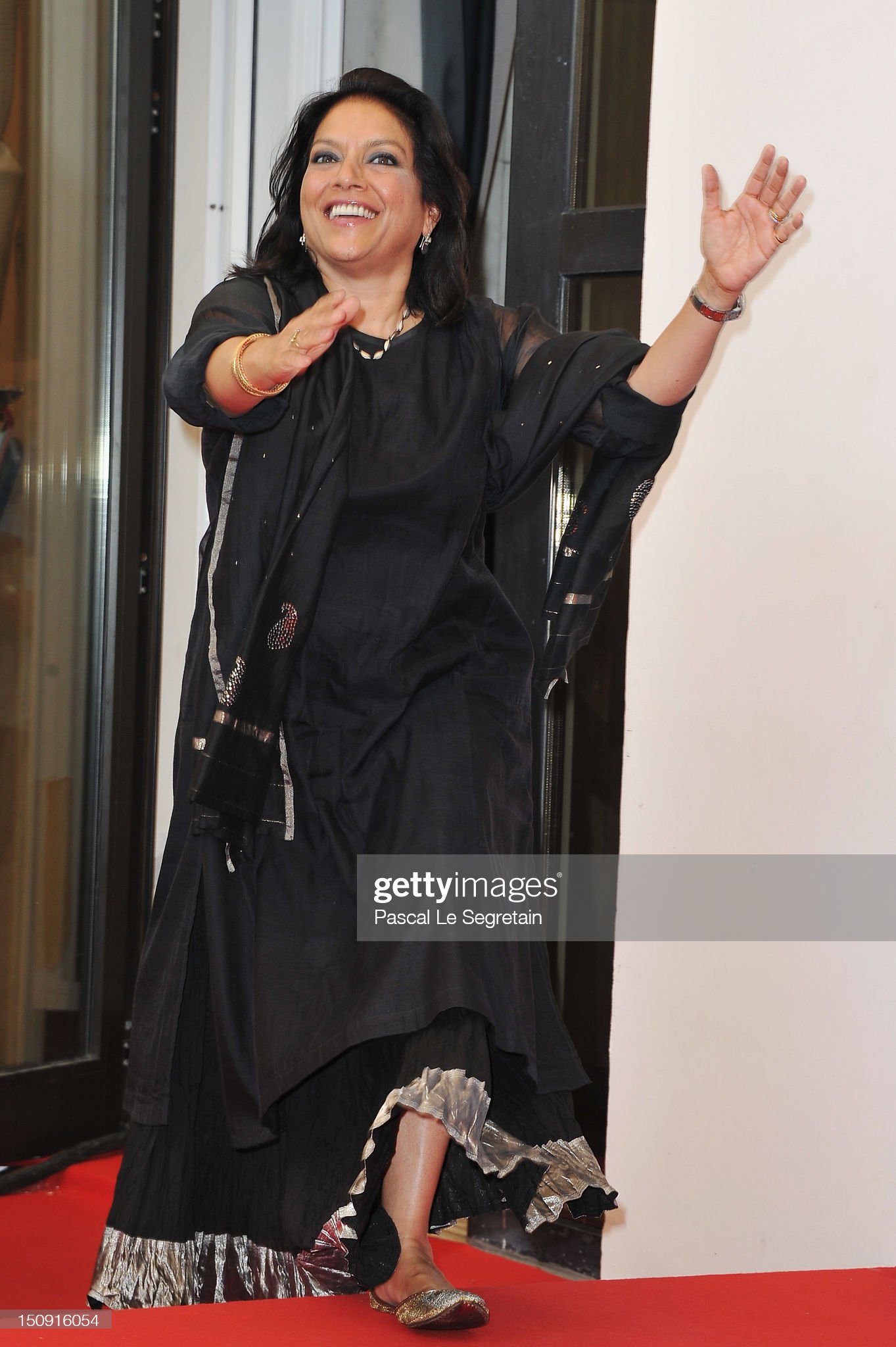
Mira Nair, Riz Ahmed e Kate Hudson - Venezia, 2012

Venezia, 2012


Venezia, 2012

Venezia, 2012

Shekhar Kapur - Venezia, 2012

Shekhar Kapur, Isabella Ferrari e Ali Aydin

2 aprile 2012

Mira Nair: I must say I am full of masala

Vi segnalo l'intervista concessa da Mira Nair a Richa Bhatia, e pubblicata oggi da The Times of India. La regista rivela qualche dettaglio circa la trasposizione cinematografica di Shantaram:
''Is your film, Shantaram, shelved?
Shantaram didn’t happen. It’s really sad, because everything was sorted out. But when we had completed shooting for a month, the Hollywood Writer’s Guild in America went on strike, demanding more writers in the business. The slogan of that strike that went on for 100 days, was ‘All pencils down’, which means you can’t write a single word. Johnny Depp, the producer of Shantaram, owns the rights of the film, couldn’t wait for three months. It was a film worth making, but sadly, it didn’t happen'.