15 luglio 2012

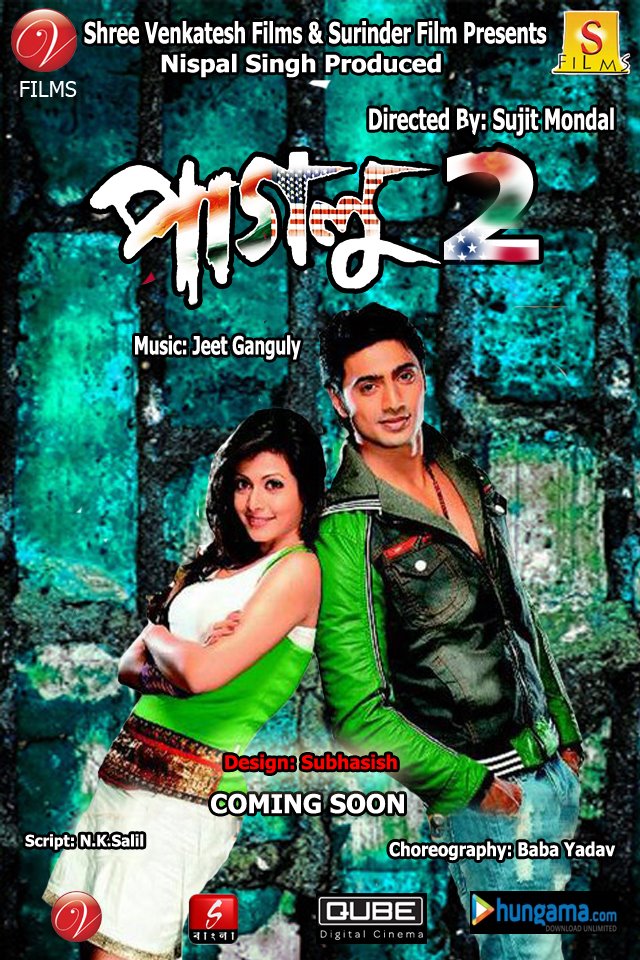
Paglu 2: le riprese in Italia

La troupe del film bengali Paglu 2 nei giorni scorsi era in Italia per girare alcune sequenze. Il 9 luglio i set sono stati allestiti in Valle d'Aosta (Teatro romano di Aosta, Castello Reale di Sarre, frazione Buic di La Thuile, passo del Piccolo San Bernardo), il 10 luglio a Torino (Piazza San Carlo), il 12 luglio a Vigevano (Piazza Ducale). La pellicola è diretta da Sujit Mondal, e interpretata da Dev e Koel Mallick. 
Aggiornamento del 23 agosto 2012: video dei brani Khuda Jaane e Paglu 2.

La Thuile

La Thuile

Khuda Jaane

Vigevano

Vigevano

Vigevano

Vigevano

Vigevano

Vigevano

Vigevano


RIP Page 3

Vi segnalo il divertente articolo RIP Page 3, di Yashica Dutt, pubblicato oggi da Brunch. Il fenomeno della mondanità e delle celebrità che arricchivano la terza pagina dei quotidiani nacque in India verso la fine degli anni novanta, a seguito della liberalizzazione economica, della cessazione dell'austerità per una fascia della popolazione, del desiderio di godere (e di mostrare) la propria ricchezza. Ma una decina d'anni dopo la scena cambiò radicalmente: le star del cinema e gli stilosi animatori di quella mondanità preferirono prendere le distanze dalla terza pagina, ormai ceduta a pagamento dai quotidiani. Chiunque possedesse un gruzzolo ingente e l'ambizione di apparire sulla terza pagina, poteva acquistarne uno spazio. Inoltre l'avvento di internet e la distribuzione di un nugolo di periodici dedicati alla cronaca mondana (Hello!, Ok!, People, Hi! Blitz) moltiplicarono l'offerta, contribuendo ad appannare lo smalto di esclusività della terza pagina dei quotidiani. Anche l'atteggiamento nei confronti della stampa è mutato: le feste con celebrità di primo piano continuano ad essere organizzate, pare in numero minore, ma i giornalisti non vengono invitati, a meno che non vi sia l'esigenza di pubblicizzare qualcosa. L'articolo insegna anche come scrivere un pezzo di cronaca mondana, come organizzare un evento, e come diventare un personaggio da terza pagina. Bene. Ognuno vuole essere famoso, e se Facebook non basta ad autopromuoversi, ecco la democratizzazione della terza pagina. Felici?

'Back in the late 2000s, when I started out as a reporter, I loved the idea of Page 3. I thought I’d get to meet rich, stylish people, talk about their intensely exciting lifestyles and be a fly-on-the-wall as pulsating gossip was created right in front of me. But I was wrong. Page 3 had died at least half a decade before that. I realised this soon after countless encounters with Page 3 people: All of them wanted to land a role in a Bollywood movie. Middle-aged women with faux blonde hair insisted on squashing rolls of saggy shoulder fat into tight animal print dresses. Rich men with zero conversation skills clutched their whiskies and looked for girls. Everyone looked for the photographers. The truth was that Page 3’s golden days had long been over. Those who had once lived and died to party didn’t want to be seen doing that any more. Now everything was Page 3 material: birthday parties, mundan ceremonies, dog funerals. The real Page 3 was gone.
Ghost of Page 3 past
But it wasn’t always so. In fact, when it started in the late ’90s, the third page was the place to be seen. A photograph there meant you had arrived on the social scene. (...) So what if you couldn’t party like them, you could at least see what it looked like. ‘Them’ meant celebrities. (...) Page 3 emerged at the end of the ’90s, when the fruits of liberalisation were just getting ripe. Indians were coming out of their phase of austerity and subtly beginning to enjoy their wealth. That was the sentiment that city supplements captured, much like the film magazines that captured the lives of movie stars. (...) [It was the beginning] of a new social order, where being seen on the circuit was a good thing. Often, this kind of visibility advanced careers. (...)
Ghost of Page 3 present
As the private parties moved to clubs and then disappeared entirely from the media glare (unless there was something - a brand, a restaurant, a clothing line, a movie, a new store - to peddle), so did the party people. They were replaced by a new crop of desperate, do-anything-for-a-photo-op wannabes who had realised what Page 3 was worth. “You open the page and see how many people you recognise. Everyone is a designer these days. Random people are featured, who don’t deserve any attention,” says a society journalist. And if earlier, style was the divine guidance, now that too has been thrown out with the bath water. Runny, over-done makeup, tight-fitting clothes that are 10 years too old, Russian and Uzbek girls who don’t have second names are the cache of Page 3 today. (...) Page 3 has, if you like, become ‘democratised.’ (...) That negates the ‘niche club’ idea that Page 3 was initially based on.
Money talks, loudly
Hard to believe now, but there were days when Page 3 dictated the readership of a newspaper. Till certain publications (...) introduced a policy where you could buy a few columns of space on Page 3 and so let the whole world see your wife’s birthday party, friend’s wedding anniversary, son’s graduation dinner... Just like your own Facebook page, only more expensive. Once money entered the picture, everything turned rancid. Would the real A-listers want to be featured on that kind of page? No, says a socialite who didn’t wish to be named. “If you do accidentally get featured one day, then you become the laughing stock of all your peers. You don’t want to look like your life is so sad that you need to pay people to showcase it.” But there are plenty of people out there who are still keen to become Page 3 celebrities. The best way to do so is to organise a Page 3 party of your own. (...) It doesn’t matter if you don’t know anyone. “You can hire a PR agency, which will get someone who does ‘guest relations’. (...) These people will charge you around `10,000-20,000 per guest to fill your party with regulars,” says a Page 3 photographer on condition of anonymity. (...)
Who killed page 3?
Like any trend that loses its charm once it goes mainstream, Page 3 too became infra dig once the exclusivity went. (...) Once ‘socialite’ became a dirty word and it became necessary for everyone to find a day job that wasn’t partying, Page 3 started gathering negative connotations. And after director Madhur Bhandarkar’s clichéd representation of society in his movie, Page 3, things became worse. (...) With the arrival of many party-centric blogs like Miss Malini and High Heel Confidential, and magazines like Hello!, OK!, People and Hi! Blitz, Page 3 doesn’t have the same equity it did earlier and the fact that you can buy it (in some publications) doesn’t help either. (...) However, any mention of Page 3 parties of the past does come attached with the folklore of the glitzy, amazing booze-headedness of the bashes that made them so awesome and attendance worthy. (...)
Press-ed Out
As Page 3 changed within a decade, so did the attitude of party hosts and partygoers to the press, which has gone from friendliness to suspicion. That’s also because back then, there were only a few magazines, newspapers and TV channels. Today there are literally hundreds, and they are far more aggressive. Once upon a time, no one, be it an A-list designer or an industrialist, (...) would think twice about inviting the press, even for allegedly ‘private occasions’. But today, the really private A-list parties are out of bounds for the press. Only when the concerned people want publicity for a new project or any other specific reason do they invite the press. (...)
So, what now?
While Page 3 looks worse than roadkill, with parties splattered all over, this is as close to death as the page can get. Though some journalists feel that as long as there are celebrations, or as long as there are occasions when people will need publicity for their products or their work (till the end of time, that!), Page 3 will continue. Others believe that the real Page 3 has degenerated. It has now become the home ground for those hungry for their 15 seconds of fame. But once they do get famous, will they too distance themselves from Page 3?'.

14 luglio 2012

Makarand Sathe: The man who tried to remember

Vi segnalo la recensione di The man who tried to remember, di Makarand Sathe, recensione firmata da Suparna Banerjee e pubblicata ieri da Hindustan Times. Il romanzo, originariamente in lingua marathi, sembra davvero intrigante:
'Makarand Sathe’s new novel (...) traces the journey of an ageing public intellectual, Achyut Athavale, from a state of power and stardom through societal imposition of madness on him to a kind of nirvana that allows him to serenely “take each day as it comes” in an upscale mental hospital from which he may never get out. Starting out with the protagonist’s reaction to his new room in the hospital, the novel loops back and forth to reveal the sequence of events leading from his obsession with remembering and communicating, through his unintended murder of a fellow inmate to his acquittal on grounds of a perceived mental breakdown. The pivotal situation in the novel is a Kafkaesque one, of a man frantically trying to prove himself guilty of murder in the face of vociferous public assertions of his unstable mental condition and therefore of his innocence. The acquittal thus dramatises the defeat of the individual before the collective.
Indeed, much of the novel is concerned with showing how ‘reality’ is constructed by collective beliefs and ritualistic praxes - that everything from social institutions to people’s lives to the language through which all experience is ordered and expressed have no ontological purity but is part of the semiotics of social existence. (...) Technically, the novel blends in elements of the modernist stream-of-consciousness with a postmodern absurdist play on language to create a fictional idiom that embodies the author’s social constructionist view of life. Identity becomes a major theme as the protagonist struggles to hold on to his reputation and self-perception as an intelligent, articulate individual even as well-meaning admirers from across the world join forces to prove the opposite in order to save him from being convicted of pre-planned murder. That salvation for someone could mean saving a long-held self-image rather than saving his life is one of the cardinal points made by the novel, as is the implied assertion of the publicly constructed nature of normalcy and sanity. The power of the majority, however, is subverted by the quiet resignation with which Athavale accepts his asylum-life. (...)
The reader’s growing awareness of the madness in what is collectively perceived as reason is balanced by an equivalent perception of the reason in Athavale’s apparent madness. The upshot is that the reader gains an uneasy but morally salutary sense of the fallibility of human constructions, including that of reason itself. The book, despite its philosophical richness, is almost never dull but enlivened with a lively wit that brings out the absurdity - the inconclusive, unending interplay of competing meanings - inherent to language and social praxes. A little more conventional ‘action’ and humour would have further enhanced its readabilty'.

11 luglio 2012

Numero Unos - A survey of the top hit films: 1970s

Vi segnalo l'articolo Numero Unos - A survey of the top hit films: 1970s, di Rajiv Vijayakar, pubblicato da Bollywood Hungama il 9 luglio 2012. È la volta dei leggendari anni settanta. Superfluo specificarlo: Sholay è il film dei film, Amitabh Bachchan è Dio, e il mito dell'angry young man è duro a morire. 

'The Top Guns
The '70s saw trends shifting to action and crime, and not as believed because of Amitabh Bachchan, who merely consolidated the genre in 1973. At the peak of the Rajesh Khanna wave itself, we saw the slick crime drama, Vijay Anand's Johny Mera Naam, Dev Anand's career-biggest hit as actor, as the first topper of this decade, trouncing two more crime dramas, Khanna's own Sachaa Jhutha and Dharmendra's Jeevan Mrityu. The remaining nine years' toppers were:
1971 - M.A. Thirumugam's Haathi Mere Saathi, a film about a man's relationship with animals, which trounced the action drama Mera Gaon Mera Desh
1972 - Ramesh Sippy's Seeta Aur Geeta, a romantic comedy, which beat Pakeezah and the crime comedy Victoria No. 203
1973 - Raj Kapoor's Bobby, a teenage love story
1974 - Manoj Kumar's Roti Kapada Aur Makaan, a social
1975 - Ramesh Sippy's Sholay, an action drama
1976 - Madan Mohla's Dus Numbri, a crime story
1977 - Manmohan Desai's Amar Akbar Anthony, an entertainer with everything from crime to romance and family drama and music
1978 - Prakash Mehra's Muqaddar Ka Sikandar, a love story with a social base and a backdrop of crime, and
1979 - K. Viswanath's Sargam, a musical romance.

Vox Populi, Vox Deii!
Escapist entertainment escalated in the '70s as a stress-buster from harsh socio-political realities that included frustration with the system, corruption, unemployment and even the first signs of inflation, and bang in the middle of the Rajesh Khanna wave, a new Raja of Romance arrived - Rishi Kapoor, who was the solo hero of the only two classic musical romances that topped the BO: Bobby and Sargam. In a tangy irony, Kapoor annexed Khanna's short-lived position as the romantic icon, and the Phenomenon (as Khanna was called) in turn married Dimple Kapadia (who was Bobby on screen!) in real life some months prior to the release of Raj Kapoor's blockbuster! Rishi Kapoor also acted in the multi-star Amar Akbar Anthony. Rajesh Khanna's sole claim to a Numero Uno position came in Haathi Mere Saathi, the children-centric entertainer that is the nearest Hindi cinema ever has got to a Walt Disney feature.
Amitabh Bachchan, the new superstar, came in with Roti Kapada Aur Makaan, Sholay, Amar Akbar Anthony and Muqaddar Ka Sikandar, the four multi-star films that highlighted the biggest trend of the '70s - of the audiences' overwhelming preference for films in which they could watching many stars instead of a single lead pair for the price of one ticket! Ironically, Bachchan missed a spectacular feat of having the biggest hits (albeit mostly multi-star bonanzas) for six consecutive years from 1973 to 1978 because, firstly, Bobby generated a mammoth craze in 1973 that beat Amitabh Bachchan's breakthrough film, the cult Zanjeer, by a good margin, and secondly, the 1976 Kabhi Kabhie lost out to Dus Numbri in box-office grading, as traditionally, that is always decided by the proportion of profit to investment and Kabhi Kabhie was a far-costlier film!
Hema Malini starred in four films (Johny Mera Naam, Seeta Aur Geeta, Sholay, Dus Numbri), and producer G.P. Sippy and his director son Ramesh Sippy were the only filmmakers to notch up more than one film - Seeta Aur Geeta and Sholay.

Forever the biggest
Sholay, of course, was the topper of the '70s and remains India's biggest hit ever. Along with Roti Kapada Aur Makaan and Deewaar earlier in 1975, it consolidated the 'multistarrer' (as it was called in ungrammatical film parlance) trend. As long as 12 years ago, it was assessed that the number of people who had watched the movie in theatres had exceeded the total population of India, what with people going to experience the revenge spectacle dozens of times! The 70mm canvas, the Stereophonic Sound (a first in Indian films), the cult villainy of Gabbar Singh, the memorable major and minor characters and the taut screenplay and dialogues by Salim-Javed rightly made Sholay an unparalleled epic that is unbeaten even today. Interestingly, one film almost came to match the scale of its cost-to-profit ratio - the same year's devotional Jai Santoshi Maa that spawned dozens of such films.

Landmark decade
The '70s remains a landmark decade in more ways than one. Johny Mera Naam became Hindi cinema's first film to gross Rs. 50 lakh [1 lakh = 100.000]. (...) 1971's Haathi Mere Saathi smashed Johny's record to become Hindi cinema's first film to gross a crore [1 crore = 10.000.000] - the costliest tickets in any part of the country then were three rupees! Haathi Mere Saathi was the first film scripted by Salim-Javed who in the following year co-scripted Seeta Aur Geeta and finally Sholay and of course created the Angry Young Man persona of Bachchan. Haathi Mere Saathi also was the first-ever music score to notch a Silver Disc (250,000 gramophone records) for outstanding music sales. Bobby was Hindi cinema's first teenage love story that had actual teenagers in the leads. Amar Akbar Anthony took Bachchan to the official Numero Uno position till then held by Dharmendra. (...) Muqaddar Ka Sikandar popularized the Cinemascope format on a large scale in Hindi cinema'. 

Vedi anche:
- Numero Unos - A survey of the top hit films: 1950s. Il testo raccoglie i link a tutti gli articoli della serie.

Ramoji Film City


[Blog]  Il primo articolo dedicato agli studi cinematografici indiani ci porta ai Ramoji Film City di Hyderabad, mecca del cinema telugu e non solo, imponente ed organizzatissima distesa di set aperta al pubblico e trasformata in località di svago e intrattenimento.  

10 luglio 2012

Le prime del 13 luglio 2012: Cocktail

Saif Ali Khan e Deepika Padukone tornano insieme sul grande schermo nella commedia romantica Cocktail, diretta da Homi Adajania, che aveva già lavorato con Saif in Being Cyrus. Nel cast anche Boman Irani e Dimple Kapadia. La sceneggiatura è firmata da Imtiaz Ali. La colonna sonora è composta da Pritam. Un assaggio nei brani Tumhi Ho Bandhu, Daaru Desi, Yaariyan, Second Hand Jawaani e Alif Allah (Jugni). La pellicola è stata girata in gran parte a Londra. Trailer.
Quanto a Homi Adajania, scorrendone la biografia scopriamo alcune curiosità. Homi è sposato con la stilista Anaita Shroff. Being Cyrus è ambientato nella casa di famiglia di Homi, nella rinomata località di Panchgani. Aamir Khan e Kiran Rao si sono sposati nella stessa casa, ed in seguito l'hanno acquistata. Alcune sequenze di Taare Zameen Par sono state girate al suo interno. Pronti per il dettaglio più clamoroso? Homi anni fa collaborò alla realizzazione di un'installazione artistica alla Biennale di Venezia (*). Suo era il compito di condurre in laguna un fachiro indiano (!). Ovviamente era impossibile convincere un vero santone, così il nostro ingaggiò un impostore... Da questa esperienza è stato tratto il film che ha segnato il vero debutto sul set di Farhan Akhtar, The fakir of Venice. Farhan interpretava il ruolo di Homi. La pellicola (diretta da Anand Surapur) non è stata ancora distribuita. 
(*) M. Francesca ci segnala che si trattava di Mother, opera di Maurizio Cattelan presentata alla Biennale nel 1999. 
Aggiornamento del 9 giugno 2022: The fakir of Venice è stato finalmente distribuito nelle sale nel 2019. Quanto a Mother, Cattelan seppellì il fachiro nella sabbia per tre ore; emergevano solo le mani, giunte in segno di preghiera.

8 luglio 2012

'Gangs of Wasseypur' is like a virus

Vi segnalo l'articolo 'Gangs of Wasseypur’ is like a virus, di Avijit Ghosh, pubblicato oggi da The Times of India:

'The strange thing about Gangs of Wasseypur is that one cannot fathom what chord it has exactly touched. (...) Director Anurag Kashyap’s blood epic leaves you drained even as you get drowned in it. The dark and bleak universe that Kashyap conjures underlines the power of cinema. No movie has evoked a more passionate reaction this year. And it doesn’t matter that not all are laudatory. As a movie, Gangs of Wasseypur makes primary departures. Kashyap blends the global with the regional to create a new aesthetic cool. The movie has a transcending quality that enables even those unschooled in its regional nuances to enjoy it. Stylistically, the movie has the distinct stamp of the usual Hollywood suspects but the visual and aural landscape is uncompromisingly its own. (...) The music and lyrics are stylised folksy. The dialogues are raw and rooted, though cusswords seem to be used sometimes also for effect and cheap thrills. (...)
But viewing the movie as a biography of Wasseypur or as a document on the Dhanbad coal mafia would be inappropriate. Kashyap’s movie is essentially a bleak, unsettling morality tale. The coalfields of Dhanbad are just a theatre where two parallel feuds - between Sardar Khan and Ramadhir Singh and between two Muslim communities (Pathans and Qureshis) - play out. Yet in its barebones, Gangs of Wasseypur is about a son seeking revenge for his father’s murder, a story told countless times in Indian cinema. If the movie is still able to keep the audience transfixed for two hours and 40 minutes, it is because Kashyap takes you inside the anarchic world that he creates and keeps you there. The movie becomes a compelling ballad of a certain kind of people, their idea of morality and relationship, patriarchy , the evolution of a criminal’s weaponry and much more. So much so that its flaws - and they are quite a few - cease to matter.
The credit partly goes to the craft. In Kashyap’s hands, much of Wasseypur’s violence almost becomes erotic; the bylane stabbing scene is like choreographed artwork. It is scary and thrilling and leaves you gasping for air. But it is the film’s characters that we really take home. Wasseypur’s men and women arise like smoke from the bowels of the stinking drains that they live around. They aren’t amoral; they just have an alternate version of morality, indispensable for their survival. (...) The characters (...) tell us that the evil and the good are not separate particles; they are rather entwined and live comfortably and without contradictions in us.
Wasseypur not only creates an alternative model of the ‘cool’ film but also throws up another model of success in Bollywood. It doesn’t really matter that the film is only a modest box-office success and will not cross the coveted Rs 100 crore mark. Many will be enthused by the fact that even after staying honest to a script’s core, you can make a movie that makes money, gets screened at a select section in Cannes and becomes a reference point for serious discussion on cinema. That it can be done with largely unknown actors and technicians from Bihar, Uttar Pradesh and Jharkhand, which underlines the vast creative energy that these regions have in store, is another plus. Perhaps the power of Gangs of Wasseypur lies in its ability to leave us with something which in absence of a better word can only be described as “an experience.” Like a virus, the movie almost forcibly creates space inside you and becomes a part of you'. 

Audience comes of age, 'A' films on rise

Vi segnalo l'articolo Audience comes of age, 'A' films on rise, di Bharati Dubey, pubblicato oggi da The Times of India. L'argomento del testo è l'incremento delle pellicole classificate dall'organo preposto alla censura come per adulti (A) o comunque da visionare in compagnia di un adulto (UA). Mentre il numero dei film prodotti è leggermente diminuito (1.288 nel 2009; 1.255 nel 2011), il quantitativo dei titoli considerati UA è rimasto invariato (400), e quello dei titoli considerati A è addirittura aumentato (da 214 a 244). Anurag Kashyap giustamente puntualizza: 'It's heartening to see our audience mature. But real maturity will be apparent when audiences stop giggling at abuses on screen and when we actually come out of our repressed sexuality'.

6 luglio 2012

Pukar (1939) : Recensione


[Blog] Recensione di Pukar (1939) sontuoso kolossal in lingua Urdu diretto da Sohrab Modi. Con Chandramohan e Naseem Banu.

5 luglio 2012

Southscope luglio 2012 : Allu Arjun


Uno stiloso (e sempre più palestrato) Allu Arjun si aggiudica la copertina del numero di Southscope di luglio. All'interno articoli dedicati a Prabhu Deva, che festeggia il successo del suo Rowdy Rathore e lascia indiscrezioni sulla sua vita sentimentale, e a Silambarasan giovane stella del cinema tamil, ma soprattutto gli scatti del matrimonio più chiacchierato nello stardom telugu: quello tra il sex symbol Ram Charan (figlio del celebre attore Cheranjeevi) e la sua invidiatissima promessa sposa Upasana.

4 luglio 2012

Numero Unos - A survey of the top hit films: 1960s

Vi segnalo l'articolo Numero Unos - A survey of the top hit films: 1960s, di Rajiv Vijayakar, pubblicato ieri da Bollywood Hungama. Nel 1960 il campione d'incassi è Mughal-E-Azam, uno dei più sontuosi successi della storia del cinema indiano. Una curiosità: il numero uno del 1964, Sangam (di Raj Kapoor), è la prima pellicola hindi ad includere numerose sequenze girate all'estero, precisamente in Italia, Francia e Svizzera. 

'The Top Guns
The kind of wide variety we saw in the (...) '50s continued, reflecting how audiences could be demanding. The winners of the '60s were:
Mughal-E-Azam, a historical romantic epic (1960)
Ganga Jumna, a 'dacoit' [bandito armato] drama (1961)
Bees Saal Baad, a supernatural thriller (1962)
Mere Mehboob, a Muslim social and romantic triangle (1963)
Sangam, a romantic triangle (1964)
Waqt, a social (1965)
Phool Aur Patthar, a social (1966)
Upkar, a patriotic social (1967)
Ankhen, an espionage action thriller (1968) and a tie between
Do Raaste, a family drama [1969]
Aradhana, a love story (1969)

The epic beginning
The beginning of this decade was anything but modern. Mughal-E-Azam was the legendary love story of Anarkali and Prince Salim last seen in the 1953 topper Anarkali, but the K. Asif epic was conceived and executed on a mammoth scale. The attention was shared not just by the lovers but by the father-son tussle between Emperor Akbar, enacted magnificently by Prithviraj Kapoor, and a defiant Salim essayed by Dilip Kumar. The ethereal Madhubala played the courtesan and the music by Naushad (including the opulent background score) was also on an epic scale.
Everything about Mughal-E-Azam was grand and had blockbuster written all over, including the advance booking queues (people slept on the pavements outside the main Mumbai theatre the previous night!) and the premiere (where the film's prints arrived on an elephant). Incredibly, though everyone still prefers the black-and-white classic over the abridged colorized version released in 2004, the fact remains that even the latter modernized avatar proved a hit, when released in Diwali week and pitted against contemporary films starring Shah Rukh Khan (Veer-Zaara) and Akshay Kumar (Aitraaz)! So in 1960, one can understand why the nearest contenders - Barsaat Ki Raat, Kohinoor, Chaudhvin Ka Chand and Jis Desh Men Ganga Behti Hai - simply did not stand a chance!


The trailblazers
After this came an array of trailblazers. Dilip Kumar's home production, Ganga Jumna, directed by Nitin Bose, made the Bhojpuri dialect used in the film so popular that it almost single-handedly fathered the Bhojpuri film industry that is so huge today, even in some international pockets. It is a combination of the success of this film and the request of India's first president Dr. Rajendra Prasad that made possible the first Bhojpuri film, Ganga Maiyya Tohe Piyari Chadhaibo released in 1962. Ganga Jumna was the first time that two real-life brothers - Dilip Kumar and Nasir Khan portrayed reel brothers who were pitted against each other. Deewaar was just one of the many Hindi and regional films inspired by this classic, despite the mixed element of the powerful mother from Mother India, the 1957 topper.
And if Biren Nag's Bees Saal Baad set into motion the supernatural trend in the real sense, with Woh Kaun Thi? and many other small and big films as the direct consequences of its 'haunting' success, H.S. Rawail's Mere Mehboob and Raj Kapoor's Sangam together gave new boost to the romantic triangle as a foolproof formula for big-time success. Rawail himself tried to reprise his film with disastrous results as the 1982 Deedar-E-Yaar. Sangam was, of course, the first Bollywood film to be extensively shot abroad, in Italy, France and Switzerland.
After the 1950s Mother India, the 1960s Waqt directed by Yash Chopra for producer-brother B.R. Chopra was Hindi cinema's first multi-starrer film. It also became the first contemporary lost-and-found drama of a family torn asunder and reunited in the last reel and remains a benchmark blueprint for this genre. Ramanand Sagar's Ankhen, along with 1967 blockbuster Farz, set into motion a temporary trend of spy dramas that however died down after films in subsequent years like Humsaya and Shatranj bombed.

New brands
If Bees Saal Baad introduced Bengali boy Biswajeet to Hindi cinema, it was the 1966 Phool Aur Patthar directed by O.P. Ralhan that made Dharmendra a big star six years after his debut. As the hunk with a heart of molten gold, he instantly became branded as the He-Man, a firmly-etched image even today. Phool Aur Patthar dared have the hero strip to the waist to show his brawn, and also kept him away from lip-synched songs.
Upkar, in turn, entrenched Dharmendra's good friend and co-struggler Manoj Kumar as Mr. Bharat, the man who epitomized the idealistic Indian. It also marked his official debut as director (after ghost-directing Shaheed) and changed the image of Numero Uno screen baddie Pran to a sympathetic character. It was the start of a Mr. Midas phase in Manoj's career that lasted till 1981 and included the 1974 Numero Uno hit Roti Kapada Aur Makaan.
The tie between two films both starring the new young heartthrob Rajesh Khanna at the end of the decade heralded a paradigm shift to come in the '70s in Hindi cinema. Kaka (as he came to be known) became the new icon, riding in on the wings of the Kishore Kumar chartbuster Mere Sapno Ki Rani from Aradhana. Raj Khosla's Do Raaste, the less costly film of the two, matched Aradhana in box-office grading and the actor formed super-successful pairings with Mumtaz and Laxmikant-Pyarelal with it just as he struck a fruitful association with Sharmila Tagore, director Shakti Samanta and R.D. Burman, who had assisted Aradhana's composer, his father S.D. Burman. The two films heralded the shifting of these two directors best known for crime-related genres to socials, but most importantly, with his songs in both these films, Kishore Kumar became a frontline playback singer for the first time and the prime voice for Rajesh Khanna, now touted as India's first Superstar and a Phenomenon'.

Vedi anche:
Numero Unos - A survey of the top hit films: 1950s. Il testo raccoglie i link a tutti gli articoli della serie.

1 luglio 2012

Shah Rukh Khan e l'Italia sulla pelle

Nel giorno della finalissima Italia-Spagna del Campionato europeo di calcio 2012, guardate cos'ha scovato la lettrice M. Francesca: un meraviglioso scatto che ritrae il Re equipaggiato di biancheria appropriata, un paio di (ehm) mutande con la sobria scritta ITALIA visibile ad occhio nudo anche dalla Luna. Bravo Shah Rukh: ci auguriamo custodisca il nostro Paese anche nel tuo cuore...

30 giugno 2012

Numero Unos - A survey of the top hit films: 1950s

Questa mattina Bollywood Hungama ha pubblicato Numero Unos - A survey of the top hit films: 1950s, di Rajiv Vijayakar, il primo di una serie di sette articoli dedicati ai titoli campioni d'incasso della cinematografia hindi suddivisi per decennio. Si parte dagli anni cinquanta. L'India ha da poco conquistato l'indipendenza e subito le atrocità della partizione. Le pellicole di critica sociale vanno per la maggiore. Raj Kapoor è il nome più sfavillante. Le sceneggiature con protagoniste femminili non spaventano il pubblico ma anzi incendiano il botteghino. Mother India, un classicone da paura, entra nella cinquina dei migliori film stranieri agli Oscar (e verrà sconfitto da Le notti di Cabiria di Fellini).

'The 'rolls' of honour
Amazing but true: the biggest hit of the very first year under discussion - 1950 - was Filmistan's Samadhi, a thriller set during India's freedom struggle, narrating a claimed real-life incident in the life of Netaji Subhas Chandra Bose. And what a wide variety we saw in the Numero Uno hits of this decade, when India was just celebrating the joys of newfound Independence and yet recovering from the aftermath of Partition traumas and facing new problems and internal socio-political conflicts! The nine other winners of the '50s after Samadhi were:
Awaara, a social (1951)
Baiju Bawra, a musical with a historical base (1952)
Anarkali, a historical romance (1953)
Nagin, a costume fantasy (1954)
Shree 420, a social (1955)
C.I.D., a crime thriller (1956)
Mother India, a social (1957)
Madhumati, love story based on reincarnation (1958) and
Anari, a social (1959)

The common thread
The only surefire common thread that ran through all these films was their huge connect with the audience regardless of genre, proving that the ticket-paying viewer was extremely smart in demanding variety and standout fare. Significantly, five of the ten films were produced by just two banners: Filmistan (Samadhi, Anarkali, Nagin) and R.K. Films (Awaara, Shree 420). Raj Kapoor, producer-director and actor of the latter two films, was also the hero of Anari. Together, these three films best epitomized the brand image Raj successfully created for himself - of the Chaplin-esque underdog. Ashok Kumar was a producing partner with Filmistan in Samadhi and Guru Dutt, also an actor-filmmaker, produced C.I.D. but did not star in it. And even in later decades, home productions of stars garnered a significant chunk among BO toppers!
Though the top hits indicated the superstar status of Ashok Kumar and the new Trinity of Raj Kapoor, Dilip Kumar (Madhumati) and Dev Anand (C.I.D.), it was always the film that made the star: Bharat Bhushan's (and even Meena Kumari's) innings took off only with Baiju Bawra. Sunil Dutt, Rajendra Kumar and Raaj Kumar broke through with Mother India, while Waheeda Rehman made her debut in a negative role with C.I.D.. Even Bina Rai really hit big-time with Anarkali, while leading man Pradeep Kumar set off on the highway to stardom with his two consecutive Numero Unos: Anarkali and Nagin, incidentally the last two highs in the career of common director Nandlal Jaswantlal who had started out in the silent era! It is interesting to see that the '50s had the maximum female-centric super-hits: besides Anarkali, there were Nagin and Madhumati (both Vyjayanthimala) topped by Mother India with that ultimate protagonist - a strong, rooted Indian woman who could be Lakshmi, Saraswati as well as Durga when needed - immortalized by Nargis. Raj Kapoor and Nargis led the star-roster with three films each, two of them (Awaara, Shree 420) as co-stars. 
The final common factor to all films was their popular music scores. (...) It showed how music would always be the major factor in giving a film both a great 'opening draw' and also a second-time watch repeat value. (...)

Leading the pack
Mother India's success was a spectacular, Technicolor trouncing of 1957 heavyweights like Naya Daur, Pyaasa, Do Aankhen Barah Haath and Tumsa Nahin Dekha to clinch the top spot. No other year in the '50s had such serious competition, and that music alone never made any film a blockbuster was borne out by the superior soundtracks of all those near contenders! Ranking among Hindi cinema's all-time biggest blockbusters, Mother India, in an era when movie tickets cost a rupee or less, did a business of Rs 4 crores [1 crore = 10.000.000]! The film, produced and directed by Mehboob Khan as an updated remake of his '40s film Aurat, is the only one in this elite list to make it to the Oscars shortlist for Best Foreign Film.

Setting trends and a pattern
There seemed to be a clear preference for socials with messages in the prevalent euphoric yet confused and thus turbulent society where films had to reflect realities and yet offer relief from everyday problems. Even Baiju Bawra, Anarkali and C.I.D. commented on society, and only Nagin and Madhumati were about only entertainment. If this decade saw filmmaking legends like Raj Kapoor (Awaara and Shree 420), Vijay Bhatt (Baiju Bawra), Bimal Roy (Madhumati) and Mehboob Khan (Mother India) earn new laurels, it also witnessed the career breakthroughs of future aces like Raj Khosla (C.I.D.) and Hrishikesh Mukherjee (Anari). Kapoor, in particular, maintained an incredible record of at least one Numero Uno film for each of his active five decades: before Awaara there had been the path breaking Barsaat in 1949, and he was to follow up with Sangam (1964), Bobby (1973) and Ram Teri Ganga Maili (1985)!
Awaara is, as we know, the first Indian film to make a solid mark outside the country: its music, like the movie itself, became a rage in Russia and many other nations to the extent that the names Raj Kapoor and Nargis and the song 'Awara Hoon' became synonyms for India and were akin to magic wands that opened doors and hearts for touring Indians! Baiju Bawra, on the other hand, gave an impetus to the use of simplified Indian classical music in cinema, and Nagin and Madhumati were the respective forerunners of many later fantasies about snakes in human form and reincarnation dramas.
There were some truly piquant trivia: Madhumati's climax was rehashed in Om Shanti Om, the top hit of 2007, while Anarkali's tragic love for Prince Salim would be depicted again in an all-time hit just after this decade ended - Mughal-E-Azam in 1960. Shashi Kapoor, a child star in both Samadhi and Awaara, was to feature in just two multi-hero films later in this elite list: Waqt and Roti Kapada Aur Makaan. Shree 420 was recycled as Shah Rukh Khan's Raju Ban Gaya Gentleman and Deewaar was admittedly part-inspired by Mother India. And yes, funster Mehmood had a tiny standout cameo as a hired killer in C.I.D.!'.

Vedi anche:

29 giugno 2012

Rangeela: A celebration of life

Vi segnalo l'articolo A celebration of life, di Subhash K. Jha, pubblicato oggi da The Indian Express. Il pezzo è dedicato a Rangeela, uno dei film hindi più famosi, diretto da Ram Gopal Varma e interpretato da Urmila Matondkar, Aamir Khan e Jackie Shroff. Di seguito un estratto: 

'Ram Gopal Varma is a director who is known for films that border on violence and drama. But he revealed a completely different facet with Rangeela, which belonged to a different genre. (...) Playing the middleclass Mumbai girl Mili (the protagonist's name was a furtive tribute by director Ram Gopal Varma to Hrishikesh Mukherjee), Urmila Matondkar rocked the box office and changed the definition of how the conventional heroine conducted herself on screen. (...) She scorched the screen, gyrating sensuously to A.R. Rahman's seductive sounds, (...) in her sizzling Manish Malhotra outfit. The magic of the movies is that it foretells a success story even before the story unfolds. Urmila, who did half a dozen inconsequential films before Rangeela, never anticipated the tremendous response that her character whipped at the boxoffice.

A fairy tale
The plot was a cleverly cloaked fairytale. The girl dreams of stardom, is secretly loved by the street hoodlum Munna (Aamir Khan) but is swept off her feet by the nation's hearththrob Raj Kamal (Jackie Shroff). The film was fresh, sassy, unselfconsciously and unabashedly dream-like in choreography, mood and tempo. Mili's life at home is portrayed with a lightness of touch that Ram Gopal Varma (RGV) never seemed to achieve in his subsequent films, which progressively leant towards dark, blood-soaked themes. In Rangeela, the delight RGV derived in portraying the joy of first love, of success or the first dance of effervescence is vividly portrayed in Urmila's performance. (...) Rangeela is RGV's lightest film to date. Its unmistakable power can be traced to Urmila's restive performance. She epitomises the yearnings of the young Mumbai girl with a strong family support-system to realise her dreams. To Mili, family also means Munna (Aamir Khan). (...) One of the finest performances of Aamir's career, Munna gave Aamir a chance to let go, simply have fun with a part without delving deeply into the character. The scenes where he coaches Urmila to memorise her dialogues for her shooting the next day, depicts the unrequited love, as he gets 'in character'. (...) The lovelorn looks he darts at Mili when she isn't looking (she has her eyes trained to a distant dream) kept Munna's character on the level of a street-smart lover-boy without reducing him to a love lost caricature. (...)

A novel experience
Interestingly, films set in the film world fared dismally at the box office. (...) Rangeela was another experience altogether. The excesses of the entertainment industry were harnessed into telling a tale where it was okay for the wannabe screen queen to replace the tantrum-throwing leading lady. Rangeela is all about wish fulfilment. Urmila gets stardom. Aamir gets Urmila. The superstar Jackie Shroff is left to walk the lonely path. You can't have a love story without a broken heart. While the songs and dances were uniquely evocative and erotic, scenes from the film industry were a tongue-in-cheek narration of reality. (...) RGV wove the wackiness of Bollywood into a fresh tale of rags-to-riches saga. The working-class wannabe star was draped in dresses that defied gravity. RGV never resorted to low-angle vulgarity. His camera had not begun to peer between thighs and down cleavages as yet. Rangeela is a celebration of unalloyed innocence. The fun quotient flowed freely and seamlessly from the actors' own enjoyment of the material that was served up to accentuate the contrast between dreamlike aspiration and harsh reality. Significantly, Munna sold tickets at blackmarket rates outside the theatres where Mili aspired to be on screen. It was the perfect blend of fantasy and reality - stuff that Bollywood fariytales are made of.

Rangeela Trivia
* Urmila's character was partly based on RGV's dream woman Sridevi. (...)
* Actor Rajesh Joshi who played Aamir Khan's friend Pakiya died soon after in a road accident. He was actor Manoj Joshi's sibling.
* The unforgettable performance by the waiter, when Aamir takes Urmila to a 5-star hotel for lunch, apparently provoked RGV to say the waiter performed better than Aamir in the scene. The actor who unknowingly caused a rift between Ramu and Aamir was the Gujarati stage television and film actor Rajeev Mehta.
* Aamir and RGV fell out after Rangeela, both vowing they'd never work with the other.
* Madhur Bhandarkar who worked as an assistant to RGV made a cameo appearance during a scene showing a film shoot'.

28 giugno 2012

The Indian independent film industry: where do we go now?

DearCinema pubblica oggi un lungo articolo dedicato alla scena indipendente. L'autore tenta di fornire una corretta definizione di cinema indipendente che tenga conto delle peculiarità indiane, compila una lista degli aspetti che andrebbero creati o rafforzati, ed infine si chiede: dove sta andando il cinema indiano indipendente? 'To build and sustain a viable Independent Film Industry in India we need an ecosystem. This ecosystem of studios/financers, production houses, filmmakers with truly independent voices, talent development programs, festivals with real curatorial authority, dedicated venues for indie film/exhibitors, independent film press to solely review indie films and only report on specialty film box office, and most importantly organizations and institutions dedicated to audience building. The audience that will buy the tickets/ DVDs/ downloads/ merchandise/ what have you, and pump the monies into this ecosystem. (...) The difference between the Bollywood film and the Indian Indie is just that - the quintessential Bollywood musical gives the audience what they expect, and the Indian Indie ideally gives them what they least expect but hopefully want. The other difference is that the Bollywood apparatus like a true industry is very good at defining its product, hence making it ‘commercial’, and the Indian Indie World is not'.

Mard : Recensione


[Blog] Recensione di Mard (1985) film di Manmohan Desai con Amitabh Bachchan e Amrita Singh. 

24 giugno 2012

Shahid Kapoor, uncut

La copertina del numero del 24 giugno 2012 di Brunch è dedicata a Shahid Kapoor. Vi segnalo l'intervista concessa da Shahid a Tavishi Paitandy Rastogi, Shahid Kapoor, uncut:

'He isn’t the easiest star to deal with. Or so say many people who have worked with him. He has the reputation of being ‘difficult.’ And he doesn’t even try to defend himself. But in this interview, actor Shahid Kapoor finally comes clean. Blame it on youth or sudden fame, he says. He promises to improve, to loosen up... (...) Here’s the man. Coming clean. Completely:

Reclusive, arrogant, difficult, snobbish... what’s with this reputation?
(Laughs) I really don’t know. I know I have a reputation that is not so flattering, but I guess I owe it to just being a private person. I don’t mean anyone harm and I’m not being mean. I just don’t socialise much, I don’t party too much, I don’t know what to say to the media if I’m not talking about a film that I am doing, so yeah, maybe I am perceived as a snob. But I assure you, I am working hard to improve all this.

Come on, isn’t "being private" the best excuse for being "difficult" or maybe "temperamental"?
Okay, let’s put it in perspective. Yes, I agree I wasn’t very easy going by temperament. But remember, I was just 22 when I started out. Think about it, I was fresh from a regular middle-class family, with no "star type" background and I was suddenly thrown into the limelight; it was a big thing. I was overwhelmed. If that wasn’t enough, I got into a serious, very public relationship. Fame hit me suddenly. But by nature, I was rather shy and an introvert. Add to it the fact that my father is Pankaj Kapur, who is the most serious and focused actor. So, of course I didn’t know any better. Taking things seriously was the only way I knew. Now, I am learning that is not the only way to be. Sure, you can loosen up. I think I’m going back in time now - from a man to a boy.

You were very young when you came into the industry, but your directors seemed to feel that you were opinionated. You interfered with their filmmaking. And your co-stars felt you were unfriendly and arrogant.
I don’t know if I can call it interfering but I sure was sceptical about a lot of things. I was new and didn’t want to take too many risks. And fortunately or unfortunately, I was also working with a lot of new filmmakers. So yes, I was apprehensive. And I did ask questions and gave my opinions. That, I am sure, would have created some discomfort. About being arrogant with co-stars, I blame it on my being a great boyfriend. I was in a four-and-a half-year long relationship and was very committed. I did not find any reason nor did I have the time to socialise or make friends otherwise. Now, I have learnt better. And I shall not be the most wonderful boyfriend. (Laughs).

You regret your relationship with Kareena Kapoor?
(Smiles) I don’t look back. I am happy the way things happened and the way things are now. I am in a very good space. That’s all that matters. (...) To clear the air, I haven’t been in a serious relationship in the last two years.

You’ve also created a lot of controversies with your co-stars, what with calling Vidya Balan fat or being at Priyanka Chopra’s house in shorts during the Income Tax raid...
Vidya first. I have to get this straight today. I never, never called her fat. It wasn’t a misquote. In fact, there was no quote at all. I don’t know where that came from. I am far too cultured to be disrespectful to a woman. I wouldn’t and I didn’t. And Priyanka, yeah, I was at her place. We live in the same building. When she heard of the raid, she called me because I am a friend and I was the closest at the time, and I went. And I was in my shorts and T-shirt. Something that I was wearing at home. What was I expected to do? Change into my best suit and welcome the IT guys? For heaven’s sake, why did my shorts become such a big deal? I wasn’t standing there naked! (...)

Talking of failures, Mausam would have been a bad hit...
You know, any rejection is heart breaking, but when that rejection comes after two years of unconditional love and nurturing, it becomes really sour. Mausam was just that. We worked on it for two years. Unfortunately, we got just two months to do post-production and I think that took a toll. Yes, I agree it could have been much shorter. A two-hour, 50-minute film just doesn’t work today. But when I look back, I feel bad, but I am glad I did the film. It gave me two years of blissful family time. Something that I had missed always.

You keep calling yourself an "outsider" but both your parents are actors...
... but not in the "commercial" sense of the word, right? Mom was essentially a theatre person, she did some films and TV mainly. Dad was never very mainstream. And my upbringing was never the flamboyant ‘actor ka beta’ [figlio di attori] type. In fact, far from it.

What was it like?
Very, very middle class. My parents were separated. I lived with my mother in Delhi for the first 10 years of my life and studied in Gyan Bharti Public School. I was very close to my maternal grandfather. Those were tough days. I have never lived in a house that was mine. I have always lived in rented accommodation. There were days when we didn’t have enough money to fill petrol. So we walked. I was also conscious about the fact that I was the only son of a single mother, so there was this huge sense of responsibility. I think that’s where my being an introvert comes from. I was very conscious of what to do and what not to do. It wasn’t really a carefree childhood.

Did you miss your father?
Somewhere I tried to understand. Dad was in Mumbai, and at that time, it wasn’t the easiest thing to travel to Delhi at the drop of a hat. Taking a flight wasn’t the cheapest option and travel was difficult. Of course I had my insecurities and vulnerable moments. But in hindsight, it also made me more responsible. And somehow, more positive. I treated it like a problem... "dad isn’t around, period! So what is the way to get past it?" - that was my attitude. I didn’t sit and wallow in it. That was the time I grew up suddenly - from a boy to a man.

Your relationship with your parents also gets talked about often...
It does. And as casually as anything else. People should be a little more sensitive about things... For me, it is complicated. I don’t have a regular happy family like most people. My parents are separated, my dad married someone else and so did my mom. All my siblings are from my parents’ other marriages. So yes, it is complicated and I don’t like talking about it or explaining this to everybody. But all this doesn’t stop us from being close to each other. I am very close to both my parents. And my siblings are far younger than I am, so I am like their father. A lot of times I know questions are being asked and things are written just for kicks. So I don’t respond. Especially when it’s speculation.

When did you learn to dance ?
Will you believe it, I was a bathroom dancer till my college years. Then I somehow joined Shiamak Davar’s troupe and it all started. And till recently, I believed that I was a great dancer, till my brother Ishaan called me “passé” and showed me some new steps. Man! I wanted to run to save my job!

So who is the real Shahid? And why don’t we see him more often?
I am a good boy. Sweet. I love to chill. I have a select set of friends, am big on house music, love Goa. I don’t read much. Though that is one habit I am trying to inculcate. But the last time I read a book with great interest (...), I turned vegetarian! So it’s tricky, I wouldn’t want to give up too much.

The lover boy and his leading ladies:
Kareena Kapoor - Amazingly talented. All the appreciation she is getting now has been long overdue.
Vidya Balan - (...) She is a very fine actor and a wonderful co-star. And wow! Hasn’t she rediscovered herself? And how!
Priyanka Chopra - Very talented, very sharp, positive and a team player. One of the best co-stars you could have.
Sonam Kapoor - Great fun to work with. She taught me all about clothes. In fact a lot of what I wear even now was suggested by her.
Anushka Sharma - (...) She is ready with her lecture on any and everything. I thought, being a senior, I would tell her how to go about things, but damn, I didn’t even get a chance. Good fun and a great actress.

They make the best films. I love these guys:
Imtiaz Ali - One of the finest talents in the film industry. He is a genius of a filmmaker.
Vishal Bhardwaj - Will give my right arm and leg to work with him again. He is the master of the game. Am waiting eagerly for the next film we can work on.
Pankaj Kapur - By far the finest actor in the industry. I’ve learnt so much from him. In fact most of what I know in terms of anything comes from him. He is unbelievably focused.

23 giugno 2012

Gangs of Wasseypur I: colonna sonora e recensioni

Gangs of Wasseypur I è stato distribuito ieri nelle sale indiane, e l'afflusso da parte del pubblico sembra in costante crescita. Le recensioni sono in generale positive. Ve ne segnalo alcune:
- Mayank Shekhar, 22 giugno 2012: 'So you know Sardar’s the hero, Ramadheer the villain, and the film, a revenge drama seeking poetic justice. And yet the worst mistake you’re likely to make is to walk into this film thinking like that. It’ll kill your fun. In fact, it’s advisable not to even perceive this as a feature film. It’s more of a multi-part mini-series. (...) Your patience is likely to wane after a point. And yes, it does. Yet, just as it does, the makers manage to successfully slip in an inspiring scene, an entertaining snippet or a limited twist in the plot and you go back to engaging with the picture all over again. (...) The film gets the atmospherics, beats and nuances just right. This is quite rare for movies placed in provincial towns. (...) GOW is fictionalised, blood-soaked, demented history that alternates between sharp grittiness and delicious grotesquery. Movies have a gender. This is animalist, male. Given how easy it is to kill off people in this picture, it’s a miracle that they’re all not dead yet!'.
- Raja Sen, Rediff, 22 giugno 2012, ** 1/2: 'And the yawns are the primary issue with Anurag Kashyap's GOW, an impressively ambitious - and excellently shot - collection of memorable characters and entertaining scenes, set to a killer soundtrack. The film never recovers from the unforgivably tedious first half-hour, and despite many laudable moments and nifty touches, never quite engages. This is (...) mostly because Kashyap is defiant in his self-indulgence, piling on more and more when less could have done the job more efficiently. (...) His film tries too hard to be more: more than just an actioner, more than just a drama, more even than a bloodied saga. This overreaching desire to be an Epic makes it a film that, despite some genuinely stunning individual pieces, fails to come together as a whole. There is much to treasure, but there is more to decry. Entire sequences that could be compressed into clever throwaway lines are staged in grand, time-consuming detail; while genuinely sharp lines are often repeated, as if too good to use just once. The characters are a wild, fantastical bunch of oddballs and trigger-happy loons, but attempting to do each fascinating freak justice with meaty chunks of screen-time may not even be film's job. Wasseypur may have worked better as a long and intriguing television series, one deserving a spin-off movie only after six seasons. Here it feels too linear, and even too predictable: scenes themselves often surprise, even delight, but the narrative is cumbersome and unexciting. (...) Yet it is the excess that suffocates all the magic, originality dying out for lack of room to breathe. Kashyap gets flavour, setting and character right, but the lack of economy cripples the film'.
- Shubhra Gupta, The Indian Express, 22 giugno 2012, ****: 'GOW is a sprawling, exuberant, ferociously ambitious piece of film making, which hits most of its marks. It reunites Anurag Kashyap with exactly the kind of style he is most comfortable with: hyper masculine, hyper real, going for the jugular. (...) Wasseypur is not just a place, but a state of mind. (...) There's history here, of the kind almost never attempted by Hindi cinema, bouyed beautifully by geography: the locations are part of the pleasures of the film'.
- NDTV, ***1/2: 'The smartly filmed vendetta saga tosses and turns convulsively from one shootout to another as a bunch of amoral human bloodhounds sniff around for their next kill in a volatile, lawless landscape. The unbridled violence and fetid language - the expletives fly as thick and fast as the bullets - are, however, only one facet of this cinematically layered shot at a time-honoured and popular genre. (...) GOW benefits immensely from a towering performance by Manoj Bajpayee, who immerses himself in the central character of Sardar Khan with such conviction and controlled flair that it becomes impossible to separate the actor from the part'.

Per quanto concerne la spumeggiante colonna sonora, vi segnalo:
- Gangs of Wasseypur - Lyrics translations, MoiFightClub, 7 giugno 2012
- Songs in ‘Bhojpurised’ Hindi, Kashika Saxena, The Times of India, 15 giugno 2012:
'Never underestimate the power of music, because we love to have a song for every occasion. Filmmakers seem to understand this sentiment all too well, which is why even though Anurag Kashyap’s “Gangs Of Wasseypur” is a film about gangsters, its music is being talked about as much as its storyline. The filmmaker explained the quantum of music in the movie in a panel discussion at the Cannes Film Festival saying, “You can’t really get away from music in India. You walk on the street and you’ll hear music from some corner, somewhere. Music is omnipresent in our lives. And the second thing is that music has become a very important part of marketing. If you have good music in your film, you get free airplay, you get awareness about your film, because each Friday you have ten films competing for audience attention and you need to build that awareness. In fact, today, when sometimes a film in India doesn’t have music, marketing teams look for ways to introduce music, such as in the rolling credits, and release that music. I have learnt to try to use music in a way that does not impact the flow of the film, that it becomes as an extension of what is going on in front of the audience - then it’s not a forced insert just for the sake of marketing.”
The attention this film’s music is getting comes as no surprise, what with lyrics like “I am hunter and she want to see my gun”. Twenty-seven-year-old music director Sneha Khanwalkar has used a mix of eclectic artistes from places like Patna, Gaya, Muzaffarpur, Garbandha, among others, for the songs of the film, and she says that the idea was to use simple, vernacular lyrics that can be sung and understood easily. The feedback that she got from Cannes, where the film was praised by many international critics, was that the music wasn’t “very Bollywood”. “It was sounding very global to them because they probably haven’t heard these voices before. These voices are so authentic and from such interior parts. For instance, I went to Trinidad to record this guy Vedesh Sookoo for the song “Hunter” and he only speaks English, but he’s a Bihari who has never been to India, which I find very interesting. I then merged his part with other singers from more of core Bihar and made this song. ‘Shut up’ and ‘my name is’ are words and phrases that are used very easily in small towns like these and I’ve used the accent to show the vernacular influence,” she tells us. No other song except “Hunter” has Hinglish in it, but the lyrics are, in what Sneha calls “Bhojpurised Hindi”. “It is basically core interior land music. The vocal nature is quite cool, and I don’t think one would care about what is actually being sung. They could understand it, but even if they don’t, it’s all right because they would still get the meaning. Even I didn’t try to learn the exact language,” she says.
The people she met while she was making the music for the film, the ones who ended up singing these songs, aren’t professional singers. They’re people who would “probably start singing in the middle of the night in their village, if at all,” she says, adding, “They aren’t professional, but authentic. Like one of the women who sang “Womaniya”, Rekha Jha, is a housewife. Her father taught music and that’s how she did chorus for me. But later I found out that she’s from this place called Mithila, near Ganga, and that’s why her voice is so different from other voices in the Bhojpuri belt.” “The good part is that there was no hurry when I was making the music of this film. There was enough time to do this process because there was no rush; we were thinking only of the music. I gathered all this and then decided who to put where, and then the music got intertwined with the film,” she says'.

Bittoo Boss : Recensione


[Blog] Recensione di Bittoo Boss (2012), con Pulkit Samrat e Amita Pathak.

Dibakar Banerjee: I am anti-dumb

Vi segnalo l'intervista concessa da Dibakar Banerjee a Priya Gupta, pubblicata da The Times of India l'8 giugno 2012. I am anti-dumb: Dibakar Banerjee:

'Unlike many other directors in Bollywood who are star-chasers, you’re known for your unconventional casting. (...)
Today, people are calling Emraan Hashmi a box office star, but one year ago when I cast him in “Shanghai”, people who are seen as opinion makers, sneered at me and said, ‘Who? That kissie guy?’ I, of course, can’t stop smiling because I can stand on a roof top and say, ‘This person you have been sniggering at all these years can do this (performance)’. The same goes for Abhay Deol. When I was casting him in ‘Oye Lucky! Lucky Oye!’ they said, ‘Why are you casting him? He is so non-filmi’, and then suddenly, he became the poster boy for alternative cinema. This gives me the strength to take the next step forward. For instance, you have no idea how much pressure I was put under before the making of “LSD”. After two National Award-winning films, you are expected to work on a big film with a big star. “LSD” was a small film with unknown actors, and yet became successful. Today, I get calls asking me how I made trend-setting films like “LSD”. Even with “Shanghai”, I cast Prosenjit Chatterjee because I wanted the audience to see a new face, and yet feel the impact of a star when he comes into the frame. Filmmaking is all about giving that juicy surprise; a good, commercial surprise. (...)

Which film directors do you look up to?
Shekhar Kapur. Anurag Kashyap, who really makes life quite interesting. It’s because of Anurag Kashyap’s presence that Indian cinema is exciting and can never be secure. He creates this energy of discomfort. I love his “Black Friday”. I was an unknown film director when I saw “Black Friday”. I went up to him and shook his hand. Of course he was too drunk to notice me. The same with Vishal Bhardwaj. After I saw “Maqbool”, I went and shook his hand, and said to him, ‘Today you gave me the courage to go ahead and make my film’. I also remember seeing “Bandit Queen” and going into deep depression because I thought this guy has robbed me of my only shot at glory. This was the film that changed my life. I could not believe that an Indian film could be made like this. (...)

You’ve called your film “Shanghai”. All of us know that connotation. Are you anti-development?
I am not anti-anything. I am just pro-brains. Any development plan that has been thought out, the future road-mapped and if done with a sense of justice and fair play, I am totally open to it. However, if you are doing anything in a dumbass way, which in the long run, creates more problems, even though it may be the flavour of the season, I am against it. Which is why I say I am anti-dumb.

Does “Shanghai” draw anything from your personal life?
Every film of mine draws from my personal life. This film draws from where I live in Parel (Mumbai), the area outside. When I come down from the 20th floor of my swanky building into the chawls [grandi caseggiati], I see people who have been living there for a century moving away to make way for the new multi-storey structures coming up. I am not saying it is good or bad. I can see society change in front of my own eyes. I can see history operate in front of my own eyes. On the 20th floor, every night, I am dancing at a party because down there in the chawl I hear a new DJ with a new remix of a new song and there are political meetings, there are marriages and there is one festival every week. So it’s like I am sitting on a cultural treasure house and every day I get something new. All of this has gone into "Shanghai" - the street band, the loudspeaker, the drum beat, (...) the non-stop celebration... So, even though “Shanghai” is a political thriller, in the film we are out on the road dancing, everybody is partying on the road'.