Visualizzazione post con etichetta A AAMIR KHAN. Mostra tutti i post

9 marzo 2024

Aamir Khan, Salman Khan e Shah Rukh Khan insieme sul palco

L'apprezzabile vantaggio di essere miliardari è che, oltre a non lavorare, per il tuo matrimonio puoi pagare i cachet astronomici di pop star internazionali (ma anche chissene) e, soprattutto, del trio regale dei Khan. Roba che non arriverei viva all'altare. Roba che all'altare ci andrei avvinghiata ad almeno un paio dei Khan (miliardaria e pure bigama, è un problema?). Insomma, qualche giorno fa, a Jamnagar, nel corso di una serie di eventi celebrativi che anticipano la cerimonia di nozze dei ricconi di turno Anant Ambani e Radhika Merchant - cerimonia fissata per il prossimo luglio -, Aamir, Salman e Shah Rukh Khan hanno offerto una storica esibizione congiunta che mi ha entusiasmato e quasi commosso perché:
1. mi ricorda i bei vecchi tempi di Bollywood, quando Bollywood era davvero Bollywood, scintillante e scanzonata, e non la pallida ombra petulante a cui l'ha ridotta l'ideologia dominante;
2. mi ricorda cosa mi son persa, mi perdo e forse mi perderò a non poter gustare un film come dio comanda, di tre ore e passa almeno, interpretato dai suddetti Khan a cazzeggiare e gigioneggiare e dardeggiare sguardi assassini - oggesù mi sta prendendo un capogiro un attimo che mi siedo.

Video con Ram Charan

Una curiosità: il Tg1 delle ore 20.00 del primo marzo includeva un servizio dedicato alle celebrità occidentali invitate all'evento. Menzionando genericamente 'star di Bollywood', il servizio mostrava Varun Dhawan, Sidharth Malhotra, Kiara Advani, Riteish Deshmukh e Genelia D'Souza. La sera successiva, citando l'esibizione di Rihanna, è stata la volta di Arjun Kapoor.

Aggiornamento del 31 maggio 2024: un nuovo evento prematrimoniale è stato organizzato in questi giorni in Italia (clicca qui).


Shah Rukh Khanna e Rihanna

30 ottobre 2013

Dhoom 3 : Il trailer


Finalmente!! Non ci bastava un miserissimo teaser di pochi secondi per saziare la curiosità su uno dei film più attesi dell'anno. Anche se nessuno potrà mai sottrarre ai nostri cuori lo sfavillante Dhoom 2 devo dire che il trailer del terzo capitolo della saga non pare affatto male. A meno di due mesi dall'arrivo nelle sale esce oggi il primo vero trailer e l'attesa si fa trepidante, this year will end with a .. dhoom!


29 ottobre 2013

Dhoom 3 : Aamir & Katrina

Le nuove locandine promozionali dell'attesissimo Dhoom 3 svelano qualche dettaglio in più sul look dell'inedita coppia Aamir Khan / Katrina Kaif.


5 settembre 2013

Dhoom 3: Teaser 1

E' finalmente in rete il primo teaser di Dhoom 3, l'attesissimo terzo capitolo della saga action prodotta dalla Yash Raj. Riuscirà la coppia inedita Aamir Khan / Katrina Kaif a consolarci dall'assenza dell'infuocato abbinamento Hrithik Roshan / Aishwarya Rai? Lo sapremo tra qualche mese. L'uscita del film è prevista per il 20 dicembre 2013. Nel cast ritroviamo Abhishek Bachchan e Uday Chopra, protagonisti anche del primo e del secondo capitolo.  
Il video dal sito di Bollywood Hungama.

11 agosto 2013

Bollywood's 100 crore club: aggiornamento

Ce la farà Chennai Express ad infrangere un altro record, quello di entrare in soli tre giorni nel sempre meno elitario 100 crore club? In attesa di verificarlo, ne approfitto per aggiornare il testo dedicato all'argomento che avevo pubblicato l'anno scorso (clicca qui) grazie alle nuove classifiche stilate da Bollywood Hungama, classifiche che allargano la definizione di 100 crore club, includendo non solo le star di sesso maschile i cui film hanno incassato, nella sola India, 100 crore (1 crore = 10 milioni) al botteghino al netto delle imposte (quindi net collection e non gross collection), ma anche le attrici, i registi e le pellicole. Si scopre così che Rohit Shetty è il regista col maggior numero di titoli in classifica (Golmaal 3, Bol Bachchan e Singham), che anzi è l'unico a vantare più di un film in classifica, e che presto si distaccherà di un'altra lunghezza grazie proprio a Chennai Express. L'attore col maggior numero di pellicole è la macchina da guerra Salman Khan (Ek Tha Tiger, Dabangg 2, Bodyguard, Dabangg e Ready; tutte nelle prime nove posizioni), tallonato da Ajay Devgan (e presto, sempre grazie a Chennai Express, anche da Shah Rukh Khan). L'anno col maggior numero di titoli in classifica è il 2012: ben nove film su ventuno totali. È stato Ghajini ad aprire le danze nel 2008. Questo già si sapeva: 3 idiots guida la classifica in virtù del suo stratosferico incasso, 202 crore, ed è l'unica pellicola ad aver superato la soglia dei 200. Ek Tha Tiger, saldamente in seconda posizione, vanta un incasso di quasi 199 crore, conseguito nel periodo in assoluto più breve: cinque giorni. Al terzo posto l'ultimo lavoro di una futura superstar: Yeh Jawaani Hai Deewani, con Ranbir Kapoor. Ed è sempre Ranbir ad interpretare uno dei due titoli meno di genere presenti in classifica, ossia Barfi! (13esima posizione). L'altro è Bhaag Milkha Bhaag, in 18esima posizione (ma il film è ancora nelle sale). Quanto alle attrici, con l'esclusione di Priyanka Chopra in Barfi!, tutti gli altri nominativi sono in classifica grazie a pellicole prepotentemente trainate dai protagonisti maschili, con ruoli femminili piuttosto deboli o comunque poco stimolanti.

12 maggio 2013

Yamla Pagla Deewana 2: presentazione colonna sonora

Il 7 maggio 2013 è stata presentata a Mumbai la colonna sonora di Yamla Pagla Deewana 2. All'evento hanno partecipato, fra gli altri, Aamir Khan, Shah Rukh Khan, Akshay Kumar, Hrithik e Rakesh Roshan, Juhi Chawla, Anupam Kher, Kunal Kohli, Riteish Deshmukh e Genelia D'Souza.


2 maggio 2013

Aamir Khan: The Khan who cares

Proiezione speciale di QSQT
Nei giorni scorsi Aamir Khan ha festeggiato i primi 25 anni di carriera. Nel 1988 fu distribuito il suo film d'esordio da attore adulto, Qayamat Se Qayamat Tak, pellicola che segnò il debutto anche di Juhi Chawla. I due hanno presenziato recentemente ad una proiezione speciale di QSQT. Vi segnalo l'articolo The Khan who cares, di Mayank Shekhar, pubblicato il 29 aprile 2013.

19 aprile 2013

Aamir Khan: Time 29 aprile 2013

Il numero del 29 aprile 2013 di Time è dedicato alle cento persone più influenti del pianeta. Il numero prevede sette diverse copertine, una delle quali è dedicata ad Aamir Khan. Aamir rientra nella categoria pionieri, occupa la 48esima posizione ed è introdotto da una breve presentazione firmata da A.R. Rahman:

'About 13 years ago, Aamir Khan, the producer and lead actor of the Bollywood film Lagaan, was sitting outside my studio as I was writing the film’s main choral theme. After he heard it, he came in with moist eyes. “A.R., what a great feeling this is,” he said. “My movie is made now!” I saw a childlike honesty in his eyes. In a world of false diplomacy and evasiveness, Aamir is a straightforward man. A man of his word. His movies are commercial successes - Lagaan was nominated for an Academy Award - but they also display a sense of social responsibility: they tackle important themes, like poverty and education. His TV show, Satyamev Jayate, is part journalism and part talk show, and it confronts India’s deepest social ills, from sexual abuse to caste discrimination. He uses his gifts as a charmer to give his audience the most bitter medicine. Hypnotized, we take it without complaint. That’s Aamir’s magic at work. Satyamev Jayate was not intended to provide solutions but to ask hard questions, the kind society is often reluctant to address. By showing the courage to ask those questions, Aamir has started a movement that will help change the world in which Indians live'.
 

12 marzo 2013

Aamir Khan e Abhishek Bachchan nel Canton Ticino

Vijay K. Acharya, Aamir Khan, Abhishek Bachchan, Uday Chopra
Aamir Khan, Abhishek Bachchan e Uday Chopra sono attualmente nel Canton Ticino per girare alcune sequenze di Dhoom:3. Ieri sera, presso l'hotel Villa Orselina di Locarno, si è tenuto un ricevimento. Vi segnalo l'articolo Star di Bollywood sulle rive del Verbano, pubblicato da  TicinOnline il 12 marzo 2013: 'Locarno - Grande ricevimento ieri sera all'hotel Villa Orselina, organizzato dal Festival del film di Locarno e da Ticino Turismo, in onore della delegazione di "Dhoom:3", la più grande produzione cinematografica di Bollywood datata 2013, per la quale nei prossimi giorni  verranno effettuate diverse riprese nel nostro cantone. (...) Per alcuni degli attori presenti ieri a Locarno non era la prima volta che sbarcavano sulle rive del Verbano. Aamir Khan ad esempio aveva presentato con successo nel 2001 in Piazza Grande Lagaan di Ashutosh Gowariker, ed era tornato al Festival del film Locarno l’anno successivo in veste di giurato del Concorso internazionale. Presente a Locarno anche Abhishek Bachchan'.

14 novembre 2012

Jab Tak Hai Jaan: prima mondiale

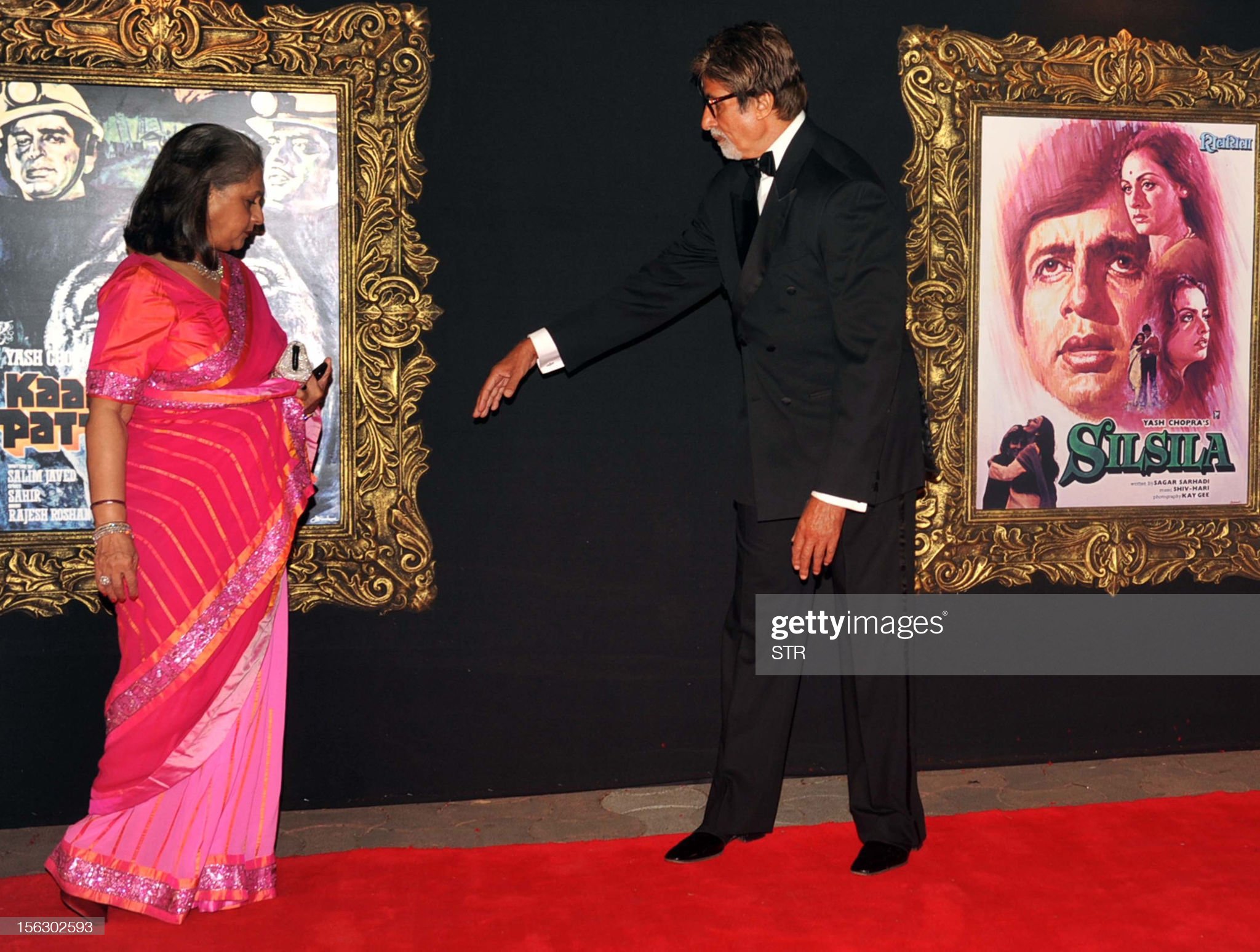
Il 12 novembre 2012 a Mumbai ha avuto luogo una prima mondiale davvero indimenticabile. In occasione della proiezione speciale di Jab Tak Hai Jaan, gli studi di Yash Raj Films si sono trasformati in una gigantesca sala cinematografica, decorata con le locandine di tutti i titoli diretti dal compianto Yash Chopra. È stato organizzato un red carpet calcato dalle celebrità più note di Bollywood. Ha fatto scalpore la partecipazione delle superstar Salman Khan e Aamir Khan (con Kiran Rao) ad una prima di una pellicola interpretata da Shah Rukh Khan. Amitabh Bachchan era accompagnato dalla moglie Jaya Bhaduri, dal figlio Abhishek e dalla nuora Aishwarya Rai. C'erano anche Akshay Kumar (con Twinkle Khanna) e Hrithik Roshan. E poi Shahid Kapoor, Anil Kapoor, Sonam Kapoor, Ranveer Singh e altri ancora. Molti registi, fra cui Karan Johar, Ashutosh Gowariker, Rajkumar Hirani, Imtiaz Ali, Zoya Akhtar, Dibakar Banerjee, Kabir Khan e Shekhar Kapur. Numerose le eroine dei film di Chopra, fra cui Madhuri Dixit, Sridevi (con Boney Kapoor), Rani Mukherjee, Rekha e Preity Zinta. Quanto a Kajol, l'eroina numero uno, protagonista di Dilwale Dulhania Le Jayenge, il più grosso successo prodotto da Yash Raj Films (diretto da Aditya Chopra, figlio di Yash e ora nuovo boss), la diva ha snobbato il red carpet e, secondo quanto rivelato da Hindustan Times, accompagnata dallo schivo Aditya avrebbe raggiunto gli studi da una porta secondaria. Tutti i riflettori erano comunque puntati sul trio di attori di Jab Tak Hai Jaan: Shah Rukh Khan, Katrina Kaif e Anushka Sharma (che ha sfoggiato una magnifica nuova acconciatura e un abito Cavalli). Video ufficiali: prima, seconda, terza e quarta parte. Ammetto che al caldo abbraccio scambiato da Aishwarya e Hrithik mi sono un po' emozionata...


22 ottobre 2012

Tom Hanks: I admire Aamir Khan's work for society

È curioso che Aamir Khan sia sempre stato accostato dai suoi fan a Tom Hanks, e che proprio il celebre attore hollywoodiano abbia recentemente manifestato la sua ammirazione per Aamir, dopo aver letto un articolo che lo riguarda pubblicato da Time Asia nel numero del 10 settembre 2012 (per un estratto: clicca qui). I admire Aamir Khan's work for society: Tom Hanks, NDTV, 9 ottobre 2012: 'I really admire the work that Aamir Khan is doing (in India). Very few celebrities take the initiative of coming forward to change the society and he has done a remarkable job. (...) It's the 'giving-back' that's tough. Aamir seems to understand the influencing power of being a celebrity and is using it to act as a catalyst for change in society, something that definitely deserves both appreciation and support from all quarters'.

29 giugno 2012

Rangeela: A celebration of life

Vi segnalo l'articolo A celebration of life, di Subhash K. Jha, pubblicato oggi da The Indian Express. Il pezzo è dedicato a Rangeela, uno dei film hindi più famosi, diretto da Ram Gopal Varma e interpretato da Urmila Matondkar, Aamir Khan e Jackie Shroff. Di seguito un estratto: 

'Ram Gopal Varma is a director who is known for films that border on violence and drama. But he revealed a completely different facet with Rangeela, which belonged to a different genre. (...) Playing the middleclass Mumbai girl Mili (the protagonist's name was a furtive tribute by director Ram Gopal Varma to Hrishikesh Mukherjee), Urmila Matondkar rocked the box office and changed the definition of how the conventional heroine conducted herself on screen. (...) She scorched the screen, gyrating sensuously to A.R. Rahman's seductive sounds, (...) in her sizzling Manish Malhotra outfit. The magic of the movies is that it foretells a success story even before the story unfolds. Urmila, who did half a dozen inconsequential films before Rangeela, never anticipated the tremendous response that her character whipped at the boxoffice.

A fairy tale
The plot was a cleverly cloaked fairytale. The girl dreams of stardom, is secretly loved by the street hoodlum Munna (Aamir Khan) but is swept off her feet by the nation's hearththrob Raj Kamal (Jackie Shroff). The film was fresh, sassy, unselfconsciously and unabashedly dream-like in choreography, mood and tempo. Mili's life at home is portrayed with a lightness of touch that Ram Gopal Varma (RGV) never seemed to achieve in his subsequent films, which progressively leant towards dark, blood-soaked themes. In Rangeela, the delight RGV derived in portraying the joy of first love, of success or the first dance of effervescence is vividly portrayed in Urmila's performance. (...) Rangeela is RGV's lightest film to date. Its unmistakable power can be traced to Urmila's restive performance. She epitomises the yearnings of the young Mumbai girl with a strong family support-system to realise her dreams. To Mili, family also means Munna (Aamir Khan). (...) One of the finest performances of Aamir's career, Munna gave Aamir a chance to let go, simply have fun with a part without delving deeply into the character. The scenes where he coaches Urmila to memorise her dialogues for her shooting the next day, depicts the unrequited love, as he gets 'in character'. (...) The lovelorn looks he darts at Mili when she isn't looking (she has her eyes trained to a distant dream) kept Munna's character on the level of a street-smart lover-boy without reducing him to a love lost caricature. (...)

A novel experience
Interestingly, films set in the film world fared dismally at the box office. (...) Rangeela was another experience altogether. The excesses of the entertainment industry were harnessed into telling a tale where it was okay for the wannabe screen queen to replace the tantrum-throwing leading lady. Rangeela is all about wish fulfilment. Urmila gets stardom. Aamir gets Urmila. The superstar Jackie Shroff is left to walk the lonely path. You can't have a love story without a broken heart. While the songs and dances were uniquely evocative and erotic, scenes from the film industry were a tongue-in-cheek narration of reality. (...) RGV wove the wackiness of Bollywood into a fresh tale of rags-to-riches saga. The working-class wannabe star was draped in dresses that defied gravity. RGV never resorted to low-angle vulgarity. His camera had not begun to peer between thighs and down cleavages as yet. Rangeela is a celebration of unalloyed innocence. The fun quotient flowed freely and seamlessly from the actors' own enjoyment of the material that was served up to accentuate the contrast between dreamlike aspiration and harsh reality. Significantly, Munna sold tickets at blackmarket rates outside the theatres where Mili aspired to be on screen. It was the perfect blend of fantasy and reality - stuff that Bollywood fariytales are made of.

Rangeela Trivia
* Urmila's character was partly based on RGV's dream woman Sridevi. (...)
* Actor Rajesh Joshi who played Aamir Khan's friend Pakiya died soon after in a road accident. He was actor Manoj Joshi's sibling.
* The unforgettable performance by the waiter, when Aamir takes Urmila to a 5-star hotel for lunch, apparently provoked RGV to say the waiter performed better than Aamir in the scene. The actor who unknowingly caused a rift between Ramu and Aamir was the Gujarati stage television and film actor Rajeev Mehta.
* Aamir and RGV fell out after Rangeela, both vowing they'd never work with the other.
* Madhur Bhandarkar who worked as an assistant to RGV made a cameo appearance during a scene showing a film shoot'.

3 giugno 2012

Bollywood's 100 crore club

Vi segnalo l'articolo Bollywood's 100 crore club, di Komal Nahta, pubblicato oggi da Brunch. L'articolo illustra il favoloso 100 crore club, ossia il ristretto gruppo di star di sesso maschile i cui film hanno incassato, nella sola India, 100 crore (1 crore = 10 milioni) al botteghino al netto delle imposte. Aamir Khan è stato il fondatore, nel 2008, grazie a Ghajini (115 crore), e nel 2009 superò se stesso con 3 idiots (202 crore) - non è stato ancora istituito il 200 crore club perché nessun  altro titolo si è neppure avvicinato a quel vertiginoso successo. Salman Khan è il membro col maggior numero di trofei: entrò nel club nel 2010 con Dabangg (143 crore), e replicò nel 2011 con Ready (122 crore) e Bodyguard (145 crore). Inoltre Salman ha raggiunto i 100 crore più velocemente degli altri: Bodyguard li incassò in una settimana. Nel 2010 fece il suo ingresso anche Ajay Devgan: Golmaal 3 (108 crore). La star consolidò la sua posizione nel 2011 con Singham (100 crore). Nel 2011 toccò a Shah Rukh Khan: Ra.One (115 crore) e Don 2 (110). Nel 2012 è la volta di Hrithik Roshan con Agneepath (122 crore) e di Akshay Kumar con Housefull 2 (112 crore).


'Getting into the 100-crore club is not as simple as being in a movie that has rung up Rs 100 crore. To be considered for entry, a film must have made that gigantic amount in net collections, not gross. For the uninitiated, gross collection of a film is the sum total of the money which is collected at all the ticket counters of cinemas across the country screening that film. Net collection is what remains in the film industry’s hands after paying off the entertainment tax to the different state governments. 
Membership can’t come on the strength of a film’s overseas success either. Otherwise Shah Rukh Khan would’ve been the club’s founder member. 
The public may have its own definition of hits and flops, but the film industry has always gone by the cost-versus-revenue analysis to determine success (it is also the only objective way of defining hits and flops). A number of avenues of revenue now exist for a producer in addition to a theatre screening. But it is a generally accepted principle in the film trade that income from most of the other sources like satellite television, home video, etc depends largely on the earnings from the theatrical business of a film. 
The 100-crore club does not take into account the cost of a film as it goes solely by revenue. It is for this reason that Shah Rukh Khan, with Ra.One (total cost Rs 150 crore approx) [e soli 115 di incasso], (...) is as entitled to club membership as Aamir Khan, with a blockbuster like 3 idiots (total cost Rs 55 crore approx). (...)

Some basic club rules: 
You must be a star to be eligible for membership. The club does not recognise any other community - neither producers and directors nor distributors.
You must be saleable, since only stars whose films collect Rs 100 crore or more can join the club. (These are net collections, not gross. Net collections are defined as total box-office collections - that is, gross collections minus the entertainment tax). Their saleability is of paramount importance. It is measured in terms of how much money their films make. (...) 

No woman no cry
Only male stars are members of the club so far. To understand why no actress is a member, it must be understood that the club has, after all, been ‘formed’ by the trade and the media. And excluding women from the group is characteristic of an industry which exercises gender discrimination more than other industries. You may have heard of producers paying Akshay Kumar and Salman Khan fees of Rs 20 or Rs 25 crore but have you ever heard of an Aishwarya Rai or a Kareena Kapoor getting that kind of remuneration? Frankly, the industry can’t be wholly blamed for the gender bias because it is the audience which gives male actors far more importance than female stars, the occasional Vidya Balan film notwithstanding. 
In commercial potboilers (which are the only films capable of catapulting their heroes into the club), heroines get far less scope than the heroes, which is the reason why the club membership has so far been restricted to male actors. (...)
An interesting aside: Kareena Kapoor has the maximum number of 100-crore films under her belt, more than even Salman Khan. Kareena’s report card reads: 3 idiots, Golmaal 3, Bodyguard and Ra.One. Unfortunately, as the club is not open to heroines, Kareena is a non-member despite her enviable score.
Even among the male stars, it is only the main leads who are considered worthy of membership. (...)

Star power
Interestingly, although it is the film which touches the 100-crore mark, it is the star who gets membership of the club. This is another indicator of how stars are worshipped by the industry. Bollywood has always been a star-driven enterprise and it is not uncommon for stars to hog the limelight for a hit. (...)
Most of the Rs 100-crore films have worked equally well in multiplexes and single-screen cinemas. Perhaps Don 2 is the only exception because it scored largely in the cineplexes. But unlike most other 100-crore-films, Don 2 had the brand advantage since it was a sequel. Golmaal 3 had a similar brand value even though the previous two films were not half as big or successful. Agneepath had tremendous recall value because of the 1990 version of Agneepath starring Amitabh Bachchan (despite the fact that the first one was a box office debacle and became a cult classic only much later on TV and DVD).
Although there is no time frame, films normally touch the 100-crore figure in two to four weeks. Today, the business of films has become touch-and-go. Most hits have a run of only four to six weeks. Among the stars who are members of the club, Salman Khan holds the distinction of touching the 100-crore mark in the shortest possible time (Bodyguard, one week!)'.

8 aprile 2012

The shocking truth about star prices!

Ficchiamo il naso nelle tasche delle star bollywoodiane: quanto guadagnano? Meritano i loro lauti compensi? Gli introiti derivano solo dal cinema? Si riscontrano differenze nelle remunerazioni corrisposte ad attori e ad attrici? Le cifre sono da capogiro. I produttori battono strade nuove per assicurarsi profitti, gli attori si trasformano in produttori, i registi e i compositori entrano nell'arena. 
The shocking truth about star prices!, Komal Nahta, Brunch, 7 aprile 2012:

'Kareena Kapoor would have to act in eight films to earn what Salman Khan can pocket in just one film, which is around Rs 23-27 crore! [1 crore = 10.000.000] Akshay Kumar, the star of the multi-star cast Housefull and Housefull 2, has not seen the housefull boards outside cinema halls for his solo starrers since what seems to be forever, but he still gets paid Rs 18-20 crore for every film he works in. Vidya Balan may have carried Kahaani to the winning post and bagged every award for The Dirty Picture, but would you believe that even after two hits, she is not the highest paid actress in Bollywood? That’s the dirty truth about star prices. Till the ’90s, Amitabh Bachchan was the only star paid in crores. Figuratively speaking, stars are supposed to be living up there in the sky. But now, it is their prices that are touching the sky. Welcome then to the real world of stars and their unreal prices. You may even feel inclined to term their remunerations obscene, more vulgar than any adult sex film Bollywood has ever churned out.

Rules of engagement
Star prices are rarely, if ever, fixed, because actors make concessions for producers or directors who are friends or who are star names themselves. Stars are also emotional people. So you have Shah Rukh Khan doing films for Yash Chopra and Karan Johar at a price which is lower than what he would demand from other banners. Salman had, years ago, gone out of his way to accommodate a film with the down-and-out Saawan Kumar Tak when the latter requested him to make his film with lesser actors saleable with his presence. Besides, if a script catches the fancy of a star or if he is keen to work with a director or producer, he doesn’t mind making a concession in his fees because, after all, stars need good scripts, banners and directors as much as producers and directors need top stars.
Like any other product, the price of a star is determined by the laws of demand and supply. The greater the demand and/or lower the supply (read availability of stars), the higher the price. If the entire family of lead stars is considered as one unit and all the producers put together, another, it is clearly a case of demand for stars exceeding the supply. That’s because the number of films produced each year in Bollywood is around 140-150 but the saleable heroes or those who can be cast in lead roles are barely 14 or 15. Ditto for the leading ladies. On an average, therefore, each star should be working in 10 films every year, which doesn’t happen now. Ultra-selective heroes like Aamir Khan and Shah Rukh do one or two films whereas other A-listers like Salman and Akshay are seen in two, three or four films every year. There may be actors who have six to eight releases a year but they are very few in number.
That our actors, especially the A-list ones, command obscenely high prices is an open secret. Not just in absolute terms, even if one were to look at the ratio of flops to hits (80:20) every year, it is anybody’s guess that most of our stars get undeservedly high prices. For, even if a good script is the main reason why a film works at the ticket windows, the stars have a major role to play, especially the hero and heroine who work as magnets to draw the audience to the cinemas, initially at least. Considering that 80 per cent of the films bomb every year and 90 per cent don’t even open decently enough to justify the high prices paid to their lead actors, it is clear that most of our stars are paid remuneration that is far more than they deserve.

Box office magnets
Even today, it is on the strength of face value that the paying public patronises a film, at least for the first couple of days. In that sense, more than even the scriptwriter, director and producer, it is the star, especially the hero, who, in a manner of speaking, is the ISI mark for a film. In other words, when a star is asking for Rs 10, 15, or 20 crore for a film, he is, by implication, assuring his producer of a great opening. But for the audience, his presence in a film is like a promise of quality cinema or, at least, value for their money. It is due to this faith which the audience has in a star (that the star will offer them an entertaining movie) that the latter commands the price he does. Or, only that actor should actually be considered worth every crore he is paid, who ensures that his film opens to bumper houses and also ensures that it offers entertainment to the paying public. So, Aamir, Salman and Shah Rukh seem to be the only three stars who are being paid what they deserve. Ajay Devgn and Hrithik Roshan are inching their way to that position but the occasional Guzaarish or Aakrosh pulls them down. 

Bang for the buck?
Akshay’s 20-crore price tag is wrong because his solo films just aren’t working at the box-office; Sunny Deol, Shahid Kapoor, Saif Ali Khan may deliver an occasional success but they’ve also given huge duds, which means they lack the consistency of Aamir, Shah Rukh and Salman. However, the fees the stars charge don’t vary according to the fate of their films - the pay packet is not cut if a film flops. But Aamir Khan is a class apart. From charging a fee and a percentage in profits, Aamir now keeps a share in the profits his starrers make. "That way, I am not burdening the film’s budget with my cost, and I am also ready to put my neck on the line," says Aamir matter-of-factly. "By not taking anything upfront and only charging a fee for acting if the film makes a profit, I am openly stating that if the audience doesn’t like my film, I don’t deserve a penny."
The Indian obsession with a male child manifests itself in film viewing habits too. That explains why hero-oriented films open far better than heroine-oriented ones. Women-oriented films like No One Killed Jessica and Kahaani started slowly and scored only afterwards. The Dirty Picture, for all its claim of being a woman-centric story, still boasted of three heroes, hit music and titillating fare! Kareena Kapoor, the heroine of Heroine, has been paid a reported fee of R4 crore but she won’t be entitled to even one per cent of the profits in the film. By the way, Sridevi was the only actress who nearly touched the one-crore mark in the Nineties. The leading lady (...) had, years ago, signed a film for Rs 1 crore but that film never got made.
Character actors rank even lower than heroines in the pay hierarchy. But over the years, supporting actors have started charging exorbitantly. So you have Irrfan getting Rs 1.5 crore and Paresh Rawal insisting on a fee with seven zeros or, at least, Rs 75-80 lakh [1 lakh = 100.000].
(1) All figures are approximate.
(2) Rates/fees are never fixed. Adjustments/concessions are almost always made.
(3) Aamir Khan charges the maximum fee among all the stars, for endorsements.
(4) Shah Rukh Khan probably earns more every year by way of endorsement fees than for acting in films. He endorses about a dozen brands but works in one or two films a year.
(5) Shah Rukh has always maintained that he wouldn’t mind over-charging for endorsements and stage shows but would prefer under-charging film producers because he owes his stardom to films and film producers.
(6) Salman Khan is not as popular for brand endorsements as compared to the size of his superstardom because of his court cases.
(7) Till about four years ago Saif Ali Khan used to endorse the highest number of brands but he has since cut down on the number of products he sells.
(8) For performing on stage at televised events (like awards functions), stars get paid almost the same amount they charge per day for endorsements. For non-televised events, the payment is about 50-60% of the endorsement fee per day.

Top Draws
The cool club of Bollywood’s Khan Crorepatis almost always ensures a spectacular opening at the box office.
Salman Khan: Acting fee per film 23-27cr - Endorsement fee (per day) 1.5cr.
Aamir Khan: Acting fee per film (share in profit, could go up to) 40cr - Endorsement fee (per day) 4cr.
Shah Rukh Khan: Acting fee per film 20-25cr (including share in profit) - Endorsement fee (per day) 2-3cr.
Stars’ big bucks come from:
Movies
Guest Appearances
Endorsements
Stage shows
Hosting stage shows
Hosting TV shows
Attendance at weddings/functions
Judging reality TV shows
Dancing/performing at events.
The only appearance for which stars, thankfully, don’t charge money are those made at funerals of friends, acquaintances and respected industry people.

Big players
Actresses lag behind the men when it comes to money.
Katrina Kaif: Acting fee per film 3-4cr - Endorsement fee (per day) 1-1.25cr.
Kareena Kapoor: Acting fee per film 3-4cr - Endorsement fee (per day) 1-1.25cr.
Vidya Balan: Acting fee per film 2.5-3cr - Endorsement fee (per day) 0.25-0.5cr.
Priyanka Chopra: Acting fee per film 2-3 cr - Endorsement fee (per day) 0.65-0.75 cr.
Deepika Padukone: Acting fee per film 1-2.5 cr - Endorsement fee (per day) 0.5-0.75 cr.
Anushka Sharma: Acting fee per film 1-1.5 cr - Endorsement fee (per day) 0.25-0.4 cr.

Colour of producers’ money
With the remuneration of actors, actresses and technicians soaring, how does a producer still end up making profits? Well, it’s not really tough because business has also grown manifold in the last 10 years. The main reasons for the growth are the high ticket prices in cinemas and the ever-growing sources of revenue, particularly sale of satellite rights. The desperation of corporate houses is another reason why producers of star-cast films are not generally in the red.
Since most corporate houses have to show turnover to shareholders, they assign projects without weighing the pros and cons. As it is, they have deep pockets due to the availability of public money and institutional funding. Since they fund star-studded films, the producers of those films could end up laughing all the way to the bank even if the corporates incur losses due to high costs. And frankly, even corporates don’t incur losses in their books of account because most of them amortise only 50 per cent of the cost of a film in the first year. This amounts to accounting jugglery but that’s the way it is.
This is not to say that these costs have not had an adverse effect on the viability of projects. Many of Akshay Kumar’s films would not be termed flops if his price were to be a third of what it is. And if that had to happen, most of his producers who have been making losses, would end up making profits.

Enter, the actor-producer
Not satisfied with earning handsomely as actors, many of our leading men have turned producers. Right from Shah Rukh, Aamir and Salman to Akshay, Ajay Devgn, Sunny, Anil, Amitabh, Saif, Sanjay Dutt and John Abraham, every actor worth his name and probably unworthy of his crores has jumped on to the production bandwagon. When the success ratio of films is barely 20 per cent and when it is the producer who suffers losses if a film flops, why would stars turn to such a risky business? It is because of three reasons:
(i) Of the 20 per cent films which click every year, 75-85 per cent are star-studded fares and so, it makes sense for stars to produce films with themselves acting in them.
(ii) It is a fallacy to think that it is the producer who bears the brunt of the losses when a film bombs at the box-office. If a film is pre-sold to distributors or a corporate house, the producer can make a profit even if the film fails at the ticket windows as, in such cases, the loss would be the corporate’s or borne by the distributors. Examples of producers making money while corporates or distributors incurred heavy losses are aplenty. Omkara, Guzaarish, Tees Maar Khan, Kites are some.
(iii) With theatrical earnings being only one part of the revenue stream of a film, a star-producer can make gains even if his film doesn’t fare well at the turnstiles, by pre-selling satellite, audio and other rights.
This is not to say that star-producers never make losses. Of course, they do. Saif Ali Khan, nicknamed Travel Agent Vinod after the many countries his character in his home production, Agent Vinod, travels to, will end up burning his fingers and toes in the thriller. Had Saif only acted in it, there was no question of him losing money. But in most cases, star-producers end up making profits because star-studded films have better chances of clicking with the public and also because star-struck corporate houses are willing to fund films of star-producers and take the risk of distributing them.
Interestingly, stars never brag about their earnings the way film producers do by announcing the gross and net collections of their released films on huge hoardings and newspaper advertisements. Therefore, in an industry where stars and their chartered accountants are the only ones who know their exact income, the grapevine and industry talk are the only sources of information about star earnings, star prices etc. But these are tried and tested reference points. 

Specalists’ fees

Directors’ Cut
With star prices touching the sky, directors also started demanding fat salaries at the turn of the new century. Highly-paid directors include Raj Kumar Hirani, Rohit Shetty, Anees Bazmee, Farah Khan, Imtiaz Ali, Rajkumar Santoshi, Prabhu Deva, Sajid Khan and the like. Of these, top ones like Hirani ask for a share in profits so that their fee could go up to R20 crore per film, or more! Some of the other above-named directors charge between R3 crore and R10 crore per film. Yash Chopra, Aditya Chopra, Karan Johar, Rakesh Roshan and Sooraj Barjatya could be among the highest paid filmmakers of Bollywood but if they aren’t, it is because they only direct films for their own banners, not for outsiders. Years ago, when there was a crazy boom in production, Anees Bazmee was rumoured to have signed a film for a business house for R20 crore, besides a share in profits! Of course, the film never got made because the boom did not last.

Bring on the money: it’s in the script
Years back, writing duo Salim-Javed’s names used to adorn the hoardings of films after they gave hits such as Zanjeer, Yaadon Ki Baaraat and Haath Ki Safai, all in one year (1973). Almost 40 years later, the tribe of writers felt short-changed. But things are changing for the better. So impressed was Aamir Khan with the script of Talaash when he heard it that he decided to pay 3 per cent of the profit of Talaash to Reema Kagti as her fee for direction and 2 per cent of the profits as remuneration to Reema and Zoya for penning the script. It is anybody’s guess that the 2 per cent in the case of Talaash will work out to at least Rs 1 crore i.e. Rs 50 lakh to Reema and Zoya each. This, as against the earlier decided fee of Rs 5 lakh each. If it was Salim-Javed who made the industry realise the importance of writers, it’s now Kagti and Javed’s daughter, Zoya, who’ve brought their contribution into focus once again.

Ruling the charts, note for note
Not just stars but technicians have also hiked their rates over the last decade. Among composers, only A.R. Rahman gets paid as a percentage of the price his music gets sold for. That way, he gets around Rs 2-4 crore per film. Other composers charge between Rs 30 and Rs 60 lakh. The way it works for a top music composer is this: he charges around Rs 10-20 lakh per song; if there are six songs, he gets paid Rs 60 lakh to Rs 1.2 crore. After paying off the expenses of recording, including fees of singers, lyricists, charges of the recording room etc., the composer is generally left with Rs 30-60 lakh. Among lyricists, Javed Akhtar is perhaps the highest paid (Rs 3 lakh per song), followed by Gulzar (Rs 2 lakh). Other renowned song writers charge anything ranging from Rs 10,000 to Rs 50,000 per song. 
Even action directors, who were paid moderately, nowadays demand Rs 30-40 lakh per film. If the action scenes are too many and too stylish, the action master’s pay packet could even go up to Rs 75 lakh.

Small screen, big bucks
Star TV Show Payment/episode:
Salman Khan Dus Ka Dum Rs 1-1.25 cr.
Shah Rukh Khan Kaun Banega Crorepati Rs 1.0 cr.
Amitabh Bachchan Kaun Banega Crorepati Rs 0.75-1 cr.
Hrithik Roshan Just Dance Rs 0.75-0.8 cr.
Akshay Kumar Khatron Ke Khiladi, Master Chef Rs 0.7-0.8 cr.
Priyanka Chopra Khatron Ke Khiladi Rs 0.3-0.4 cr.
Madhuri Dixit Jhalak Dikhla Ja Rs 0.1-0.2 cr.
Farah Khan, Rohit Shetty for judging TV shows Rs 0.1-0.2 cr'.

18 marzo 2012

India supermercato di uteri e bambini?

Il 13 marzo 2012 Tempi ha pubblicato uno scioccante articolo dal titolo Vendo figlio chiavi in mano. Quanto costa comprarsi un bebè, firmato da Valentina Fizzotti, nel quale fra l'altro vengono citati Aamir Khan e Kiran Rao: 'I primi in India ad affittarsi pance altrui sono gli straricchi locali, i vip e gli attori di Bollywood che sorridono sulle copertine con le nuove creature («Siamo colpiti dalla grandezza di Dio e dal miracolo della scienza», hanno commentato due star del cinema indiano, Aamir Khan e Kiran Rao, ringraziando per «il dono di un maschio» attraverso un utero in affitto). 

1 marzo 2012

Aamir Khan, Salman Khan e Shah Rukh Khan: CineBlitz marzo 2012

Ecco una copertina per bollywoodiani davvero tosti. Il trio regale dei Khan si offre in tutto il suo splendore nel numero di marzo 2012 di CineBlitz. Aamir il perfezionista, Salman il bad boy e Shah Rukh il Re: ho l'imbarazzo della scelta. Ma poi: perché scegliere? Non scarto proprio nessuno...

29 gennaio 2012

Aamir Khan in Network East Late

[Archivio] Vi segnalo i video - prima e seconda parte - della partecipazione di Aamir Khan, nel 2001, al programma britannico Network East Late condotto da Russell Peters, comico canadese di origine indiana. Il filmato include anche un'esibizione (purtroppo non integrale) dal vivo della talentuosissima Susheela Raman, cantante britannica di origine indiana.

26 gennaio 2012

Talaash: trailer


Dopo le immagini della locandina ufficiale ecco svelato il primo trailer di Talaash. Tra i produttori del film figura anche Farhan Akhtar, mentre la sorella Zoya (Luck By Chance, Zindagi Na Milegi Dobara) collabora con la regista Reema Kagti alla stesura dello sceneggiatura. L'attesa si fa insostenibile.

25 gennaio 2012

Talaash: locandina


Condividiamo la prima locandina di Talaash, uno dei titoli più attesi del 2012. Il film avrà come protagonista la star Aamir Khan affiancato da due attrici di tutto rispetto: Rani Mukherjee e Kareena Kapoor.