13 maggio 2012

Naresh Fernandes: Taj Mahal Foxtrot

Vi segnalo la recensione di Taj Mahal Foxtrot - The story of Bombay's jazz age di Naresh Fernandes, recensione firmata da Amitava Sanyal e pubblicata da Hindustan Times il 17 febbraio 2012:

'A delightful book on Bombay’s jazz past that takes readers beyond jazz as well as Bombay.
At the stroke of the midnight hour, when India was coughing awake to light and freedom, the charmed people of Bombay and Karachi were celebrating in swing time. In Bombay’s Taj Mahal Hotel, jazz bands led by saxophonist Micky Correa and trumpeter Chic Chocolate were playing the new national anthem with a young J.R.D. Tata and Vijaya Lakshmi Pandit in audience. At the Karachi Club a night later, Ken Mac’s band played a special request by Muhammad Ali Jinnah - Paul Robeson’s ‘The End’, which the Quaid-e-Azam apparently used to hum while visiting his wife’s grave in Mazagaon, Bombay.
Such vivid snapshots take Taj Mahal Foxtrot, Naresh Fernandes’ book on jazz in Bombay, to a field larger than either jazz or Bombay. Fernandes’ eight-year transcontinental research gives the American-born genre of music a new historical home this side of the Suez. His doggedness at getting close to the likes of Ken, Chic and Micky leads to a unique portrait of Bombay musicians. In the middle is the sketch of a fad-following Brilliantined society - one that worried more about slowing down the quicksilver ‘Paris speed’ to ‘Bombay speed’ than about the morning after - that Fernandes projects as jazz loving Bombay.
Much like the music itself, Fernandes’ research goes on inspired dot-joining sprees. He dives into chapters as diverse as the role of jazz musicians in the nation-building project; on Blue Rhythm, the only Indian magazine on jazz, published by diamond merchant Niranjan Jhaveri and friends in 1952-53; and on the playing up of colour as a signifier of authenticity in bands like the Plantation Quartet. At times, the collected trivia would fall between the dots and need to be parked in footnotes or in the eponymous blog. From one such aside we learn that C. Lobo, leader of the Bengal governor’s marching band around 1900, grudgingly taught western notations and violin to his neighbour, a young boy named Allauddin Khan.
The three musicians in the August 1947 postcards loom large because of their stellar roles in the history. In Finding Carlton, a documentary researched by New York-based artist-entrepreneur Susheel Kurien at about the same time as Fernandes’ book, Ken Mac is identified as the musician who brought jazz to India in the 1920s, a time the self-proclaimed ‘pioneer of European dance bands’ was playing 40 engagements a month. 
Micky Correa provided generations of musicians sustenance through his Taj band during 1939-1961.
Chic Chocolate, on the other hand, was a shape-shifter who showed others how to survive. A Goan born as Antonio Xavier Vaz, Chic first styled himself after Louis Armstrong at the time the African American was emerging as the biggest name in swing, the jaunty form of jazz that stands for the larger genre in the book. After 1947, Chic and several other jazzmen found jobs in the burgeoning orchestras of Bollywood because of their skill with harmonies and western rhythms. In that phase, Chic helped composer C. Ramchandra with some of the biggest film hits of all times: ‘Shola jo bhadke’ in Albela and ‘Eena meena deeka’ in Aasha.
Independence signalled another kind of watershed, too. After 1947, jazz masters such as Max Roach, Dave Brubeck and Duke Ellington would come by, but they would never hover for more than few weeks. Gone was the era when jazz musicians, some of them frontiersmen travelling from the racially-segregated US, would spend half a year in residence in Calcutta or Bombay.
One such travelling salesman was Teddy Weatherford, who had the most impeccable jazz pedigree in India at the time. Weatherford had mastered the piano in New Orleans, the US port where ragtime and blues blended into jazz. In Chicago, he had played with Armstrong in a pit orchestra accompanying silent films. His rendition of the Armstrong hit Basin Street Blues is included on the six-song CD that accompanies Fernandes’ book.
The burly American shifted to ‘the Orient’ in 1926. Between his first stint in Shanghai and his last in Calcutta, he played in Singapore, Hong Kong, Jakarta, Surabaya and Colombo. In Calcutta’s Grand Hotel he set up India’s best regarded jazz band of the 1940s. Among the people he hired was Nepali trumpeter Pushkar Bahadur Buddhapriti a.k.a. George Banks, whose son Louiz is a survivor of the itinerant jazz ages that followed.
During one of his Bombay stints, Weatherford was called in to record a song written by Menassch David Silas, a Baghdadi Jew born in Shanghai and settled in Bombay. The ethno-geographic mash was all too jazz-like. As was the song: a paean to the Taj Mahal Hotel, set in foxtrot'.

Naresh Fernandes pubblica testi dedicati al jazz nel sito Taj Mahal Foxtrot. A proposito: vi ricordo che Bombay Velvet, il film in progetto di Anurag Kashyap, narrerà gli sfavillanti anni del jazz nella capitale economica del Paese. Ranbir Kapoor è stato scritturato per il ruolo del protagonista, ruolo offerto in precedenza ad Aamir Khan.

Vedi anche #MumbaiMirrored: All that jazz, 19 settembre 2019.

Le prime del 18 maggio 2012: Department

Un nuovo film di Ram Gopal Varma con Amitabh Bachchan è sempre un evento. Il vulcanico regista ha regalato alla superstar una collana di ruoli indimenticabili (Sarkar, Nishabd), da qui l'eccitazione che accompagna la distribuzione di Department. Nel cast anche Sanjay Dutt e Rana Daggubati. In Department  RGV ha utilizzato  una miriade di videocamere in simultanea, alcune localizzate nei posti più impensati, e ha chiesto agli attori di sentirsi il personaggio sempre addosso e di agire come lui, in piena libertà sulla scena. A ciak ultimato, sono state selezionate le inquadrature migliori. Big B ha dichiarato il suo entusiasmo per questa tecnica nuova e stimolante. Vi propongo i video dei brani Kammo e Mumbai police, composti da Bappi Lahiri, e di Dan Dan Cheeni, item song firmata da Dharam Sandeep (ispirata alla canzone Aasai Nooru Vagai, inclusa nella colonna sonora del film tamil Adutha Varisu del 1983 interpretato da Rajinikanth). Trailer. Vi segnalo anche I am almost a gangster myself, intervista concessa da RGV a Sonil Dedhia, e pubblicata da Rediff il 9 maggio 2012:

'You recently tweeted that Amitabh Bachchan's role in Department is that of Nasty Sarkar. How similar is it to the character he played in Sarkar?
The hairstyle is similar. He is still playing a political leader though the background is different. And there is a certain intrigue in his character and from the context of the film you cannot make out whether he is a villain or a positive character. His way of speaking is very crass compared to Sarkar. That's the reason I came up with the title Nasty Sarkar.
Recently there have been a lot of cop films. How does Department stand out?
If my film Company dealt with politics within an underworld organisation, this film deals with politics within the police department. This particular department is specially formed to tackle crime situations in Mumbai. So what happens among the members of the department is what the film is about. Primarily, it is about the relationship between characters played by Sanjay Dutt and Rana Daggubati.
You have worked many times with Amitabh Bachchan. Have you found it difficult to convince him to play a role?
Fortunately, he trusts me a lot as a director. So far it hasn't happened that I've approached him for a role and he has said no. Sometimes the films have worked and sometimes they haven't, but somewhere he knows my commitment is there.
Which is Amitabh Bachchan's best performance according to you?
I think his best performance has come in Nishabd. People reacted to the overall film, but as a director I reacted to his performance. (...)
How would you define yourself?
I am almost a gangster myself. Just because I didn't have the guts to become one for real, I became a filmmaker to make films on gangsters (Laughs). (...)
You work with stars and newcomers. Do you handle them differently?
Stars come with an image attached to them. They come with a certain background. You can only build up from the characters they have done in the past. A newcomer becomes a separate character; you can make him more real compared to a star. You can make a Satya with newcomers but for a Sarkar you need a star'.

Aggiornamento del 27 maggio 2012: nelle settimane precedenti la distribuzione, era trapelata la notizia di dissapori fra il regista Varma e l'attore (e coproduttore del film) Sanjay Dutt. Department è stato pesantemente bocciato da pubblico e critica, e, per la prima volta nella sua carriera, RGV non si assume la responsabilità dell'insuccesso di un suo lavoro.

Le prime del 18 maggio 2012: Mr. Bhatti On Chutti

Godetevi l'irresistibile trailer - che in realtà è un corto di cinque minuti - di Mr. Bhatti On Chutti e vi innamorerete della pellicola e del grandissimo Anupam Kher. L'esilarante commedia è ambientata in Inghilterra ed è diretta da Karan Razdan. È previsto un cameo di Amitabh Bachchan, che ha accordato alla produzione il permesso di filmare una scena di MBOC all'esterno di casa sua. Il custode con cui interagisce il protagonista è il vero custode dell'abitazione di Big B. Vi propongo anche il video di Balle Balle, la spumeggiante... ehm... item song visualizzata da Anupam.

12 maggio 2012

Le prime dell'11 maggio 2012: Gabbar Singh

Ieri è stato distribuito Gabbar Singh, remake in lingua telugu del blockbuster hindi Dabangg. Gabbar Singh ha registrato incassi spettacolari nel primo giorno di programmazione, pare abbattendo ogni record precedente nell'ambito di Tollywood. E non solo: anche nelle sale americane sta conseguendo un grande successo. Ram Gopal Varma ha definito GS addirittura migliore di Dabangg. Il film è diretto da Harish Shankar e interpretato da Pawan Kalyan e Shruti Haasan. Malaika Arora visualizza l'item song Kevvu Keka composta da Devi Sri Prasad. Trailer.

Anish Kapoor e Cecil Balmond: Orbit

A Londra è stata inaugurata l'opera Orbit, torre disegnata da Anish Kapoor e da Cecil Balmond. La struttura, la più alta del Paese, è situata nell'area del Parco Olimpico. Vi segnalo l'articolo Anish Kapoor's 'awkward but beautiful' Olympic tower unveiled, Hindustan Times, 12 maggio 2012:

'British Indian artist Anish Kapoor on Saturday unveiled Britain's tallest sculpture, a twisted tangle of steel sponsored by ArcelorMittal, next to the Olympic Stadium. (...) Steel giant ArcelorMittal has contributed nearly 20 million pounds towards the project. (...) Kapoor said: "I think it is awkward. It has its elbows sticking out. In a way it refuses any singular capture. It refuses to be an emblem. It is unsettling and I think that is part of this thing of beauty". Located in Olympic Park in Stratford, east London, the tower has two observation floors, a 455-step spiral staircase, lift and restaurant. Visitors go up in the lift and walk down the staircase and take in the views and artistic tricks designed by Kapoor. Admitting that the structure would prove controversial, Kapoor said: "I think controversy is OK - it is part of the deal really. We have tried to open territory for ourselves and hopefully in so doing a whole question about what this type of tower form can be. I am sure there are other possibilities but this is the one that we thought was right". The tower, which is made from 60 per cent scrap metal, is designed by structural designer Cecil Balmond. Kapoor said: "Cecil is also a very clever man. The four people who pieced it together could do so because Cecil designed the structure in such a way that one (piece of) steel and the next piece come down in the right position and because of it you need no scaffolding".'

Se volete ammirare in un film una delle opere più note di Kapoor, il Cloud Gate di Chicago, vi consiglio il magnifico Source Code di Duncan Jones, che offre anche un cameo di Russell Peters, noto attore canadese di origine indiana.

Cloud Gate, Chicago

10 maggio 2012

Lady Gaga e la moda indiana

L'abito sfoggiato martedì da Lady Gaga all'aeroporto di Hong Kong è firmato dagli stilisti indiani Alpana & Neeraj. Il... ehm... copricapo è una creazione di Shilpa Chavan (marchio Little Shilpa).

Salone Internazionale del Libro 2012

L'edizione 2012 del Salone Internazionale del Libro si svolge a Torino dal 10 al 14 maggio. Amitav Ghosh è fra gli ospiti attesi alla manifestazione.
Aggiornamenti del 14 maggio 2012 - Vi segnalo il testo redatto da Ghosh dedicato al fenomeno dei blog, tradotto da Anna Nadotti e pubblicato ieri da La Repubblica. Di seguito un estratto:

'Il blogging cominciò a interessarmi solo quando aveva cessato di essere la cosa più nuova e incandescente. Fino a quel momento le sue potenzialità erano oscurate dalla tempestività che da esso si esigeva. Tutti i blog si occupavano del Qui-e-Ora. (...) Il formato sembrava voler mimare una concezione del "mondo reale" in cui i fatti e i sentimenti rotolano oltre lo spettatore come i detriti disordinati di un fiume in piena. (...) Il "look" costituiva la prova grafica di urgenza e autenticità. I post spesso erano concepiti per essere letti come dichiarazioni, o testimonianze, e le loro parole dovevano apparire come uscite di getto, sotto la spinta del tempo, di una profonda emozione, o di qualche incontenibile stimolo esterno. Ma quei giorni ormai sono lontani. Oggi la funzione di testimoniare e fornire aggiornamenti in tempo reale è stata assunta dalle reti sociali e dagli sms. (...) I blog non possono sperare di competere quanto a sveltezza e tempestività. Né possono competere con Facebook e Twitter come forum di discussione. (...) Solo dopo aver accantonato l'urgenza i blogger cominciarono a prestare più attenzione a ciò che fa del blog un particolare tipo di manufatto, un oggetto che viene forgiato con cura prima di metterlo in mostra. E proprio questo è l'aspetto più entusiasmante del blog: non la sua immediatezza, bensì il fatto che offre la possibilità di tornare a una forma più antica di rappresentazione, che permette di accostare senza soluzione di continuità parole e pittura o disegni, immagini e testo. (...) Venuta meno la pressione del Qui-e-Ora, è anche una delle poche forme virtuali ormai priva di scopi eminentemente pratici. (...) Uno degli aspetti più divertenti del blogging è che non ha bisogno di intermediari. È una forma di espressione che non richiede né ragione né ricompensa, né pubblico né causa - e come tale è quanto di più puro e piacevole si possa immaginare. (...) Nulla nel tenere un blog è sorprendente quanto il puro piacere di farlo'.

Vi segnalo infine Occupy Art!, testo pubblicato oggi da Ghosh nel suo sito, dedicato al movimento torinese dell'Arte Povera, arricchito da fotografie scattate dallo scrittore durante il suo soggiorno in Piemonte.

In focus: VFX segment

L'articolo In focus: VFX segment, pubblicato da Box Office India il 5 maggio 2012, analizza in modo dettagliato lo stato attuale della tecnologia indiana nel campo degli effetti visivi o VFX. Il settore è (tanto per cambiare) in rapida espansione, sia per quanto riguarda il cinema, che per la televisione e la pubblicità. Sino ad ora, le società VFX indiane hanno operato quasi esclusivamente per conto di aziende americane e inglesi, ma, grazie alla produzione di film e spot pubblicitari ad alto budget anche nel subcontinente, la domanda è in crescita da parte del mercato interno. Le aziende del settore sono circa quaranta, e il loro lavoro costituisce il 10% dell'intera torta di commesse VFX in outsourcing. La percentuale è in aumento per le richieste hollywoodiane. Ad esempio: Prime Focus ha collaborato in Star Wars: Episodio I - La minaccia fantasma, Tron: Legacy, Harry Potter e i Doni della Morte. In India la pubblicità è stata la prima a richiedere uno sviluppo dell'uso di tecnologia VFX, incoraggiata dall'accresciuta popolarità della fantascienza, seguita poi dal cinema, con Bollywood in testa (Ra.One), ma anche con titoli non hindi (Enthiran - tamil, Eega - telugu), malgrado i costi, pur economici per i clienti stranieri, siano ancora onerosi per le produzioni locali. Sino ad ora gli effetti visivi sono stati poco sfruttati nell'ambito delle pellicole in 3D. Si moltiplicano gli istituti scolastici che preparano i tecnici del settore.

9 maggio 2012

Seattle International Film Festival 2012

Il Seattle International Film Festival 2012 si svolgerà dal 17 maggio al 10 giugno. Fra i titoli indiani in cartellone, vi segnalo Adaminte Makan Abu e Valley of Saints.

Una città nella storia: Mumbai Bollywood

Milano si confronta con quattro città. Oggi e domani tocca a Mumbai. Allo Spazio Teatro No'hma, alle ore 21.00, si svolge l'evento Una città nella storia: Mumbai Bollywood. L'ingresso è gratuito. 

Bikram Singha: locandina, trailer, Dhin Tak Na, Na Champa Na Chameli

Calcutta, anzi, Kolkata non è solo la città che vanta il maggior numero di premi Nobel al mondo (fra cui, vado a memoria: Rabindranath Tagore - letteratura, Madre Teresa - pace, Amartya Sen - economia), e non è solo la capitale culturale dell'India. Kolkata è anche la sede della cinematografia in lingua bengali (e occasionalmente in lingua inglese), considerata la più autoriale ed europeizzata del Paese. Il neorealismo italiano è apprezzatissimo dai suoi cineasti. A Kolkata si svolge annualmente il festival del film d'autore più importante di tutto il continente asiatico. Ma a Kolkata si producono numerosi titoli commerciali, tanto che questa industria condivide con quella in lingua telugu lo stesso nomignolo: Tollywood. La superstar del cinema bengali è Prosenjit Chatterjee, celebre per gli innumerevoli ruoli in pellicole d'intrattenimento e per le rigorose interpretazioni in film d'autore. Presto potremo ammirarlo a Bollywood in Shanghai. Prosenjit è il protagonista di Bikram Singha, di Rajiv Kumar, remake bengali del successo telugu Vikramarkudu, e quindi cugino di Rowdy Rathore. Vi propongo in un colpo solo locandina, trailer e i video dei brani Dhin Tak Na, composto da Shree Pritam, e Na Champa Na Chameli, composto da Bappi Lahiri.

The secret to writing a bestseller in India

Vi segnalo l'articolo The secret to writing a bestseller in India, di Mukti Jain Campion, pubblicato oggi nel sito della BBC. L'India è il terzo mercato al mondo per l'editoria in lingua inglese, dopo gli Stati Uniti e il Regno Unito, ma gli osservatori ritengono che scalzerà presto gli avversari per posizionarsi trionfalmente in vetta. La classe media indiana si espande a vista d'occhio, e l'inglese è ormai la sua lingua ufficiale. Molteplici case editrici straniere stanno dunque inaugurando filiali nel subcontinente, ma devono tener conto della peculiarità demografica del Paese: un terzo della popolazione è sotto i trent'anni. Cosa legge la gioventù urbana indiana? Jeffrey Archer è lo scrittore straniero più apprezzato, tanto che i suoi nuovi lavori vengono pubblicati prima in India che altrove, e le sue visite nel subcontinente sono un successo clamoroso. L'autore indiano più venduto è Chetan Bhagat, i cui romanzi sono scritti in un inglese facilmente accessibile, a differenza della lingua aulica adottata da Salman Rushdie o da Arundhati Roy, nomi celebri all'estero ma poco commerciabili nel loro Paese d'origine. Di seguito riporto l'articolo:

'The Indian market for English books is booming. Third only to the USA and Britain, it's set to become the biggest in the world as India's middle class continues to expand rapidly over the next 10 years. Keen to get a piece of the action, international publishers are flocking to set up offices in India, while many canny Indian publishers have already been reaping big rewards from backing emerging homegrown talent. India has a demographic profile very different to the US or Britain, with more than a third of its population under 30. With literacy on the rise and a fiercely competitive education and work environment, English has become established as the language of the new middle class. Book sales are demonstrating that these young urban Indians, with more disposable income than ever before, are hungry for books that will develop their English and help them to succeed on college campuses and in the globalised offices of corporate India.
So what are Indians reading? It used to be Agatha Christie and P.G. Wodehouse, but no longer. 
Jeffrey Archer is the most successful foreign author in India. He now launches his books in India before anywhere else and his book-signing tours are big crowd-pullers. He puts his success down to the nature of his protagonists. "The Indian race is an aspiring race, and my books so often are about someone coming from nowhere and achieving something, which is what every Indian believes will happen to them - and that's a wonderful thing."
Business books, self-help books and books about India written by Indians are all selling well.
But the biggest growth has been in commercial fiction, led by a banker turned author called Chetan Bhagat whose books have become a publishing phenomenon. His first novel, Five Point Someone, published in 2004, was a laddish tale of student antics and young love set on a college campus. It became a huge bestseller, opening up a previously untapped mass market of young readers. His subsequent books have also all been fantastically successful, turning him into a nationwide celebrity. Bhagat ascribes his success to being able to catch the zeitgeist: "India is seeing a lot of change in terms of economic development and change in values and each of my five stories has connected with the youth audience in a way that other books have not. That's why they continue to patronise me and be my fans." His books are often criticised for dumbing down but it is the very accessibility of his language that attracts readers for whom English may be their second or even third language and who may previously have never bought an English book.
While Indian authors like Salman Rushdie and Arundhati Roy have won great international acclaim, their style of literary fiction is largely inaccessible to the majority of Indian readers. Today there are many hundreds of Indian authors trying to emulate Bhagat's success, writing in simpler language, devising fast-paced narratives with plenty of humour and, most importantly, a finger on the pulse of modern urban Indian life.
Jaishree Misra is an Indian-born novelist who lived in Britain for more than 20 years, where her first novel Ancient Promises was published. She has now switched to writing commercial fiction and moved back to live in Delhi. A three-book deal for a chick-lit series beginning with Secrets and Lies was commissioned by Harper Collins in Britain but has actually won her more readers in India. The plots feature jet-setting Indian characters, glamorous foreign locations and the prose is liberally sprinkled with luxury designer names. She has been more than willing to adapt her style for Indian readers. "I am now trying to keep my language a little simpler than before. As it is in the world of commercial fiction, you have editors breathing down your neck saying: 'Don't use big words.' "I would rebel against that in the past but now I understand. I'd rather not lose these people who are buying books in hundreds of thousands."
So what else does it take to write an Indian bestseller? Kapish Mehra of Rupa [casa editrice indiana], who first published Chetan Bhagat, has these words of advice. "There is no formula. You have to keep on looking for what the reader is expecting. Is there a certain sort of aspiration that today's youth have that is not being fulfilled? You have to constantly engage in dialogue with your target market, to speak to the reader in the language they want to be spoken to." And he is optimistic that, for those who can crack it, the rewards will prove worthwhile. "Today we have three generations of English-speaking Indians, and that will continue to grow. With every new generation we are obviously creating a bigger market".'

Bollywood's Funny Guy

Ranvir Shorey non è solo un ottimo attore, ma anche un uomo intelligente ed estremamente divertente. Vi segnalo Bollywood’s Funny Guy, l'intervista concessa da Ranvir ad Aastha Atray Banan, pubblicata da Open il 4 maggio 2012. Di seguito un estratto: 

'“Don’t say I play middle-class characters well. That’s not true. I can just ‘be anyone’. That’s the right phrase.” As friend and co-actor Vinay Pathak says, “Ranvir has this honesty that he brings to each character that makes you believe everything he does. It’s a rare talent and that’s what makes him so good.” (...) “I have a three-tier method of selection. I first see the script, then the role and then the director. I trust Rajat [Kapoor, the director] implicitly.”  Rajat (...) says, “I have high regard of him as an actor. He is an instinctive actor and that’s great. Even in his first reading of a scene, he always catches the right note. He also brings this sense of humour and endearing quality to the role that is so him.” (...) 
It’s easy to see why people relate with him on screen. He seems so normal, a rarity for actors from Bollywood. (...) His opinions on politics and the general state of our country and film industry well thought out, he seems sorted and intelligent. I almost cringe asking him, “How did films happen?” He smiles, “I am from Jalandhar, but moved to Mumbai when I was only one. My father was a film producer, so yes, I grew up on sets and all. I wanted to be a pilot, but then did so many odd jobs when I was 21 - like working in a restaurant. There was pressure at home to make money, and so I had to work. And then I started doing TV and became a VJ, because the money was good, not because I wanted to act. And then I did Ek Chhotisi Love Story. You want to hear about my first day at shoot?” he asks, and then laughs, “I played Manisha Koirala’s boyfriend. And the first shot was that I had to ring the bell of her house, and she would pull me in and tear my clothes off. I was shivering, and Manisha was laughing.” 
Since then, he has done a variety of roles; and (...) he’s managed to convince audiences and critics that he truly gets under the skin of the character. Actress and wife Konkona Sen Sharma puts it simply, “He is a compassionate actor, he makes you feel for the character. He is much better than me, actually.” But (...) Ranvir rues the futility of being a good actor in this industry. “Investors don’t want to invest in small movies. Money comes with glam, and glam comes with stars. This niche I am working in is not completely ‘niched’ yet. Don’t fall for the fallacy that small movies are doing well. A Vicky Donor has John Abraham behind it, and a Dhobi Ghat or Peepli [Live] has Aamir Khan behind it. It’s great though that they are supporting new talent. But I will always try and bridge that gap between alternative and masala movies. I will die trying if I have to.” 
But he has no problems with being an underdog. “I’d rather be an underdog and achieve something that is not supposed to be achievable, than be a star and do nothing. The fact that I have work and people like me are doing what I am doing is such a blessing. I may have been a star, but then you may have hated me.” He’s surprised though that many good scripts never turn into films. “You know, I will get two scripts. One will be great and one not so. And the one which is not good will get made. I have no clue how this happens. There are so many scripts just lying around. I still have around three movies waiting for release.” (...)
I ask Ranvir what drew him to his wife, Konkona, when he first met her, and he wickedly remarks, “So what draws a guy to a girl, ya?” I am trying to be polite now: “Maybe her eyes?” He throws back his head and laughs, “I was 35, I had had enough eyes and legs. I wanted to settle down. So yes, apart from being attracted to her, I love Koko’s ‘qualitative exactitude’. She never overdoes anything.” Konkona, on the other hand, loves the fact that with Ranvir around, there is “never a dull moment”. At home, he is either playing with his one-year-old son Haroon, which means ‘hope’ in Sanskrit, or, “[spending] hours with his gadgets,” says Konkona. “He is also an avid foodie,” reveals Vinay, “he knows all about food - what’s good, what’s healthy, what’s nutritious. He knows everything.” (...)
As I leave him, he says modestly, “Don’t be too hard on me, okay?” Well, it’s not even an option, is it?'.

8 maggio 2012

Randeep Hooda: I'm very secure with the man in me

In un mondo di eterni adolescenti, un *Uomo* è un esemplare raro, e merita dunque tutta la nostra attenzione. Randeep Hooda atterra schiere di ammiratrici con il suo sensualissimo timbro di voce, il sorriso letale, lo sguardo tenebroso, e con tutto il resto. Sarà la primavera o chissà cos'altro, ma il gorgoglio ormonale di fondo scatenato dall'attore stenta a spegnersi. L'intervista concessa da Randeep a Madhureeta Mukherjee, pubblicata oggi da The Times of India, certo non aiuta: I'm very secure with the man in me. Di seguito un estratto:

'Recently you said, “Every dog has its day!” Ready to bite, Randeep? 
I’ve had my share of struggle. I believe, never take success to your head or failure to your heart. All actors go through five stages - 1) Who is Randeep Hooda? 2) Get me Randeep Hooda. 3) Get me a Randeep Hooda type. 4) Get me a younger Randeep Hooda, and 5) Who is Randeep Hooda? So you know which stage I’ve to be in for the longest time to survive. (...)
What about your former mentor Ram Gopal Varma? He still says you’re a great actor. 
Sadly, it didn’t work out with him. RGV’s approach to cinema doesn’t agree with me anymore.
So far, Sunny Leone has been grabbing more eyeballs than you in Jism 2
True, but I’ve never seen her movies or videos. When people ask me too much about Sunny, I just tell them she’s not the only (s)expert. Haha!
You’re playing second fiddle to actresses in films like Heroine and Jism 2. Isn’t your machismo taking a hit? 
No it’s not, because I’m very secure with the man in me.
In an industry full of Khans, Kumars and Kapoors, did you ever feel like an outsider? 
It was undoubtedly hard for me; some actors get a platform because of their filmi families. Even the media shows interest in certain actors despite their failures. But after some years, it becomes a level playing field. Some of the biggest actors today haven’t come from filmi families.
This year, you’re sharing screen space with Deepika Padukone, Kareena Kapoor and Sunny Leone. Lucky guy! 
It’s too bad I’m not a flirt. When I’m on the sets, I’m too busy working on my scenes to look at the ladies'.

Gandhi e i tessitori della pace

All'Università di Pavia, dall'8 all'11 maggio 2012 viene allestita la mostra Gandhi e i tessitori della pace. Per l'occasione, sono previste conferenze e tavole rotonde. Dal 15 al 22 maggio la mostra sarà esposta a Como presso la ex Chiesa di San Francesco.

Vandhanam / Nirnayam : Recensione


[Blog] Recensione di Vandhanam (1989) e del suo remake telugu Nirnayam (1991). Con Mohanlal, Nagarjuna, Amala e Girija Shettar. Regia di Priyadarshan.

Cibo al cinema

Il 5 maggio 2012 Box Office India ha pubblicato un bizzarro articolo, Gut Feel, dedicato al rapporto fra cibo e distribuzione cinematografica. Gli investimenti legati ai multisala diventano sempre più onerosi, ma è stato imposto un limite al prezzo del biglietto, quindi i proprietari delle sale, anche nelle città di provincia, tentano di incrementare gli introiti diversificando l'offerta di cibo. Non più solo popcorn e cola (che tuttavia costituiscono il 60% delle vendite), ma anche spuntini tipici indiani e addirittura assaggi di pasta. I prezzi sono spesso scoraggianti, però in alcune catene sono differenziati a seconda del costo del biglietto. Attualmente il giro d'affari riguardante il cibo garantisce un ritorno del 25-30% sull'importo totale degli incassi, a cui aggiungere un 10-12% proveniente dalla pubblicità.

7 maggio 2012

DJ Fatboy Slim charms Delhi

Fatboy Slim - Gurgaon, 2012
Vi segnalo l'articolo DJ Fatboy Slim charms Delhi, di Mitik Singhal, pubblicato oggi da Hindustan Times. Il pezzo è la cronaca dell'esibizione di Fatboy Slim a Gurgaon, città satellite di Delhi, ed espone qualche interessante considerazione: 'The brisk growth of the Indian economy especially in the service sector and its integration with the world has not only put money in the pockets of our youth but has also diversified our tastes and choices. DJ Fatboy Slim's maiden tour to India follows DJ Guetta's successful gig in March this year. These represent, as observed by music buffs, a growing trend where international bands and brands flock to India eager to tap into our markets. Musical concerts as well as hi-life events offer a golden opportunity to lifestyle brands (watches, liquor, designer wear, tobacco companies) to sensitise their target audience consisting of uber riche youth and crème de la crème of high society. As per analysts, with the saturation of the Western markets the future growth in the electronic dance music genre will be seen in emerging markets of Brazil and India'.

Le prime dell'11 maggio 2012: Ishaqzaade

Ishaqzaade si prospetta interessante da molti punti di vista. In primo luogo sembra che Yash Raj Films proietterà Ishaqzaade al Marché du film a Cannes, nell'ambito della promozione commerciale del suo catalogo di titoli. In secondo luogo la pellicola segna il ritorno alla macchina da presa di Habib Faisal, regista dell'ottimo Do Dooni Chaar (premiato col National Award). Habib ha redatto anche la sceneggiatura e i dialoghi. Ishaqzaade offre inoltre una fresca (e tosta, a giudicare dal trailer - sottotitolato in inglese) coppia di giovani attori: Parineeti Chopra - cugina di Priyanka, nel suo primo ruolo da protagonista dopo il buon debutto in Ladies vs Ricky Bahl - è affiancata da Arjun Kapoor al suo esordio. Arjun è figlio del produttore Boney Kapoor (per intenderci: Anil Kapoor è suo zio, Sonam Kapoor sua cugina). Le coreografie sono ideate dai mitici Chinni e Rekha Prakash. La colonna sonora è firmata dal talentuoso Amit Trivedi che, ormai lo sappiamo bene, non delude mai. Un assaggio? Eccovi serviti: Aafaton Ke Parinde e Chokra Jawaan. Insomma: sulla carta Ishaqzaade è un successo annunciato.

Le prime dell'11 maggio 2012: The forest

Ashvin Kumar, regista dell'acclamato documentario Inshallah, football (premiato con il National Award), torna nella sale con l'inquietante thriller The forest. Nel cast Javed Jaffrey e Nandana Sen, affiancati da due magnifici leopardi in prestito dalla Francia. In India la legge che disciplina l'utilizzo di animali sul set è molto restrittiva, da qui la scelta della location thailandese. Una troupe internazionale ha collaborato alla realizzazione della pellicola. The forest viene distribuito nel subcontinente nell'edizione in lingua inglese per evitare i paletti imposti dalla censura indiana. Trailer. Approfitto per segnalarvi l'articolo Can we ban the Censor Board, please?, di Diksha Kamra, pubblicato da The Times of India il 4 maggio 2012. L'articolo raccoglie alcune dichiarazioni rilasciate da Kumar. Di seguito un estratto: 
'“With great difficulty, I have had the chance to release my first commercial film, “The Forest”, made four years ago. Finally, when it was about to hit the screens, the CBFC [Central Board of Film Certification] gave its trailer an ‘A’ certificate. The trailer has to be screened in the middle of an ‘A’ film only. It’s even delayed the release by a week. I show a story mentioning the Indian government, and I’m not allowed. I show someone lighting up in my film for a few seconds, and I’m told that I have to put a scroll about smoking being injurious to health, then I have to run a few lines on screen while the scene is shown. Then, I show two people - husband and wife - having sex, and that can’t be shown to the audience. So, I get tired of all this unwanted hassle and release the film only in English. (...) What is this Censor Board for? Can we ban the Censor Board, please? And yes, this is the only film which will be released in cinema halls as well as on the internet on the same day. That’s because, come what may, I - like any filmmaker - wish to reach out to as many people as possible”.'

6 maggio 2012

The Khans do, Rajinikanth doesn't!

Vi segnalo l'articolo The Khans do, Rajinikanth doesn't!, di Lata Srinivasan, pubblicato oggi da The Times of India. Il testo analizza il rapporto fra cinema, sport e pubblicità. L'India è un Paese in vertiginosa crescita, quindi un mercato sempre più ampio. I grandi marchi si contendono a suon di compensi stellari giocatori di cricket e superstar del cinema (principalmente hindi) come testimonial. Gli attori utilizzano i contratti pubblicitari anche come veicolo promozionale per i loro film, o consentono il product placement al fine di comprimere i costi delle pellicole. In tal senso, Shah Rukh Khan è un mago. Il trio regale dei Khan - Aamir, Salman e Shah Rukh - è il più richiesto dai marchi. Fra le attrici, Kareena Kapoor e Katrina Kaif sono le testimonial più desiderate. Ma anche le nuove leve si buttano nella mischia: un buon contratto pubblicitario significa la sopravvivenza economica pur senza film all'orizzonte. A Kollywood, il leggendario Kamal Haasan solo ora, a 57 anni, ha accettato di promuovere un marchio. Mentre la supersuperstar Rajinikanth rifiuta persino di incontrare gli agenti pubblicitari. Pare che una nota casa produttrice di bevande lo stia corteggiando dal 2006, innalzando di continuo l'offerta economica pur di ingaggiarlo. Rajinikanth 'has achieved a status that is beyond these and frankly, does he even have a price?'. In effetti...

Mahesh Bhatt: Emraan doesn't need me anymore

Singolare carriera quella del clan dei Bhatt, parallela alla Bollywood che conta. Nel corso degli anni, i Bhatt hanno diretto e prodotto film incuranti degli argomenti trattati - spesso volutamente pruriginosi - e ignorando le onerose superstar. I titoli della Vishesh Films hanno conquistato una fetta considerevole di mercato. Sono pellicole perlopiù di intrattenimento puro, contraddistinte da colonne sonore molto accattivanti e da sequenze audaci per gli standard indiani. Ma il clan ha anche il merito di aver creato una star ormai di prima grandezza - Emraan Hashmi, componente della stessa famiglia -, e di aver prodotto Gangster, il miglior lavoro, ad oggi, di Anurag Basu. Vi segnalo l'intervista Emraan doesn't need me anymore, concessa da Mahesh Bhatt (proprietario della Vishesh Films in società col fratello Mukesh) a Sonil Dedhia e pubblicata ieri da Rediff. Di seguito un estratto:

'The trigger for Jannat 2 is quite interesting. Tell us about it.
I was sitting in my old office at Juhu when a young man came and told the receptionist that he wanted to meet me. When she refused to let him in, he took out a country-made pistol from his bag and fired one shot at one of the doors. This is something we enact on the sets and enhance it for cinematic experience, but it was happening in real life! Then, the writer of the film, Shagufta Rafique, was a victim of illegal arms. Her brother-in-law Brij Sadanah (who directed the film Victoria No. 203) got drunk one day, killed his wife and daughter, and ultimately shot himself dead. These incidents became the trigger.
The character and the plot are different from Jannat so why call the film Jannat 2?
We had earlier called this film Informer. That got an ice cold response from the media. It was not generating the kind of anxiety amongst the audience. The truth is that the blockbuster mentality has taken over. We have the same mentality as Hollywood. The opening weekend has become very important. A franchise gives a sense of security to everyone - the director, producers, exhibitors and even the audience feels that they are watching something close to the first part. (...) We tasted success with Murder 2 and Raaz 2. As soon as we changed the name of our film from Informer to Jannat 2, the pre-release buzz has been astounding. People are eager to see the film. (...)
So that's just succumbing to public demand?
I think that is uncharitable. We have never succumbed to a star system and we have stood alone and made films on our own terms. We use our own brand that we have created to our advantage in these times when everybody is obsessed with brands. (...) In our case the star of our film is the brand we build. (...)
Do you feel in a safe zone when you are casting Emraan Hashmi in your film?
After Murder 2, Emraan may look like a very safe proposition, but (...) having created this monster we won't let this monster devour us. What's the point of saying that you won't work with stars and you wait for your own in-house star to dictate the terms? He has other people to work with which would make him richer and just because he is the flesh of our flesh, blood of our blood, we have agreed. Emraan doesn't have to work only with us. That's why Kunal Khemu is one of our major assets. We are going to invest in him. Randeep Hooda is another great actor whose potential hasn't been tapped by the industry. We won't lean only on Emraan Hashmi; we will move away from the safety of even an Emraan Hashmi if it cripples us. (...) The world is not a static place. People change, evolve. I am not the same and neither is he. I have never felt that he should limit his flight to my understanding. I was wrong when I advised him that it would be suicidal to play the role of Dawood Ibrahim in Once Upon A Time In Mumbaai. My protective parental instinct said that it would be bad for him to play the role of the most demonised terrorist in India but he had the guts to say no to me and he did it. (...) Today he is a force to reckon with. He isn't my destination neither am I his destination. Today, Kunal Khemu needs me more than Emraan Hashmi. And if you ask me, between Kunal Khemu and Emraan Hashmi whom do I support, I'll say Kunal Khemu, as Emraan is already a star.
Vishesh Films is known for launching new talent. But was it a deliberate decision to not launch your own (...) daughter? (...)
Alia is lucky to get a break with Karan Johar. He is an A-grade filmmaker who has passion and who has the platform and makes the kind of movies that the masses like. She is a young girl, just 18 years old, just out of school, and that's the right kind of vehicle for her. She didn't have to work towards it; it just happened'.

3 maggio 2012

Southscope Maggio 2012 : Ajit Kumar


La star del mese di Southscope Magazine è Ajit Kumar, veterano attore tamil conosciuto principalmente per i suoi thriller oscuri, action movies "da macho" o glitterati successi commerciali come il recente Mankhata. Ajit ha annunciato l'uscita del suo nuovo film Billa 2, secondo capitolo del fortunato film d'azione vagamente ispirato a Don.

2 maggio 2012

3 : Recensione


[Blog] Recensione di 3, emozionante (e devastante) film tamil con Dhanush e Shruti Haasan. Diretto da Aishwarya R. Dhanush.

29 aprile 2012

Kiran Segal: Zohra Segal - Fatty

Kiran Segal, figlia di Zohra Sehgal, ha firmato Zohra Segal - Fatty, biografia della celebre attrice. Fatty è l'affettuoso soprannome scelto da Kiran per la madre, da sempre attenta al proprio peso. Il volume contiene numerose fotografie che ripercorrono la rocambolesca vita di Zohra, ed è stato presentato due giorni fa durante la festa per i suoi primi cento anni. Il cognome Sehgal è stato volutamente modificato in Segal.

Rekha e Sachin Tendulkar nel parlamento indiano

Negli ultimi giorni, Rekha e Sachin Tendulkar hanno attirato l'attenzione dei media a causa del loro ingresso nella Rajya Sabha, una delle due camere che compongono il parlamento indiano (l'altra è la Lok Sabha) (*). Come previsto dalla costituzione, dodici membri della Rajya Sabha vengono nominati direttamente dal presidente dell'Unione, su proposta del primo ministro e del ministro degli interni, a riconoscimento dei loro meriti nei campi dell'arte, della letteratura, della scienza e delle attività sociali. Tendulkar, 39 anni, è il primo sportivo a ricevere questo onore. Quanto al cinema hindi, nella RS sono già presenti Javed Akhtar, Jaya Bachchan, Hema Malini e la leggendaria Lata Mangeshkar.
(*) Non mi è chiaro il genere di Rajya Sabha e Lok Sabha. Ho optato per il femminile sperando di non aver commesso un errore.

28 aprile 2012

L'India e la Vespa

La mitica Vespa torna alla conquista del mercato indiano con un modello concepito per il subcontinente. Nel 2012 si prevede una vendita di 50.000 esemplari. Il target di consumatori è quello più elevato, e il prezzo (1.000 euro) è volutamente superiore del 20% a quello dello scooter più caro della concorrenza. Ma un altro articolo della Piaggio ha conseguito in India un clamoroso successo: l'Ape, il tipico taxi urbano locale. Nel 2011 ne sono stati venduti 220.000. L'India e il Sud Est asiatico concorrono al 40% degli attuali ricavi totali del gruppo Piaggio, con la previsione di raggiungere il 50% nel 2014.

Ajay Devgan: Film awards are a sham

L'India è il Paese dei grandi numeri, discorso che vale anche per le cerimonie di assegnazione di premi alla produzione cinematografica. Se escludiamo i prestigiosi National Film Award, risulta difficile districarsi nella giungla di nomination e premiazioni. Alcune star hanno però deciso, ormai da anni, di non partecipare a questo genere di eventi: uno su tutti, Aamir Khan. Lo schivo Ajay Devgan ha rilasciato delle dichiarazioni in proposito, raccolte nell'articolo Film awards are a sham, di Minakshi Saini, pubblicato il 26 aprile 2012 da Hindustan Times. Di seguito un estratto: 'They (the organisers of private awards) need maximum number of stars to attend their ceremony, so they call you up and tell you that if you attend their event, they will give you an award. So what is the point of getting an award only if you will attend the show? And if you are unable to make it at the last minute… the chit with the name of the winner changes and another actor gets the trophy. I have lost faith in such ceremonies'. Capito?

27 aprile 2012

I primi 100 anni di Zohra Sehgal

Zohra Sehgal ha festeggiato oggi a Delhi il suo centesimo compleanno. Tutto lo staff di Cinema Hindi augura con affetto a Zohra altri cento (almeno) di questi giorni! L'attrice è assolutamente adorabile in versione serial killer, in procinto di giustiziare la torta.


Beijing International Film Festival 2012

La seconda edizione del Beijing International Film Festival si svolge a Pechino dal 23 al 28 aprile 2012. In cartellone anche Gattu, di Rajan Khosa.

26 aprile 2012

Kahaani - Recensione


[Blog ] Recensione di Kahaani (2012) lo splendido thriller che ha fatto impazzire pubblico e critica. Con Vidya Balan e Parambrata Chatterjee. Un film da non perdere!

Raghuram G. Rajan: Terremoti finanziari

A partire dal 27 marzo 2012, è in distribuzione nelle librerie il saggio Terremoti finanziari di Raghuram G. Rajan, pubblicato da Giulio Einaudi Editore. Prefazione di Franco Debenedetti. Nel sito di Einaudi si legge:

'Raghuram Rajan è stato uno dei pochi economisti al mondo ad avvertire la comunità internazionale della crisi imminente prima che si manifestasse, in un momento anzi in cui il paradigma dominante era al suo culmine. In Terremoti finanziari egli mostra come le decisioni individuali che nel complesso hanno causato la crisi finanziaria - decisioni prese dai banchieri, dai governi e dai semplici proprietari di case - erano risposte in sé razionali ma all'interno di un ordine finanziario globale scorretto. Un sistema cioè in cui gli incentivi al rischio erano incredibilmente fuori misura rispetto ai pericoli che tale rischio poneva. Rajan dimostra inoltre come l'accesso disuguale sia all'educazione sia alla tutela della salute negli Stati Uniti ponga noi tutti in grave pericolo; lo stesso si può dire anche per le scelte economiche di Paesi come la Germania, il Giappone e la Cina, che gravano l'America di un fardello non dovuto. A conclusione del libro Rajan delinea le scelte radicali che dobbiamo assolutamente compiere se vogliamo assicurare un'economia globale più stabile al fine di ricreare una prosperità duratura'. 

Sempre nel sito di Einaudi si trova una breve presentazione dell'autore: 'Raghuram G. Rajan (1963) insegna Finanza presso la University of Chicago Booth School of Business. Attualmente è consigliere economico del primo ministro dell'India. In passato, inoltre, è stato capo economista del Fondo monetario internazionale. Recentemente è stato segnalato da un'inchiesta dell'«Economist» come «l'economista dalle idee più interessanti per un mondo post-finanziario». Presso Einaudi ha pubblicato (con Luigi Zingales) Salvare il capitalismo dai capitalisti (2004 e 2009) e Terremoti finanziari (2012). Terremoti finanziari ha vinto nel 2010 il «Financial Times» and Goldman Sachs Business Book of the Year Award'.

22 aprile 2012

Naseeruddin Shah: An extraordinary gentleman

Naseeruddin Shah in Maximum
Vi segnalo l'intervista concessa da Naseeruddin Shah ad Ali Usman e pubblicata dal quotidiano pachistano The Express Tribune il 15 aprile 2012. Naseeruddin era in Pakistan, precisamente a Lahore, sul set del film Zinda Bhaag, di produzione locale, diretto da Meenu Gaur e Farjad Nabi. La pellicola tratta il tema dell'immigrazione clandestina.

'But given that an actor of his stature has literally hundreds of offers on his table, why choose this movie and this topic? And given that Bollywood constantly beckons him, why opt for a project by a pair of relatively unknown Pakistani filmmakers?
“Illegal immigration is a very big problem both in India and Pakistan. We have young, desperate and unemployed people using different and sometimes very dangerous illegal ways just to go abroad. One Pakistani boy even tried to go abroad while hiding in a plane’s landing gear. While some of them do manage to reach their destination, the majority end up in a terrible position and even lose their lives. (...) The notion that their lives will be somehow better if they manage to get to another country is just a mirage that many educated and unemployed young people are chasing. (...) All these aspects are discussed in the movie. But more than the topic of the film, it was the fact that the script is very interesting that convinced me to work in it.”
But surely there are good scripts in Bollywood as well? Certainly, the lure of Mumbai’s booming film industry inevitably draws Pakistani talent to it like moths to a flame. Why then would Naseeruddin Shah want to work in a Pakistani production? 
“I have become quite disillusioned with Indian films. (...) Filmmakers in India have become so complacent that there aren’t any chances of making good films there. Over there, filmmaking is a business and so long as a film makes money it’s a success. If it happens to be a good film as well, then that’s a bonus! I believe that films made today will be watched even a hundred years from now. People will watch them to get a sense of history and see what the art of filmmaking was like. The films being made in India today aren’t what one would want to watch a century later. Of course, there are some young filmmakers trying to opt for quality rather than just profits and I do support them as well.”
How different then is the picture west of the Wagah border?
“I feel there’s more creativity in Pakistan in terms of writing and ideas than there is in India. (...) The poetic and literary gatherings I have attended here are truly amazing! I also find that there’s much more awareness in the youth as well, and that’s why Zinda Bhaag is so relevant to Pakistani society and will resonate with a Pakistani audience. If all these creative people go abroad, who will live here and serve this country?” (...)
“While writing the character of the human trafficking ‘agent’, we really started enjoying getting into the depths and motivations of the character, and very soon, Naseeruddin Shah’s name popped into our minds,” says Meenu [Gaur] who is herself of Indian origin and is a trained filmmaker. “We approached him and thankfully he really liked the character and agreed to work in this film. (...) 
Farjad [Nabi] has made a name for himself working largely on documentaries and music videos, all of which have a distinctly ‘artsy’ flavour. Does Zinda Bhaag then fall into the ‘art movie’ category?
“It’s difficult to categories this film as an art or commercial film. All we can say is, this is a film. We don’t even have any ‘heroes’ in it. There are four friends whose stories are integrated and who have equal weightage in it. Even Shah Sahab’s role isn’t the central role,” explain the directorial duo. “We were surrounded by many stories and we just set out to make a film, and by default, we made a film on this subject. It is inspired by the stories of real boys and real girls”.'

The Music Project

The Music Project è un'encomiabile iniziativa organizzata da Tehelka. La scena musicale indipendente indiana è pressoché sconosciuta: escludendo la classica, musica in India significa principalmente colonne sonore cinematografiche. È quindi una gradita sorpresa visionare i numerosi filmati caricati da più di un anno da Tehelka nel suo canale YouTube ufficiale: ecco la playlist. Nella presentazione si legge: 'The Music Project is a series of video portraits, documenting independent music in the country. The idea is small, intimate, and features a host of artists from a range of genres, aiming to capture a distinctly spontaneous flavor that reveals itself in single takes and live environments. To take musicians outside of studio spaces and to record wholly raw, acoustic, unplugged sounds'. Non mi resta che augurarvi buon ascolto.

17 aprile 2012

Pranayam - Recensione


[Blog] Recensione di Pranayam (2011), film malayalam diretto da Blessy con Mohanlal, Anupam Kher e Jaya Prada.

13 aprile 2012

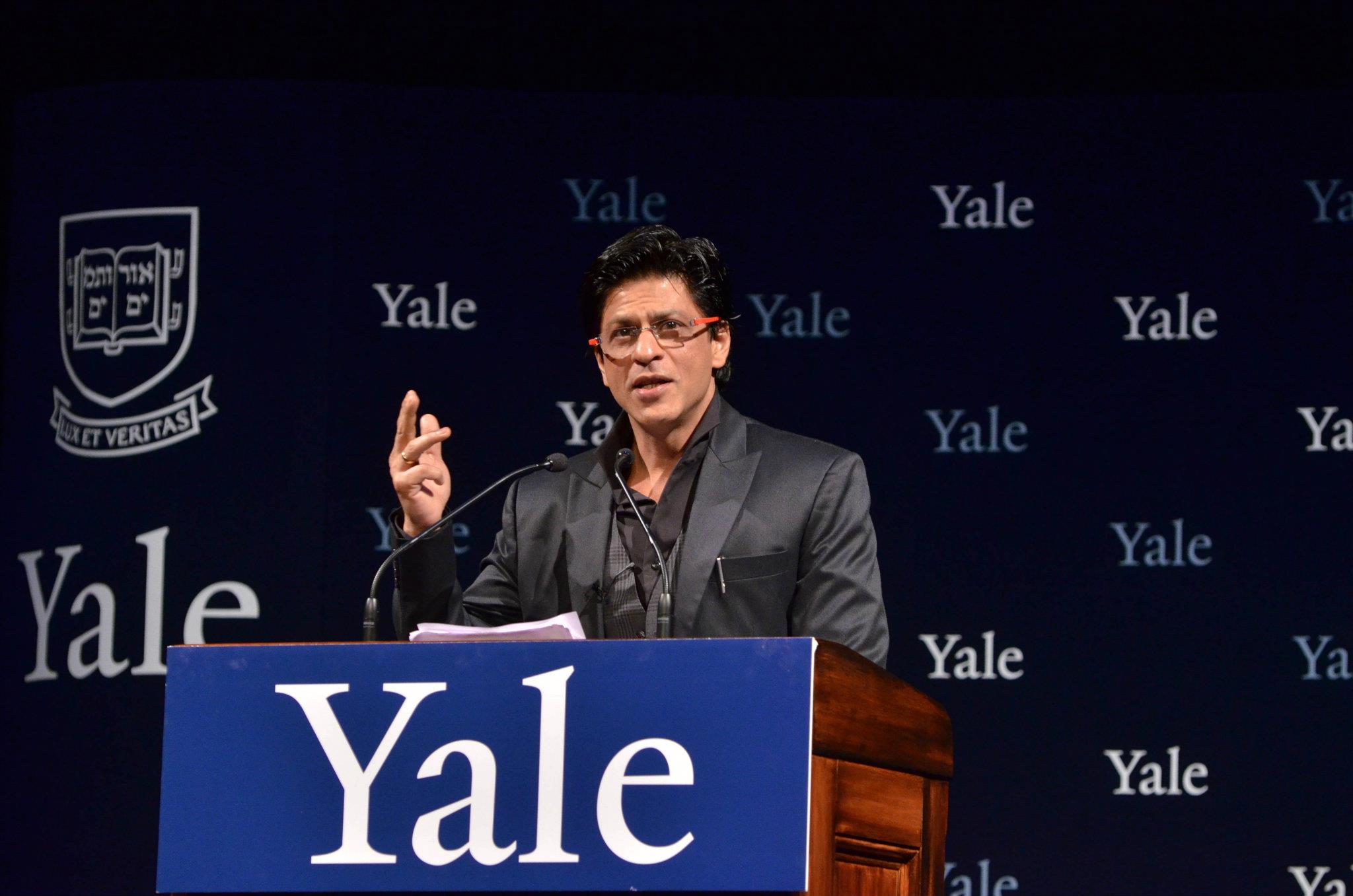
Shah Rukh Khan a Yale

1.600 persone hanno assistito all'incontro con Shah Rukh Khan organizzato ieri dall'università di Yale. L'attore ha interagito con gli studenti, ha accennato qualche passo di danza coinvolgendo anche i docenti, e sembra aver dimenticato la sgradevole avventura del nuovo fermo in un aeroporto americano (la superstar è stata bloccata dalle autorità per accertamenti, e rilasciata dopo un paio d'ore, grazie all'intervento dei responsabili di Yale). A proposito di quest'ultimo episodio, il Re ha spiritosamente commentato: 'Whenever I start feeling too arrogant about myself I always take a trip to America. The immigration guys kicked the star out of stardom. They (immigration officials) always ask me how tall I am and I always lie and say 5 feet 10 inches. Next time I am going to get more adventurous. (If they ask me) What colour are you, I am going to say white'. Video e photo gallery della conferenza. 
Aggiornamento del 14 aprile 2012: Shah Rukh Khan questioned at US airport again, Chidanand Rajghatta, Indrani Bagchi, Bharati Dubey, The Times of India. Nell'articolo si ricorda che l'attore era già stato fermato in aeroporto nel 2009, e che la stessa sorte è toccata in passato a Kabir Khan, Sajid Khan, Irrfan Khan, e persino ad Abdul Kalam (ex presidente dell'Unione Indiana), per non parlare di Ted Kennedy. Irrfan ha dichiarato: 'America is the most advanced country in the world. Do they really have such a flawed security system that the name of a person keeps popping each time he lands at the airport? I have been detained at US airports not just once but at least four times and for two to three hours. One cannot even make a phone call to the studio, though they have a car waiting outside the airport to pick you up'.


12 aprile 2012

Vettai - Recensione


[Blog] Recensione di Vettai (2012), avvincente film d'azione in lingua tamil con Arya, R.Madhavan, Amala Paul e Sameera Reddy.

9 aprile 2012

Reelworld Film Festival 2012

Il Reelworld Film Festival 2012 si svolgerà a Toronto dall'11 al 15 aprile. Ek Main Aur Ekk Tu chiuderà la manifestazione, alla presenza del regista Shakun Batra. In cartellone un'altra pellicola indiana, The forest (2012), di Ashvin Kumar.

Bollywood filmmakers take 3D head on

Hindustan Times, nell'articolo Bollywood filmmakers take 3D head on pubblicato il 7 aprile 2012, fotografa lo stato attuale della diffusione della tecnologia 3D nell'industria cinematografica di Mumbai, riportando le dichiarazioni di registi, produttori e distributori. Budget a parte, pare che la difficoltà principale stia nel blindare le superstar per un periodo contrattuale più lungo, dal momento che realizzare pellicole in questa tecnologia richiede un tempo maggiore. Da qui la preferenza, sino ad ora, di convertire i film in 3D, e non di girarli direttamente in 3D.

8 aprile 2012

The shocking truth about star prices!

Ficchiamo il naso nelle tasche delle star bollywoodiane: quanto guadagnano? Meritano i loro lauti compensi? Gli introiti derivano solo dal cinema? Si riscontrano differenze nelle remunerazioni corrisposte ad attori e ad attrici? Le cifre sono da capogiro. I produttori battono strade nuove per assicurarsi profitti, gli attori si trasformano in produttori, i registi e i compositori entrano nell'arena. 
The shocking truth about star prices!, Komal Nahta, Brunch, 7 aprile 2012:

'Kareena Kapoor would have to act in eight films to earn what Salman Khan can pocket in just one film, which is around Rs 23-27 crore! [1 crore = 10.000.000] Akshay Kumar, the star of the multi-star cast Housefull and Housefull 2, has not seen the housefull boards outside cinema halls for his solo starrers since what seems to be forever, but he still gets paid Rs 18-20 crore for every film he works in. Vidya Balan may have carried Kahaani to the winning post and bagged every award for The Dirty Picture, but would you believe that even after two hits, she is not the highest paid actress in Bollywood? That’s the dirty truth about star prices. Till the ’90s, Amitabh Bachchan was the only star paid in crores. Figuratively speaking, stars are supposed to be living up there in the sky. But now, it is their prices that are touching the sky. Welcome then to the real world of stars and their unreal prices. You may even feel inclined to term their remunerations obscene, more vulgar than any adult sex film Bollywood has ever churned out.

Rules of engagement
Star prices are rarely, if ever, fixed, because actors make concessions for producers or directors who are friends or who are star names themselves. Stars are also emotional people. So you have Shah Rukh Khan doing films for Yash Chopra and Karan Johar at a price which is lower than what he would demand from other banners. Salman had, years ago, gone out of his way to accommodate a film with the down-and-out Saawan Kumar Tak when the latter requested him to make his film with lesser actors saleable with his presence. Besides, if a script catches the fancy of a star or if he is keen to work with a director or producer, he doesn’t mind making a concession in his fees because, after all, stars need good scripts, banners and directors as much as producers and directors need top stars.
Like any other product, the price of a star is determined by the laws of demand and supply. The greater the demand and/or lower the supply (read availability of stars), the higher the price. If the entire family of lead stars is considered as one unit and all the producers put together, another, it is clearly a case of demand for stars exceeding the supply. That’s because the number of films produced each year in Bollywood is around 140-150 but the saleable heroes or those who can be cast in lead roles are barely 14 or 15. Ditto for the leading ladies. On an average, therefore, each star should be working in 10 films every year, which doesn’t happen now. Ultra-selective heroes like Aamir Khan and Shah Rukh do one or two films whereas other A-listers like Salman and Akshay are seen in two, three or four films every year. There may be actors who have six to eight releases a year but they are very few in number.
That our actors, especially the A-list ones, command obscenely high prices is an open secret. Not just in absolute terms, even if one were to look at the ratio of flops to hits (80:20) every year, it is anybody’s guess that most of our stars get undeservedly high prices. For, even if a good script is the main reason why a film works at the ticket windows, the stars have a major role to play, especially the hero and heroine who work as magnets to draw the audience to the cinemas, initially at least. Considering that 80 per cent of the films bomb every year and 90 per cent don’t even open decently enough to justify the high prices paid to their lead actors, it is clear that most of our stars are paid remuneration that is far more than they deserve.

Box office magnets
Even today, it is on the strength of face value that the paying public patronises a film, at least for the first couple of days. In that sense, more than even the scriptwriter, director and producer, it is the star, especially the hero, who, in a manner of speaking, is the ISI mark for a film. In other words, when a star is asking for Rs 10, 15, or 20 crore for a film, he is, by implication, assuring his producer of a great opening. But for the audience, his presence in a film is like a promise of quality cinema or, at least, value for their money. It is due to this faith which the audience has in a star (that the star will offer them an entertaining movie) that the latter commands the price he does. Or, only that actor should actually be considered worth every crore he is paid, who ensures that his film opens to bumper houses and also ensures that it offers entertainment to the paying public. So, Aamir, Salman and Shah Rukh seem to be the only three stars who are being paid what they deserve. Ajay Devgn and Hrithik Roshan are inching their way to that position but the occasional Guzaarish or Aakrosh pulls them down. 

Bang for the buck?
Akshay’s 20-crore price tag is wrong because his solo films just aren’t working at the box-office; Sunny Deol, Shahid Kapoor, Saif Ali Khan may deliver an occasional success but they’ve also given huge duds, which means they lack the consistency of Aamir, Shah Rukh and Salman. However, the fees the stars charge don’t vary according to the fate of their films - the pay packet is not cut if a film flops. But Aamir Khan is a class apart. From charging a fee and a percentage in profits, Aamir now keeps a share in the profits his starrers make. "That way, I am not burdening the film’s budget with my cost, and I am also ready to put my neck on the line," says Aamir matter-of-factly. "By not taking anything upfront and only charging a fee for acting if the film makes a profit, I am openly stating that if the audience doesn’t like my film, I don’t deserve a penny."
The Indian obsession with a male child manifests itself in film viewing habits too. That explains why hero-oriented films open far better than heroine-oriented ones. Women-oriented films like No One Killed Jessica and Kahaani started slowly and scored only afterwards. The Dirty Picture, for all its claim of being a woman-centric story, still boasted of three heroes, hit music and titillating fare! Kareena Kapoor, the heroine of Heroine, has been paid a reported fee of R4 crore but she won’t be entitled to even one per cent of the profits in the film. By the way, Sridevi was the only actress who nearly touched the one-crore mark in the Nineties. The leading lady (...) had, years ago, signed a film for Rs 1 crore but that film never got made.
Character actors rank even lower than heroines in the pay hierarchy. But over the years, supporting actors have started charging exorbitantly. So you have Irrfan getting Rs 1.5 crore and Paresh Rawal insisting on a fee with seven zeros or, at least, Rs 75-80 lakh [1 lakh = 100.000].
(1) All figures are approximate.
(2) Rates/fees are never fixed. Adjustments/concessions are almost always made.
(3) Aamir Khan charges the maximum fee among all the stars, for endorsements.
(4) Shah Rukh Khan probably earns more every year by way of endorsement fees than for acting in films. He endorses about a dozen brands but works in one or two films a year.
(5) Shah Rukh has always maintained that he wouldn’t mind over-charging for endorsements and stage shows but would prefer under-charging film producers because he owes his stardom to films and film producers.
(6) Salman Khan is not as popular for brand endorsements as compared to the size of his superstardom because of his court cases.
(7) Till about four years ago Saif Ali Khan used to endorse the highest number of brands but he has since cut down on the number of products he sells.
(8) For performing on stage at televised events (like awards functions), stars get paid almost the same amount they charge per day for endorsements. For non-televised events, the payment is about 50-60% of the endorsement fee per day.

Top Draws
The cool club of Bollywood’s Khan Crorepatis almost always ensures a spectacular opening at the box office.
Salman Khan: Acting fee per film 23-27cr - Endorsement fee (per day) 1.5cr.
Aamir Khan: Acting fee per film (share in profit, could go up to) 40cr - Endorsement fee (per day) 4cr.
Shah Rukh Khan: Acting fee per film 20-25cr (including share in profit) - Endorsement fee (per day) 2-3cr.
Stars’ big bucks come from:
Movies
Guest Appearances
Endorsements
Stage shows
Hosting stage shows
Hosting TV shows
Attendance at weddings/functions
Judging reality TV shows
Dancing/performing at events.
The only appearance for which stars, thankfully, don’t charge money are those made at funerals of friends, acquaintances and respected industry people.

Big players
Actresses lag behind the men when it comes to money.
Katrina Kaif: Acting fee per film 3-4cr - Endorsement fee (per day) 1-1.25cr.
Kareena Kapoor: Acting fee per film 3-4cr - Endorsement fee (per day) 1-1.25cr.
Vidya Balan: Acting fee per film 2.5-3cr - Endorsement fee (per day) 0.25-0.5cr.
Priyanka Chopra: Acting fee per film 2-3 cr - Endorsement fee (per day) 0.65-0.75 cr.
Deepika Padukone: Acting fee per film 1-2.5 cr - Endorsement fee (per day) 0.5-0.75 cr.
Anushka Sharma: Acting fee per film 1-1.5 cr - Endorsement fee (per day) 0.25-0.4 cr.

Colour of producers’ money
With the remuneration of actors, actresses and technicians soaring, how does a producer still end up making profits? Well, it’s not really tough because business has also grown manifold in the last 10 years. The main reasons for the growth are the high ticket prices in cinemas and the ever-growing sources of revenue, particularly sale of satellite rights. The desperation of corporate houses is another reason why producers of star-cast films are not generally in the red.
Since most corporate houses have to show turnover to shareholders, they assign projects without weighing the pros and cons. As it is, they have deep pockets due to the availability of public money and institutional funding. Since they fund star-studded films, the producers of those films could end up laughing all the way to the bank even if the corporates incur losses due to high costs. And frankly, even corporates don’t incur losses in their books of account because most of them amortise only 50 per cent of the cost of a film in the first year. This amounts to accounting jugglery but that’s the way it is.
This is not to say that these costs have not had an adverse effect on the viability of projects. Many of Akshay Kumar’s films would not be termed flops if his price were to be a third of what it is. And if that had to happen, most of his producers who have been making losses, would end up making profits.

Enter, the actor-producer
Not satisfied with earning handsomely as actors, many of our leading men have turned producers. Right from Shah Rukh, Aamir and Salman to Akshay, Ajay Devgn, Sunny, Anil, Amitabh, Saif, Sanjay Dutt and John Abraham, every actor worth his name and probably unworthy of his crores has jumped on to the production bandwagon. When the success ratio of films is barely 20 per cent and when it is the producer who suffers losses if a film flops, why would stars turn to such a risky business? It is because of three reasons:
(i) Of the 20 per cent films which click every year, 75-85 per cent are star-studded fares and so, it makes sense for stars to produce films with themselves acting in them.
(ii) It is a fallacy to think that it is the producer who bears the brunt of the losses when a film bombs at the box-office. If a film is pre-sold to distributors or a corporate house, the producer can make a profit even if the film fails at the ticket windows as, in such cases, the loss would be the corporate’s or borne by the distributors. Examples of producers making money while corporates or distributors incurred heavy losses are aplenty. Omkara, Guzaarish, Tees Maar Khan, Kites are some.
(iii) With theatrical earnings being only one part of the revenue stream of a film, a star-producer can make gains even if his film doesn’t fare well at the turnstiles, by pre-selling satellite, audio and other rights.
This is not to say that star-producers never make losses. Of course, they do. Saif Ali Khan, nicknamed Travel Agent Vinod after the many countries his character in his home production, Agent Vinod, travels to, will end up burning his fingers and toes in the thriller. Had Saif only acted in it, there was no question of him losing money. But in most cases, star-producers end up making profits because star-studded films have better chances of clicking with the public and also because star-struck corporate houses are willing to fund films of star-producers and take the risk of distributing them.
Interestingly, stars never brag about their earnings the way film producers do by announcing the gross and net collections of their released films on huge hoardings and newspaper advertisements. Therefore, in an industry where stars and their chartered accountants are the only ones who know their exact income, the grapevine and industry talk are the only sources of information about star earnings, star prices etc. But these are tried and tested reference points. 

Specalists’ fees

Directors’ Cut
With star prices touching the sky, directors also started demanding fat salaries at the turn of the new century. Highly-paid directors include Raj Kumar Hirani, Rohit Shetty, Anees Bazmee, Farah Khan, Imtiaz Ali, Rajkumar Santoshi, Prabhu Deva, Sajid Khan and the like. Of these, top ones like Hirani ask for a share in profits so that their fee could go up to R20 crore per film, or more! Some of the other above-named directors charge between R3 crore and R10 crore per film. Yash Chopra, Aditya Chopra, Karan Johar, Rakesh Roshan and Sooraj Barjatya could be among the highest paid filmmakers of Bollywood but if they aren’t, it is because they only direct films for their own banners, not for outsiders. Years ago, when there was a crazy boom in production, Anees Bazmee was rumoured to have signed a film for a business house for R20 crore, besides a share in profits! Of course, the film never got made because the boom did not last.

Bring on the money: it’s in the script
Years back, writing duo Salim-Javed’s names used to adorn the hoardings of films after they gave hits such as Zanjeer, Yaadon Ki Baaraat and Haath Ki Safai, all in one year (1973). Almost 40 years later, the tribe of writers felt short-changed. But things are changing for the better. So impressed was Aamir Khan with the script of Talaash when he heard it that he decided to pay 3 per cent of the profit of Talaash to Reema Kagti as her fee for direction and 2 per cent of the profits as remuneration to Reema and Zoya for penning the script. It is anybody’s guess that the 2 per cent in the case of Talaash will work out to at least Rs 1 crore i.e. Rs 50 lakh to Reema and Zoya each. This, as against the earlier decided fee of Rs 5 lakh each. If it was Salim-Javed who made the industry realise the importance of writers, it’s now Kagti and Javed’s daughter, Zoya, who’ve brought their contribution into focus once again.

Ruling the charts, note for note
Not just stars but technicians have also hiked their rates over the last decade. Among composers, only A.R. Rahman gets paid as a percentage of the price his music gets sold for. That way, he gets around Rs 2-4 crore per film. Other composers charge between Rs 30 and Rs 60 lakh. The way it works for a top music composer is this: he charges around Rs 10-20 lakh per song; if there are six songs, he gets paid Rs 60 lakh to Rs 1.2 crore. After paying off the expenses of recording, including fees of singers, lyricists, charges of the recording room etc., the composer is generally left with Rs 30-60 lakh. Among lyricists, Javed Akhtar is perhaps the highest paid (Rs 3 lakh per song), followed by Gulzar (Rs 2 lakh). Other renowned song writers charge anything ranging from Rs 10,000 to Rs 50,000 per song. 
Even action directors, who were paid moderately, nowadays demand Rs 30-40 lakh per film. If the action scenes are too many and too stylish, the action master’s pay packet could even go up to Rs 75 lakh.

Small screen, big bucks
Star TV Show Payment/episode:
Salman Khan Dus Ka Dum Rs 1-1.25 cr.
Shah Rukh Khan Kaun Banega Crorepati Rs 1.0 cr.
Amitabh Bachchan Kaun Banega Crorepati Rs 0.75-1 cr.
Hrithik Roshan Just Dance Rs 0.75-0.8 cr.
Akshay Kumar Khatron Ke Khiladi, Master Chef Rs 0.7-0.8 cr.
Priyanka Chopra Khatron Ke Khiladi Rs 0.3-0.4 cr.
Madhuri Dixit Jhalak Dikhla Ja Rs 0.1-0.2 cr.
Farah Khan, Rohit Shetty for judging TV shows Rs 0.1-0.2 cr'.