17 luglio 2022

Salman Rushdie in Italia

Lo scorso 12 luglio Salman Rushdie era in Umbria, al Castello di Civitella Ranieri, ospite di un evento pubblico nel corso del quale ha letto il primo capitolo di Victory City, il suo nuovo romanzo in distribuzione nel 2023. Nei giorni precedenti lo scrittore era stato avvistato a Capri.

Vedi anche Salman Rushdie: La città della vittoria, 6 febbraio 2023


12 luglio 2022

Sushmita Sen in Italia

Sushmita Sen è in questi giorni in vacanza in Sardegna. 

Aggiornamento del 5 agosto 2022: video.

2 luglio 2022

Shahid Kapoor in Italia

Nei giorni scorsi Shahid Kapoor era in vacanza in Italia - a Sciacca e a Palermo - con la famiglia. Nell'estate del 2019, in occasione di un viaggio in moto, l'attore era stato avvistato con Ishaan Khatter e Kunal Khemu a Torino e a Livigno. 

22 giugno 2022

Rajkummar Rao e Patralekha in Italia

Rajkummar Rao e la moglie Patralekha sono attualmente in vacanza in Italia. Nei giorni scorsi erano a Roma, oggi in Costiera Amalfitana.


16 giugno 2022

Mahesh Babu e Namrata Shirodkar in Italia

In questi giorni il fascinosissimo Mahesh Babu è con la famiglia in vacanza a Milano. Vi ricordo che la fortunata moglie di Mahesh è l'attrice Namrata Shirodkar.

14 giugno 2022

Ram Charan in Italia

Ram Charan è attualmente in vacanza in Italia con la moglie. La coppia sta festeggiando il decimo anniversario di matrimonio nella stessa località dove trascorse la luna di miele: il borgo Il Borro, in provincia di Arezzo. 
Aggiornamento del 18 giugno 2022: video (notare prego la scelta del commento musicale).


Vogue India dicembre 2012

9 giugno 2022

Nayanthara e Vignesh Shivan oggi sposi

Nayanthara e il regista Vignesh Shivan si sono sposati poche ore fa, nel corso di una cerimonia a cui hanno partecipato, fra gli altri, Shah Rukh Khan, Rajinikanth, Vijay, Vijay Sethupathi, Atlee e Boney Kapoor. Felicitazioni alla coppia!


7 giugno 2022

Amitav Ghosh in Italia

In occasione del Fuorisalone 2022, ieri Amitav Ghosh era a Milano per l'evento Narrating, organizzato nell'ambito di Prada Frames On Forest, presso la Biblioteca Nazionale Braidense. 
Lo scrittore tornerà a Milano il 18 giugno 2022, ospite della manifestazione 2084 - Storie dal futuro, presso l'East River Martesana. Ghosh terrà una conferenza dal titolo Pensare l'impensabile. Comunicato ufficiale: 'Con La grande cecità Amitav Ghosh ha raggiunto un successo planetario: un segnale di speranza, trattandosi di un saggio che riflette sulla assurda divisione tra materie scientifiche e umanistiche, scienziati e artisti. Ma Ghosh è anche un romanziere di lungo corso e Anna Nadotti ne traduce l’opera da più di trent’anni, ricostruendo una lingua meticcia che riflette la polifonia di opere vaste come oceani, voci che rimbalzano tra ricordi e racconti, tracciando mappe di mondi ancora da scoprire'.

Amitav Ghosh e Elvira Dyangani Ose, Milano, 6 giugno 2022

4 giugno 2022

Sonam Kapoor in Italia

In questi giorni Sonam Kapoor è in vacanza in Toscana col marito. La località selezionata per il soggiorno: Rosewood Castiglion del Bosco, in provincia di Siena. La coppia, che aspetta un bambino, è stata avvistata al ristorante stellato La Leggenda dei Frati a Firenze. 

Rosewood Castiglion del Bosco

3 giugno 2022

Filming Italy Sardegna 2022

La quinta edizione del festival Filming Italy Sardegna avrà luogo dal 9 al 12 giugno 2022 a Cagliari. Fra i numerosi partecipanti che terranno dei seminari agli studenti, segnalo Kabir Bedi. L'attore indiano sarà inoltre a Roma il 15 giugno al Museo dell'Ara Pacis, e a Positano il 22 giugno ospite dell'evento Mare, Sole e Cultura 2022.

Aggiornamento del 21 giugno 2022: intervista video Kabir Bedi: "Sandokan, Gandhi, i Beatles e la morte di mio figlio: il romanzo della mia vita", Alvaro Moretti, Il Messaggero, giugno 2022. Nel testo di presentazione si legge: 'Al Messaggero e al suo paparazzo principe, Rino Barillari, Kabir Bedi, il Sandokan mitico dello sceneggiato tv del 1976, deve qualche fuga vantaggiosa dagli alberghi di via Veneto: frotte di donne e fan, la calca e lì ci vuole il talento del paparazzo per sfuggire alla morsa del successo. Sorride Kabir Bedi, ospite dell'Interrogazione del vicedirettore del Messaggero, Alvaro Moretti: perché entrando per la videointervista ecco che proprio Barillari spunta da un'auto in corsa a via del Tritone. "Sandokan!", lo chiamano tutti così. E quando in motorino un fattorino passa e lo riconosce ecco scattare un romanissimo: "Bada, Sandokan!".'

Sardegna 2022


Sardegna 2022


Kabir Bedi e Danny Glover

Kabir Bedi e Sarah Ferguson

Roma 2022


25 maggio 2022

Priyanka Chopra: pubblicità Bulgari

Lo scorso marzo Priyanka Chopra era a Roma (clicca qui), probabilmente per la campagna pubblicitaria Unexpected Wonders di Bulgari. Vi propongo la fotografia promozionale. Priyanka indossa gioielli delle linee Alta Gioielleria e Serpenti

9 maggio 2022

Sguardi Altrove 2022

La 29esima edizione del festival Sguardi Altrove si svolge a Milano dal 10 al 15 maggio 2022. In cartellone Yere Yere Pausa (titolo internazionale Come come rain), film in lingua marathi diretto da Shafaq Khan. La pellicola era stata presentata l'anno scorso al Giffoni Film Festival.

8 maggio 2022

Anurag Kashyap on Gangs of Wasseypur, a decade later

Vi segnalo l'intervista concessa da Anurag Kashyap a Uday Bhatia, pubblicata ieri da Mint. Anurag Kashyap on Gangs of Wasseypur, a decade later

'What was the run-up to Cannes like?
In my head I was not even looking at Cannes. (...) Marco Müller literally forced me to show him Wasseypur. I was surprised they liked it.
Did it screen as one film at Cannes?
It was screened together. I remember I was very nervous when the film was playing. I just sat outside for five hours, drinking. I didn’t think this is the kind of movie that plays at festivals. (...) The reception was crazy. They showed the movies back-to-back, with just a 10-minute break, but everyone stayed. There was total madness. The actors were getting stopped on the street. We were dancing late into the night.
Is the film more personal than it might appear at first? You shot a lot of it in your childhood town.
It is a very personal interpretation of the real story. We could not shoot in Wasseypur. The budget was very controlled. The only way I could maximise everything was to go back to where I grew up. I used all my father’s goodwill he had accumulated over the years to make the film. People opened their houses because of my dad, and because of them feeling I am one from amongst them who’s now making movies. I shot in the house I grew up in. The house where Richa Chadha gives birth is where my brother was born. The imagery is from my childhood: the mountain I used to sit on, the mines, Tashkent Colony. The powerhouses my father worked on are there in the film. The sequence with the first fridge, the way the family sits together, the way the singer adopts male and female voices - those things I grew up with. (...) I was very affected by a six-hour movie called The Best Of Youth (2003), which chronicled the history of Italy. I thought, this is an opportunity to tell the political history of Bihar. We shot a lot of material that we later took out - I got carried away with the politics of the land and the history of the mines. (...) I was averse to making a gangster film. After Satya (1998) and Black Friday (2004), I thought, what is left to be told? But I found these gangsters to be very funny and childish. (...)
It marked a decisive shift for the genre. The gangster film largely moved out of Mumbai after this.
I was very excited about making what I thought would be a commercial hit. I was genuinely not thinking about anything else. I just wanted to tell a very north Indian story, with north Indian humour. We wrote the first film before shooting; the second was written while shooting the first. UTV [Motion Pictures] backed out three days before the shoot. We were there with little money and little time. We couldn’t have gone and just come back. When you are working with a controlled budget, you come back with a finished film, otherwise it will never get made. (...)
Would you have made it with bigger stars if you could?
No. That’s the reason UTV didn’t work out, because they wanted bigger stars. They had talked to some. What happens with a bigger star is you have to have a definite story, a heroic ending - and you can’t have them play an idiot. Everyone comes with a sense of entitlement. It wouldn’t have been the same. I was so fixed on Nawazuddin [Siddiqui] and Huma Qureshi. I didn’t see anyone else but Nawaz. On the first day of shooting, there was a massive problem because he decided to play Faizal like a gangster. I had to stop shooting. Nawaz and I went back to the hotel and had green tea and a long discussion. I said, this man knows he’s a gangster, he doesn’t have to act like one. (...)
Is there anything you would re-do?
Just the climax, with blood pouring out of Ramadhir’s body... oh god. When I watch it, I want to kill myself.
Was it always planned as two films?
At one point it was almost a three-parter. Then [Vikramaditya] Motwane cut it down. (...) He took the soundtrack of The Dark Knight (2008) and cut the montages to that (Motwane remembers editing to the score of the 2009 film Moon).
It’s altogether rare today to find a Hindi film like this, where all the primary characters are Muslim.
Yeah. I don’t think you could make a Wasseypur today. (...) (The censors) did not cut anything in Wasseypur. Only one sequence where Danish knifes a man in the eye, they asked to mute the sound because it was too gruesome. Kudos to (censor board head) Pankaja Thakur, who said, this film is an authentic representation and it will not be cut. (...)
What effect do you think ‘Wasseypur’ has had on Hindi cinema in these 10 years?
I don’t know if it’s a positive or negative effect. There’s so much north Indian gangster stuff now - a lot of it is nowhere close to how it is (in real life). Unfortunately, what people borrowed from Wasseypur is abuses. (...)
If you made ‘Wasseypur’ today, would it be a series?
Definitely. I like the long format, and there was much more story to be told. There are a lot of my movies I would have done as series if OTT had existed then.
A decade later, how do you regard the film?
I know why I made the film but I don’t understand why people go crazy about it. (...) I don’t think any of the actors except Manoj Bajpayee got paid, it was made for such a low cost. It did not stay at the box office, it was pushed out by a Salman Khan movie. (...) People keep expecting me to make the same film. It has derailed me in a way. Everything I do is compared to that. It confuses me, because I do not want to make another gangster movie'.


30 aprile 2022

Deepika Padukone a Venezia: evento Louis Vuitton

Lo scorso fine settimana Deepika Padukone era a Venezia, presso la Ca' d'Oro, ospite di una cena di gala organizzata da Louis Vuitton in occasione della 59esima edizione dell'Esposizione Internazionale d'Arte (clicca qui). L'evento mondano celebrava il sostegno al futuro restauro della Galleria Giorgio Franchetti. Video.


23 aprile 2022

Aishwarya Rai: spot italiano L'Oréal

[Archivio] Vi segnalo la versione italiana di uno spot L'Oréal di qualche anno fa interpretato da una splendida testimonial: Aishwarya Rai.

14 aprile 2022

Alia Bhatt e Ranbir Kapoor oggi sposi

Oggi sono state celebrate le nozze di Alia Bhatt e Ranbir Kapoor. Entrambi gli attori appartengono a due famiglie celebri dell'industria cinematografica hindi. In particolare, Ranbir Kapoor è figlio di Rishi Kapoor e Neetu Singh, e nipote di Raj Kapoor. Congratulazioni e auguri alla blasonatissima coppia!

12 aprile 2022

Festival del cinema africano, d'Asia e America Latina 2022

La 31esima edizione del Festival del cinema africano, d'Asia e America Latina si svolgerà a Milano dal 29 aprile all'8 maggio 2022. In cartellone Gaadi, film srilankese diretto da Prasanna Vithanage.

17 marzo 2022

Priyanka Chopra a Roma per Bulgari

In questi giorni Priyanka Chopra è a Roma per un impegno professionale commissionato da Bulgari. Nella fotografia che segue, la diva è al Ristorante Dal Bolognese in Piazza del Popolo.

Aggiornamento del 25 maggio 2022: Priyanka Chopra: pubblicità Bulgari.

25 febbraio 2022

Azad: Khaas

[Archivio] Vi segnalo il video promozionale del brano punjabi del 2020 Khaas. La canzone è composta da Azad e interpretata dall'attore e cantante Navraj Hans. Le attrici nel filmato sono Ihana Dhillon e Neha Rana. Il video è stato parzialmente girato a Maiori e Minori. (Fotografia a sinistra: Ihana Dhillon in costiera amalfitana).

12 febbraio 2022

Michele Morrone: Mud Mud Ke

L'attore italiano Michele Morrone debutta in India nel video promozionale del brano Mud Mud Ke, affiancando Jacqueline Fernandez. La canzone è composta da Tony Kakkar, e interpretata da Tony e Neha Kakkar. Il filmato è stato girato a Dubai. Michele ha dichiarato: 'I'm grateful for such a heartfelt welcome. I'm aware that the music of India has a wide reach and it defines the nation's heritage. It is truly an honour to be part of the music industry that has entertained listeners across the globe.' Jacqueline ha dichiarato: 'It's wonderful to be welcoming Michele Morrone to India with 'Mud Mud Ke'. As the nation's musical identity is changing and the world is getting smaller, it is fitting to have Michele join us.'

10 febbraio 2022

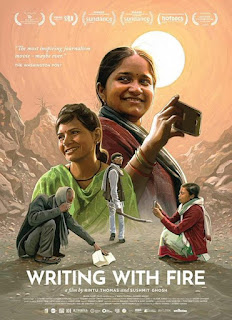
Writing With Fire in corsa per l'Oscar

Writing with fire, di Sushmit Ghosh e Rintu Thomas, è entrato nella cinquina per il miglior documentario agli Oscar. La pellicola era stata proiettata in prima mondiale al Sundance Film Festival 2021, dove si era aggiudicata, oltre al premio del pubblico, anche il World Documentary Special Jury Award for Impact for Change. Lo scorso settembre Writing with fire era stato presentato a Milano al Festival Internazionale del Documentario Visioni dal Mondo 2021, dove aveva vinto il premio per il miglior documentario internazionale con la seguente motivazione: 
'Il premio internazionale della giuria spetta a un film nuovo e originale - una storia alla Davide e Golia - dove chi storicamente non ha voce, può finalmente farsi sentire e urlare la verità ovunque su internet. I protagonisti sono scelti con occhio sapiente e abilmente sviluppati nel corso del tempo. I due registi dimostrano una notevole sensibilità nel seguire il percorso personale dei personaggi, descrivendo allo stesso tempo il duro ambiente socio-politico in cui si svolge la vicenda. La giuria ha unanimemente apprezzato la destrezza dei registi nel narrare e portare alla luce una storia drammatica di violenza, abusi e ingiustizie usando un tono leggero dove le donne, che combattono contro un sistema secolare di sfruttamento, non rinunciano mai al sorriso, andando sempre avanti, affrontando situazioni e condizioni difficilissime. La giuria ha anche apprezzato il tono e un ritmo di regia che contribuisce a creare un’atmosfera di suspense. Non sai mai cosa può capitare a una donna Dalit, della casta degli Intoccabili, che con il proprio giornale e un canale youtube denuncia senza mezze misure violenze sessuali, corruzione politica e ingiustizie sociali'.

Aggiornamenti del 14 gennaio 2024: Writing with fire purtroppo non ha conquistato l'Oscar.
Vedi anche:
- The triumph and tragedy of the Indian documentary, Rahul Desai, Film Companion, 19 febbraio 2022;

Sundance Film Festival 2022

L'edizione 2022 del Sundance Film Festival si è svolta dal 20 al 30 gennaio. In cartellone All that breathes di Shaunak Sen, opera che si è aggiudicata il World Documentary Grand Jury Prize. Il 3 febbraio 2022 Film Companion ha pubblicato una lunga intervista concessa dal regista a Sankhayan Ghosh, nella quale Sen, fra l'altro, dichiara: 'I’m deeply interested in the styles of (...) Gianfranco Rosi a lot in terms of how he shoots human, and Roberto Minervini in terms of how he comes out as a kind of hybrid between nonfiction and controlled spaces'. Shaunak Sen on his Oscar-nominated documentary All that breathes.

Aggiornamenti del 26 marzo 2023: All that breathes, in seguito proiettato fuori concorso a Cannes (clicca qui) e a Roma, è entrato nella cinquina dei titoli candidati all'Oscar senza purtroppo aggiudicarsi l'ambita statuetta.
Vedi anche:
- The triumph and tragedy of the Indian documentary, Rahul Desai, Film Companion, 19 febbraio 2022;

Lata Didi, "l'usignolo dell'India", è volata via

Lo scorso 6 febbraio è deceduta la celeberrima (e amatissima) cantante Lata Mangeshkar. Vi segnalo il video in italiano condiviso il 7 febbraio 2022 da Euronews: Lata Didi, "l'usignolo dell'India", è volata via.

24 novembre 2021

Andrea Guerra, il compositore di musiche per il cinema dei due mondi

Vi segnalo l'intervista concessa dal compositore Andrea Guerra a Lisa Bernardini, pubblicata da La Voce di New York il 22 novembre 2021. Andrea Guerra, il compositore di musiche per il cinema dei due mondi:

'Nel 2015/16 ti sei dedicato alla scrittura della musica per il film indiano Fan. (...) Quali sono le principali caratteristiche del cinema firmato da registi stranieri rispetto a quello fatto da registi italiani, secondo te?
C’è una mutazione in corso nel cinema indiano. La trasformazione - da musical con danze al vero e proprio cinema di immagini - sta prendendo piede, così anche il ruolo della musica sta cambiando. È una mutazione dolorosa per noi occidentali; è rimasta ad esempio la struttura a “quadri” tipica per mettere in scena le coreografie e che è una eredità narrativa interiorizzata. Il concetto di bellezza e riuscita dello spettacolo in India prevede che si attraversino tutte le fasi narrative. Dramma, situazioni grottesche, commedia, amore, thriller, situazioni patetiche: ciò proviene dalla loro storia letteraria e religiosa. Un film indiano deve contenere tutto questo. Le canzoni e le danze si prestano perfettamente a questi cambi repentini, anzi: li magnificano; questa mutazione verso un cinema più tradizionale invece deve adattare un racconto più identitario e unico, che può smarrire l’intensità nelle singole emotività.'

17 novembre 2021

Vidya Balan: I love Italian men

[Archivio] Vi segnalo un vecchio articolo decisamente insipido ma dal titolo interessante, Vidya Balan: I love Italian men, di Sumitra Nair, pubblicato da iDiva il 6 gennaio 2011. L'unica frase degna di nota: 'Her dream destination is Sicily in Italy since she loves "Italian food and men!".'

15 novembre 2021

River to River Florence Indian Film Festival 2021

La 21esima edizione del River to River Florence Indian Film Festival si svolgerà dal 3 all'8 dicembre 2021, parte in presenza e parte in streaming. Vi segnalo l'incontro virtuale in diretta con Amitabh Bachchan, il 5 dicembre, al termine della proiezione di Chehre. In cartellone anche Kabhi Kushi Kabhie Gham, sottotitolato in italiano e in inglese.

Aggiornamento del 5 dicembre 2021: video ufficiale della partecipazione di Bachchan.


10 novembre 2021

Amitav Ghosh: Jungle Nama

È in distribuzione in libreria Jungle Nama. Il racconto della giungla, il nuovo lavoro di Amitav Ghosh pubblicato da Neri Pozza Editore. Nei prossimi giorni lo scrittore sarà in Italia. Di seguito le date:
- 15 novembre, Roma, inaugurazione dell'anno accademico dell'Istituto Europeo di Design, lectio magistralis What do we miss when we speak of sustainability?
- 15 novembre, Roma, teatro Piccolo Eliseo;
- 16 novembre, Roma, evento Green&Blue Open Summit (aggiornamento del 17 novembre 2021: video de La Repubblica);
- 16 novembre programma Fahrenheit, Rai Radio 3;
- 18 novembre, Mestre, museo M9;
- 19 novembre, Torino, Circolo dei lettori;
- 20 novembre, Milano, Castello Sforzesco, evento BookCity.
 
Aggiornamento del 21 novembre 2021 - BookCity, Amitav Ghosh presenta la sua favola ambientalista: "I cambiamenti climatici sono una violenza", Annarita Briganti, La Repubblica: '"La cosa sconvolgente dell'avidità è che un tempo era considerata negativamente, ma da un certo punto in poi è diventata un 'valore'. Il sistema la glorifica, le élite al potere in tutto il mondo la pensano così. (...) Non si può più nascondere la realtà: i cambiamenti climatici sono una guerra, una violenza. Chi è tra i meno fortunati subisce perdite e deve affrontare situazioni difficili, come in una guerra. Una emergenza che non risale, come dicono gli esperti, alla rivoluzione industriale, ma bisogna andare ancora più indietro, fino al XVII secolo, al colonialismo, alla violenza coloniale. (...) Non c'è solo Greta. Lei rappresenta l'idea del bambino redentore che viene a redimere gli adulti dai loro peccati".' 

Aggiornamento dell'11 luglio 2022: intervista video concessa da Ghosh a Rai Cultura nel novembre 2021.


BookCity 2021

26 ottobre 2021

Loredana Bertè: Bollywood

Ieri Loredana Bertè ha presentato il video di Bollywood, il suo nuovo brano.

14 ottobre 2021

Nella spettacolare residenza londinese di Sonam Kapoor

Il 4 ottobre 2021 l'edizione italiana di Architectural Digest ha pubblicato l'articolo Nella spettacolare residenza londinese di Sonam Kapoor Ahuja. Il pezzo include un video, sottotitolato nella nostra lingua, nel quale Sonam mostra la sua casa. L'articolo è la traduzione di AD Open Door: Sonam Kapoor Ahuja's spectacular London townhouse and studio, di Farah Shafiq, pubblicato l'8 settembre 2021 dall'edizione indiana della stessa testata.

'Sonam Kapoor Ahuja è nervosa; i membri del team di Architectural Digest Open Door sono i primi ospiti che filmano la sua residenza londinese: «Le troupe televisive non sono mai entrate a casa mia». (...) Camminando per le stanze della sua casa londinese a Notting Hill, Kapoor Ahuja spiega che quegli spazi rivelano «un aspetto della mia personalità che molti non hanno visto», aggiungendo anche che «casa e ufficio rispecchiano al massimo chi sei come persona». Che cosa ha trovato AD? Un’oasi di tappezzerie dipinte a mano con paralumi abbinati, una promettente collezione d’arte indiana, arredamenti contemporanei e antichi messi insieme nel corso del tempo... Ma il pezzo forte di Kapoor Ahuja ci ha sorpreso. «Sapete qual è la cosa più speciale? - ci domanda entrando nel suo bagno tappezzato Ralph Lauren - Questa toilette POTO. Ne vado pazza», esclama ridendo, divertita dalla passione per la toilette ad alta tecnologia. L’attrice, imprenditrice e filantropa ha passato gran parte dello scorso anno nel Regno Unito a causa della pandemia, facendo di questa casa il suo santuario. Mentre ci parla del ponderato design degli interni, indicandoci i suoi tratti preferiti, confessa di aver sentito la mancanza della sua famiglia a Mumbai. “Ho voluto che tutte le stanze mi ricordassero l’India e i suoi colori,” afferma. “Tutto mi riporta a casa mia, di cui sento un’enorme mancanza.” 
Nel frattempo, a poca distanza da casa sua si trova lo studio che condivide con suo marito Anand Ahuja, imprenditore della moda. I due sono sposati dal 2018, e come i tanti che lavorano da casa con un partner, Kapoor Ahuja afferma: «Viviamo e lavoriamo insieme, il che è fantastico e impegnativo allo stesso tempo». Qui l’attrice organizza sessioni di lettura del copione, riunioni e prove costume... Infatti, tutte le prove costume del suo ultimo film Blind, girato seguendo un programma di 39 giorni in Scozia all’inizio del 2021, si sono tenute qui. Ci avviciniamo di soppiatto all’ufficio di Anand Ahuja. «Anche se non potrei farlo, voglio portarvi al piano di mio marito. Lui non c’è, quindi abbiamo poco tempo», afferma in tono cospiratorio. Chi comanda? «È lui il grande capo - ci dice sorridendo, per poi fermarsi a riflettere - No, sono io il grande capo». Qual è il suo mantra principale quando si tratta di stile degli interni? «Di qualsiasi cosa si tratti, l’importante è che abbia un aspetto favoloso e che sia comoda».'

7 settembre 2021

Mammootty: The discreet masculine charm

La superstar del cinema malayalam Mammootty compie oggi 70 anni. Per celebrare l'evento, Film Companion pubblica un lungo articolo nel quale ripercorre la carriera dell'attore. Mammootty - The discreet masculine charm, C.S. Venkiteswaran:

'The variety of roles he has essayed, the diverse acting modes and speech styles he has experimented with, and the untiring efforts he puts into each role, are phenomenal to say the least. (...) A rare and unique combination of magnetic personality, physical charm, longevity of career, diversity of roles and ever-increasing popularity - all make Mammootty one of the greatest actors in Indian cinema. (...) 

He entered the scene when major actors of the earlier era were at the fag end of their careers. (...) This was the scene when both Mammootty and Mohanlal entered it in the early 80's. But it was the decade when the Malayalam film industry was witnessing a huge jump in terms of production: from around 80 films a year in the previous decade it rose to more than 110, averaging about 2 new releases every week! It was also a period when gulf remittance to Kerala was on the rise, spurring film production and the growth of exhibition halls. In terms of content, treatment and themes too, this decade proved to be very prolific: films of all kinds - 'art', 'middle' and 'commercial' - and genres - suspense thrillers, family dramas, northern ballads, socials, films based on contemporary events and politics etc. - were being made. All this created a vibrant industry atmosphere that encouraged experimentation with daring themes, introduction of new techniques and technologies, and the entry of more and more new talents: scenarists, directors and technicians, as well as producers. (...) Entering the scene at such a high point in Malayalam film industry, a hardworking actor like Mammootty had ample opportunities to hone his skills, connect with the audience, and to entrench himself as a star in the industry and as an actor in popular imagination. In his first decade itself, Mammootty had the opportunity to work with all the important filmmakers from different generations, and in diverse categories and genres. (...) So much so that in the very first decade of his entry, he had acted in more than 200 films in all conceivable genres - socials, family dramas, mystery thrillers, ghost stories, period films, art films, and also some light comedies. By the end of the decade, he had established himself as a very dependable and successful star with an acting style of his own.

Even in the 1990s when the entry of television rocked the film industry by capturing its most favourite and popular thematic terrains, and hitting the box office by bringing visual entertainment to the audiences' homes, the popularity and stardom of Mammootty continued to grow. Actually, in the case of both Mammootty and Mohanlal the coming of television was a blessing in disguise. Though television captured the most important segment of the movie market - the 'family audience', as far as its entertainment content was concerned, it predominantly depended on cinema for its films, songs, comedy scenes, clips and the umpteen parodies based on that. (...) The burgeoning popularity of Mammootty as an actor and his pre-eminence within the industry are evident from the fact that he acted in as many as 220 films in the 1980's. From 1983 to 1986, he acted in about 35 films every year! In the next decades, along with the general decline in film production, Mammootty films also came down to an average of around 55 films a year. It was also a period when production, turnover and also the number of theatres were on the wane. If the 1990s saw a more mature Mammootty performing with greater ease and in a variety of roles, in the post-millennium years his persona has assumed greater gravitas and grace. A host of young 'newgen' actors were entering the field in the last decades, and superstars like Mammootty and Mohanlal becoming more selective in their choice of roles and films, and so, figuring mostly in mega productions. But even in the so-called 'newgen' films one can see the glare and shadows of these super stars - in the form of references, tributes, jokes, imitations or parodies. (...)

Evolution of an actor 
(...) In most of the films, (...) one can see both these character-types and role models - that of the protector of the weak and women, and as the enforcer of Law - being elaborated in various guises, diverse situations and different milieus. (...) In many of the (...) films in the 80's, Mammootty plays the role of the family man who is caught in domestic and marital conflicts of different kinds (...) strengthening Mammootty's fan base among the female audience. (...) Soon, too many films of the same genre led to a series of box office failures. (...) By the end of 1980s and the beginning of 1990s, we see the actor persona of Mammootty strongly leaning towards hyper-masculine roles, with a slew of commercially successful and thematically engaging films. (...) These films expanded and placed Mammootty on to a wider canvas of narratives that portrayed different and more complex shades of masculine power and conflicts. Compared to earlier films, the narrative world of these macho protagonists expanded from the realm of the individual and the family, to that of society and nation at large, and the paternal/protector figure turned into an authority figure representing the State. These narratives traversed history and legends, and were animated by various shades of desire, valor, love and troubling questions about corruption in public life and crime. These varied roles successfully combined Mammootty's stature as an actor and appeal as a star. What distinguished Mammootty the actor was his continuing engagements with films outside the commercial-mainstream that constantly enriched and expanded his repertoire, and brought him critical acclaim and national accolades. (...) Though not very comfortable in his comic roles, Mammootty also experimented with light comedies. (...) Another feature that distinguishes Mammootty is his ability to embody and voice 'regionalities'. There are several hit films where he plays the role of a hero belonging to a particular locality/region/milieu, and speaks the respective local lingo. (...) While elevating him as a versatile actor, these roles also indicate the pan-Kerala image that he has built up through his career. (...)

Mammootty-Mohanlal duo and the Ambivalence of Malayalee Masculinity
It is impossible to talk about Mammootty and his acting career without referring to Mohanlal, the other super star, his friend, competitor and his alter ego. (...) One, the upright, powerful, masculine and monogamous family man, and the other the playful, eternal flirt and boy next door, vulnerable, polygamous, lyrical and romantic. While one readily sings and dances around trees, the other is averse to it. (...) Such strange equivalence could be read as the expression of the ambivalence in Malayalee male masculinity - one that is torn between the macho and the tender, the masculine and the feminine, the strong and the vulnerable, the rigid and the flexible, the tragic and the comic. Incapable of making any final choice between the two, Malayalee masculine imagination seems to waver between the two, consciously and subconsciously, and indulges in the possibilities and diverse pleasures they open up through these star-duo. (...) As a lone, masculine hero, age and aging go much more comfortably or convincingly with Mammootty whereas with Mohanlal it often looks odd or a little forced, for we always associate him with youthhood, playfulness, and often childlikeness. (...) While Mammootty roles are more often associated with seats of power and authority, (...) Mohanlal plays the common man, the one who is in search of security, life, freedom and love. (...) While the concern of one is to control and conquer the world, the other explores and revels in all its uncertainties and accidents. So, while one offers love and invites our identification, we are in awe of the other and look up to him in admiration. While one is a companion and fellow prankster, the other is a protector or guide. (...)

The Star Persona
(...) In the last decades, stories about loss of masculinity itself becomes a theme in some films. (...) Interestingly, they all tangentially tap on to the Mammootty persona deeply embedded in public minds to poignant effect. So through time, Mammootty persona has not only embodied and enacted masculine charm, power, desires and fantasies, but also its fears, anxieties and uncertainties. Another makeover domain was visible in the new millennium, when Mammootty played several light and comic roles. (...) The incisive self-criticism he expresses in many of his acclaimed interviews prove his commitment to the art and also his relentless effort to reinvent himself. This is also a unique feature that elevates him from other actors of his generation, who tend to get pigeon-holed into certain stereotypes, industry models or generic patterns. As an actor and a star, Mammootty had always tried to transgress these boundaries and to redefine and remake himself. Which is what has always kept him at the top, for so long and for so many'.