21 giugno 2012

Autori vari: Amul's India

Vi segnalo la recensione del saggio Amul's India, firmata da Anwesha Mittra e pubblicata oggi da The Times of India. Nel subcontinente il burro Amul è da cinquant'anni un'istituzione. Le campagne promozionali commissionate dall'azienda sono rimaste praticamente invariate nella concezione, ma con uno slogan nuovo (e una vignetta nuova) quasi ogni settimana. In modo arguto e colorato commentano qualsiasi argomento, dalla politica alla cronaca all'intrattenimento. Un fenomeno pubblicitario forse più unico che raro. Il volume include anche un contributo di Amitabh Bachchan.

'Amul’s little moppet in a red polka dotted dress and a blue ponytail delivered on a regular basis a humorous take on everything that bothered us, everything we thought deserved a repartee. Like a true spokesperson of the masses, she rose to every occasion, be it a cricketing double century, scandals surrounding politicians, to controversial diplomatic policies, with an infallible gut and a tongue-in-cheek attitude. And in the process made Brand Amul synonymous with honesty, purity and subtlety.
Since her birth in the 60s, (...) she has remained an icon of sorts in the advertising world, surviving odds of the trade and yet being steadfastly consistent. Our impish little Amul girl today not only looks the same, but retains that crispy cheekiness with which she pranced into out hearts the first time and said naively, “Give us this day our daily bread: with Amul butter.” As a deserving tribute to Amul’s journey across five decades and a massive advertising success on its back, the book Amul’s India is an attempt to deconstruct the brand, the little things that went into making a heroic success of the Amul girl, sentiments of its makers, and of those who loved to pass by an Amul hoarding each time. Like a celebration of the memorable Amul hoardings, the book in a non-linear pattern chronicles decades of having fun with subjects such as politics, Bollywood, sports and personalities among others. (...)
The journey was of course not a seamless one as the brand landed up in a couple of legal wrangles only to emerge unfazed and stronger than ever. (...) But there were those like painter M.F. Husain who loved Amul’s ‘Heroin Addiction - Fida on you’ that had the barefoot artist paint Bollywood diva Madhuri Dixit, and requested for a personal copy for his studio. (...)
Amul’s India is another interesting way to get different perspectives on popular ads that formed an inexplicable part of our growing up years. (...) Amul through various hoardings over a period has mocked at men, celebrated female achievements or at least brought them to the fore, and depicted the rapidly changing status of women. (...) Some popular brands lost out to competition in a desperate bid to change their mascot. Time and again companies attempted to reposition themselves, but Amul never did. It didn’t have to, nor does it need to, for we prefer its unvarnished views of India in that ‘utterly butterly delicious’ manner'.

Anurag Kashyap: Gangs of Wasseypur almost did not get made

Vi segnalo l'intervista concessa da Anurag Kashyap a Sonil Dedhia, pubblicata da Rediff il 19 giugno 2012. Gangs Of Wasseypur almost did not get made
'A lot of people are comparing the film with The Godfather. Is that justified?
At the end of the day, it's a good comparison. I take it as a compliment. (...) My films are a story of three generations and Godfather is the ultimate crime tale of three generations.
This film is your most ambitious one so far. What difficulties did you face in making it?
Gangs of Wasseypur almost did not get made. People did not believe in my film. They asked me why I wanted to work on this film and not something like Dev. D which was a success. I don't want to repeat myself. People also questioned me about making another mafia film. But I had this story which is entertaining and at the same time, it will engage the audience. In five hours and 20 minutes, the audience will explore the mafia in Gangs Of Wasseypur and I am sure they will like it.
You have been making the kind of films that you wanted to make. Do you think finally the audience and the industry is waking up to your films?
Our cinema is changing; our mainstream cinema has changed so much. I think today alternative cinema can happily exist with mainstream cinema. There are fewer struggles to make the kind of films I have been making. This is the time when you can make films without stars and they are working at the box office. Some directors who have been supporting this for a long time are finding it much easier to make their films.
As a newcomer, you took a lot of flak for the kind of films you made. Of late the industry and the critics have started praising your work.
I have always been seen as a troublemaker or a problem creator. I guess that suits my image (Winks). A lot of people are astonished that in spite of cheating the producers how does Anurag Kashyap manage to make films? Logically, businesswise, it does not make sense how I make my films (laughs). I still feel that the old-school filmmakers don't like me. I guess they don't understand the kind of films that I am trying to make. At the same time, the generation has changed. A lot of new blood has been infused into the industry and they are standing up for the same thing that I have been doing for so many years. I still feel that my acceptance is not very wide. I have a lot of support from the director and the actor community, but the distributors and producers are still trying to figure out what I want to do.
How challenging was it to make a film that you wanted to make and at the same time make it entertaining?
To begin with, it was a film that had the potential to be entertaining. I can't force entertainment in a film like That girl in yellow boots. There are different stories within the story and we brought in music to bind all of them together. The kind of music Sneha Khanwalkar has done is just phenomenal. The intention was to make an entertaining film, or else we wouldn't have been given so much money to make GOW. (...)
Do you think that the length of GOW (five hours and 20 minutes) will be a hindrance?
Eight hundred people watched the film in Cannes and gave it a standing ovation. The audience mainly consisted of people who read the subtitles and did not know the language. This has given me enough confidence that GOW is going to work. We were thinking of making the film in three parts. We wrote three scripts. We combined half of the second part in part one and the other in part two. It is one film, but we had to make it in parts. I think two parts are not enough; it could have become a TV series (laughs).
Do you think production houses have started believing in you? I remember at FICCI Frames this year you mentioned that you change the scripts on the spot and that irks a lot of producers.
The basic rule of cinema is that a script is written three times - when you are writing the script, when you are shooting the film, and then when you are editing the film. A lot of people misconstrue it. When I started my journey in films people never wrote scripts. Until six to seven years ago, there was no concept of bound scripts. People made a face when you handed them bound scripts. The same people today demand a bound script. A basic script is always treated like a map. Yes, I do change scripts but only when it is needed. Improvisation is always necessary and I don't do it alone. I consult my actors, writers and other important people. There are times when producers don't know how to read scripts. Thankfully the newer lot of producers know how to read scripts. They understand the fact that the script will evolve during the making of the film.
Your films have always been dark and intense. Would you make a completely different film?
The problem is that we make so many light-hearted, candy floss films that anything real seems dark. Barring That girl in yellow boots, my films are not dark nor are they intense. When I made Paanch, a lot of people said the film was dark and disturbing because of the kind of films that were being made by other filmmakers then. Today, the same people say that Paanch is a mainstream commercial cinema and it should have been released. I don't understand how a film that was dark when I made it suddenly becomes a commercial film. The problem is not with my films, it is with the mindset of people.
You have never worked with big stars in your films. Do you still feel that the industry is star driven and requires a big star to make a film successful?
The purpose of the industry is to grow monetarily and economically. In other countries, a lot of money is spent on research for the film. Ours is one industry that does not spend anything on research. There is a safe formula that is adopted in our industry. A star will work in our film and we will make money. This is not how films are made. I identify films with their directors and not actors, except in the case of Aamir Khan where you trust that you are bound to see a good film. (...) 
You recently mentioned in an interview that you don't want to become another Ram Gopal Varma...
Ram Gopal Varma is someone who I have learnt everything from. He taught me a lot about cinema and I diligently follow that. He has somewhere isolated himself. He has cut himself off from the rest of the world. He has a virtual presence but I believe that he has slightly cut off from what's happening in cinema. His idea about filmmaking and shot designing is quite fixed. I feel bad that he has isolated himself because I care about him. When he discovers any camera or equipment, he always talks about it as if he is the one who has found it. But all over the world, kids are experimenting with it. His experiments are becoming like a child with a toy which sometimes is good but what happens is that he is Ram Gopal Varma and people have expectations from him which burden him with restrictions. He has reached beyond the point where he is trying to impress anyone. He doesn't realise that it costs money and it is someone else's money. Things are not working for him which is making him stubborn. I will not say that he doesn't have it in him to come back'.

19 giugno 2012

Manoj Bajpayee: interviste

Vi segnalo l'intervista concessa da Manoj Bajpayee a Indiatimes, pubblicata il 12 giugno 2012:
'You were never the one to be seen at movie promotions. Isn't the current campaign - unfamiliar territory - tiring you?
Things have changed a lot; the fact that everything is temporary was perhaps never as true as it is now. (...) I faced situations where the producer could not ensure much visibility for my movies, sometimes from lack of funds, or from other reasons.
Such as?
1971 is the prime example! It is one of the best films of my career. (...) It was the first real film on the Army in a very long time. (...) So I don't know whether the promotions work or not (...) but I am not going to find out. Sometimes, publicity can be a brain dead thing, but I say, let it be, if it is working for a film, I am available, because I have suffered the cost of no publicity - not in one film, but in two, three films very dear to me! If it's fruitful conversation, I am very happy - but even when it is not, I tell people, no, I don't mind it (laughs)!
Some scandals, some fights, may help?
(Laughs) I am not somebody who would like to show his emotions publically. I may be able to speak to you one-to-one, but if we were to be speaking in front of ten people right now, I would not really say much. That's a personality defect. But I am working on it. (...) I have seen the consequences of not having attention for my film, so I am prepared to change myself in some ways to get it. And this film is for the people - it is not for drawing room conversation, that's very clear to me. (...)
It's far easier to visualize you as the protagonist for a film like Shool - upholding a certain line of thought. In Zubeidaa, there's a fair shade of grey in the protagonist, and moving further, in Gangs of Wasseypur (since I've seen the film and the readers haven't) there's a lot of grey (...)
There's nothing right about this person; this is why this role is so interesting. He has no sense of right and wrong, he has no sense of morality. He leches at this girl, openly, and the next day he goes and kills someone who is harassing a girl. It's a contradiction, but not for him, since he has no sense of right or wrong. What he's doing right now is right for him.
I assume, for you, a grey character is more difficult to execute?
It's much more difficult to execute. Much more! (...) One of the most difficult shots. Reemma is cooking, and I am looking at her back. (...) Now that's something that is not from my world. (...) If I have found a girl attractive, sometimes we have managed to say it, sometimes you have stayed in touch over the phone. (...) But to just lech at someone's back and accompany it with such a voyeuristic, orgasmic expression is something I have never experienced in my life (laughs)... (...)
You get a main lead after quite some time and you're still not a hero, but quite possibly the wickedest man in the script?
This is possibly the first time in Indian cinema in a while. (...) There's nothing right about him. (...) I wouldn't have thought I could pull off this role, frankly. (...)
How are you looking forward to having your family watch your super lecherous avatar on screen?
I am scared! I am going to tell them to go one by one and see it alone. Please. It will be very embarrassing if my brothers and sisters watch it with my parents; it will be quite an issue in the family! We basically come from a small village near the Nepal border; the family sensibilities are like that. (...)
You seem to be quite busy at the moment.
I have never been this busy, never had this much work in my career, in my life. Nobody still believes that I did no work for a year after (...) Satya. There were no directors for people like me. An Anurag Kashyap was still trying to prove himself. That crop of directors that are around today - they weren't there. I often feel that all this came five years late for me, and I am jealous of the actors in their prime who are able to work with such directors today. Even Nawaz (Nawazuddin Siddiqui) has got his due very late; he's also a victim of no directors being around when he was entering the industry.
And the likes of you, Nawaz, Irrfan [Khan] have been conspicuous by their absence from the 100-crore club of movies, haven't you? (...)
Are we actually welcome there? No, we are not. And I have come to terms with it. If somebody is not opening the door for you, I will not feel bad; I'd rather knock on another door. But the painful time was when there was only one door, and all the other houses were walled; there were just no doors. Today, even today, if I like a director's work, I pick up the phone, call his number, and ask him for work. (...)
There must be young people trying to break into cinema who come to you for advice. What do you tell them?
Yes, many of them come, but I don't know what to tell them, there are no easy answers. You have to keep going to people, you have to keep auditioning. In my time, you didn't even have the culture of auditions. I still remember pestering Mahesh Bhatt during a lunch break to switch on his camera. And I was so insistent - so aggressively insistent - that he actually switched on his camera and took my audition. Acting is my passion, not celebrity status. I left theatre only because theatre was not paying me anything and I was not getting any younger. I tell young people to ask themselves whether they want to enter acting for the sake of acting, or for something else that it will give them - because then it can break you. (...) I wanted only acting. Nothing through acting.
Your take on just wanting to act, not the fringe benefits, is rather philosophical, isn't it? (...)
I am always conscious of my own mortality. Guru Dutt isn't here anymore, Raj Kapoor was here, he's gone... My story isn't going to be any different. If I can move towards the very end of my lifespan doing what I want to do, that, for me, is the biggest achievement'.

Vi propongo anche un corposo estratto dall'intervista concessa da Manoj a Sonil Dedhia, pubblicata ieri da Rediff. Manoj Bajpayee: Never been so busy in my entire career:
'You recently went to the Cannes Film Festival with Gangs of Wasseypur. How was the experience?
Cannes is just amazing. The feedback for the film and my role was quite exhilarating. I was surprised when I saw the French and people from other continents who couldn't understand the language give a standing ovation to the film. The place is buzzing all the time. I curse myself for not being there earlier but from next year I'll make sure even if my film is not there I go there for a holiday with my family during the film festival. (...)
What was it about Gangs of Wasseypur that appealed to you?
It's a film where I have completely changed as an actor. I have changed my approach to acting. I have unlearned things as an actor and it was very difficult for me to do that. I was risking a lot of things with this film. My whole approach to my role was completely different. I didn't want anyone to know that this is the Manoj Bajpayee they have seen earlier. A lot of people told me not to take up this role but I stood by my decision. Also, I felt that I was in the safe hands of Anurag Kashyap who gave me an opportunity to re-define myself as an actor.
You have earlier played characters with grey shades but your character in Gangs of Wasseypur looks quite unusual.
Well, you will have to pay for the ticket and watch me on the screen (laughs). On a serious note, there is nothing right about my character Sardar Khan. This is why this role is so interesting. He has no sense of right and wrong, he has no sense of morality. He loves sex and he doesn't mind killing people. He leches at a girl, forces her to sleep with him and the very next day he goes and kills someone who is harassing a girl. He lives for the moment and what he does at that time is right for him. In spite of him having so many flaws and vices, I had to make my character look adorable, which was very tough.
Most of your films have been set in Uttar Pradesh and Bihar, the same region where you come from. Does acting in such films come naturally to you?
Nothing comes naturally to me. I reject the idea that if the story is set in Uttar Pradesh or Bihar it will come naturally to me. Accent doesn't make you an actor. It is the approach and the performance of an actor that count. Performance doesn't come naturally just because you come from a particular region. Getting into the skin of this character was quite a gruelling task. I think it's the toughest performance of my career. (...)
You have worked with Anurag as a writer. How was he as a director?
Anurag is a very easy director. He gives complete freedom and makes things very easy for his actors. He understands the suffering and insecurities of an actor. He's one of those rare directors who can relate to their actors. That is the reason you see fantastic performances in all his films. He has evolved a lot as a filmmaker.
There was a lull in your career before Raajneeti.
Not many people know that I was not well. My shoulder was in bad shape. I couldn't even move my hand. For two years I had to lie low and listen to and read all the false reports that were written by the media. I lost a lot of projects that I had in hand. But, yes, I am here promoting my film today and I am also busy with my other films (smiles).
How did you deal with the situation?
I was unfazed by it. My priority was to get myself fit. I missed out on a lot of films, which I would have loved to be a part of. I suffered a lot. I was without work and money. I was spending everything that I had saved. It was the most challenging phase of my life. At the same time, some people came out in support. Prakash Jha offered me Raajneeti and subsequently Aarakshan when I needed it the most.
When you look back on your career, do you think filmmakers have not been able to use the potential that you have as an actor?
I think not even 25 per cent of my potential has been utilised. I still have the same passion and the hunger that I had when I started my career. I am in search for great roles all the time. I hope things will get back to normal and directors will keep coming to me, give me challenging roles and keep putting my talent to good use (smiles). (...)
How is your equation with Ram Gopal Varma?
My equation with Ram Gopal Varma will never change. I will always be indebted to him. Whatever I am today is because of him and I don't think that my equation with him will ever change'.

17 giugno 2012

Emraan Hashmi: Never thought I would end up where I am today

Vi segnalo l'intervista concessa da Emraan Hashmi a Sonil Dedhia, pubblicata da Rediff il 5 giugno 2012. Emraan: Never thought I would end up where I am today:

'Shanghai is one of the biggest movies of the year. What do you think of that?
It's a new time in our industry with the kind of films that are being made and Shanghai is one step in that direction. All these years our industry has functioned in a formulaic way where if something becomes a hit or works at the box office, it gets repeated again and again. Very few filmmakers step out of the crease and try to do something different and Dibakar Banerjee is one of them. I would like to work in more films like Shanghai which surprise audiences. I would like Shanghai to do the same kind of business that any other commercial film would do.

Director Dibakar Banerjee and you have explored the diverse sides of filmmaking. How has working with him benefited you?
The way Dibakar shoots the film is very different from the way I have worked in my films. He does a lot of research and I guess that can be seen when he starts making the film. He starts scripting the film a year before he shoots it and the post-production takes almost a year. That's commendable. He takes almost three years from the ideation to completion of a film. There is intent to make a brilliant film. I've always wanted to work with a director like Dibakar. He doesn't overlook minor details. He wants to do things out of the box and break the mould of how you would perceive an actor or a film and present it in a completely different way.

Were you on the same page as Dibakar since day one?
It was difficult for me to get into the process of how Dibakar functions. I work in a certain style. Generally, I read the script, learn the dialogues, go on the sets and give my shot. Dibakar wanted me to get into the skin of the character. He made me go through 10 workshops and then he started working on my physical appearance. I had to put on weight for my character. I started working on my character almost a month and a half in advance, which is unlike anything that I have done before. 

It's true that you look very different in this film from what we have seen before.
My character in the film is quite complex. I play a small-town journalist, who also shoots marriage videos. He is also a photographer and also shoots porn films. I've never played a character from a small town and so this role was very different for me, both in terms of getting into his psyche and changing my physicality. Let me tell you, before Shanghai I never attended any workshop to prepare for my character.

Did you, at any point of time, question Dibakar about your looks in the film?
No, but I asked him whether he could have made me look any worse and he replied, 'Give me one more film and I will make you look even worse.' 

You have admitted that you are not a good dancer but you managed to dance very freely in one of the songs.
It was very difficult for me to do the dance steps in Bharat Mata Ki Jai. I have issues when people give me dance steps when I am on the sets. Dibakar knew that and asked the choreographer to give me the steps well in advance. I also saw a lot of videos of processions and would rehearse a lot after watching them. In fact, the day we shot the song, Dibakar also did the steps to make me comfortable. (...)

You have never been in any controversies nor are you seen on the party circuit.
When I am not working on a film, I dissociate from films completely. I like to enjoy my space. I like to travel so I keep travelling. Also I have non-filmi friends so they don't talk about films. I like to keep it that way'.

Le prime del 22 giugno 2012: Gangs of Wasseypur I

Tutta l'India ne parla da quasi due mesi, ossia da quando ne era stata annunciata la prima mondiale, in edizione integrale, alla Quinzaine des réalisateurs al Festival di Cannes 2012. Gangs of Wasseypur, secondo quanto dichiarato dal regista stesso, è il prodotto più commerciale della carriera di Anurag Kashyap. GOW è un epico gangster movie che copre 60 anni e tre generazioni. La prima parte viene ora distribuita nelle sale del Paese. Nel cast Manoj Bajpayee e Nawazuddin Siddiqui. La colonna sonora, composta da Sneha Khanwalkar, ha infiammato il pubblico con il licenziosissimo brano Hunter. Vi propongo anche i video di Womaniya e Tain Tain To To. Kashyap ha dichiarato: 'My film has 25 item songs in it. Every character is an item. In fact, the entire film is an item'. Trailer.
Vedi anche:
- Festival di Cannes 2012: il testo raccoglie video, articoli, interviste e recensioni (italiane).
- Intervista concessa da Nawazuddin Siddiqui a Sonil Dedhia, pubblicata da Rediff il 6 giugno 2012:
'What is the perception of Indian cinema in Cannes? 
All this while they had a notion that only meaningless film with a lot of dance and drama were made in India. To a certain extent that is true, but in the last couple of years a different kind of cinema has evolved. A lot of people in Bollywood laugh at films made in Malegaon, which is how our films were regarded in the west. They are now realising that good cinema is being made in India. They like our films because the kinds of films we are making are completely different. (...)
What is the best compliment that you received at Cannes?
A Frenchman who had seen both my films told me, 'You did a brilliant job in Gangs Of Wasseypur.' When I asked him about my performance in Miss Lovely he was shocked, as he didn't realise that I was a part of the film. For an actor it is a kind of compliment that people see you in different roles and fail to recognise you. It shows the kind of range and versatility that an actor has'.
Manoj Bajpayee: interviste, 19 giugno 2012


16 giugno 2012

Aishwarya Rai e Abhishek Bachchan: evento Silver Star, Londra

Ieri sera Aishwarya Rai e Abhishek Bachchan hanno partecipato alla cena di beneficenza organizzata da Silver Star al Radisson Hotel di Londra. La coppia ha posato per i fotografi accanto alla statua di cera che raffigura Amitabh Bachchan, in prestito per l'occasione dal Madame Tussauds. AbhiAsh stanno prolungando il loro soggiorno nella capitale britannica per godersi una breve vacanza. Anche Jaya Bhaduri è a Londra. Per motivi di salute, Big B ha preferito non lasciare Mumbai.

15 giugno 2012

Sanjay Leela Bhansali: I'm rowdy at heart

Vi segnalo l'intervista concessa da Sanjay Leela Bhansali a Upala KBR, pubblicata il 2 giugno 2012 da The Times of India. I'm rowdy at heart:

'What prompted you to make a massy, commercial film like Rowdy Rathore?
I wanted to make a hit film. As a producer, it’s important to make films that are different from my usual style. I wanted to make a film that would entertain people, and I wanted them to go home loving everything - the songs, the dialogues, the action. RR is not my genre, but I wanted to be part of a film that people like watching. Guzaarish changed my perspective on life, and purged me of my fear of death and sorrow. Now I am in a happy, adventurous zone. I want to do different things.

How did RR happen?
My co-producer Shabina (Khan) asked me to see the Telugu film Vikramarkudu on which RR is based. I found the plot wonderfully entertaining, and felt it was a film that needed to be produced in Hindi. I am extremely proud of what we have made. It is entertaining, beautifully-crafted and has great action and songs. My mother loved every minute of it! She whistled and screamed. She loved Akshay and kept laughing at the one-liners. (...)

Could you direct a film like RR?
Yes, it’s very easy for me to direct a film like this. I am rowdy at heart! I have done lots of mad things in my youth. Being rowdy is a state of mind, and means getting up and doing anything as a filmmaker. There is fearlessness in me as a filmmaker. I make anything that touches my heart - be it as a director or producer. After Saawariya, people thought I was mad to make Guzaarish, but I will always make what I want to.

How was it working with Akshay?
I have always wanted to work with him. He’s a very big star and a competent actor, but none of the scripts that I was working on, suited him. It was a pleasure working with him. There was not a single moment of drama, complaint or ego issue. He would be ready for a 9 am shift, in make up and costume. He’s come up with a splendid performance. Rowdy Rathore will be his crowning glory in cinema'.

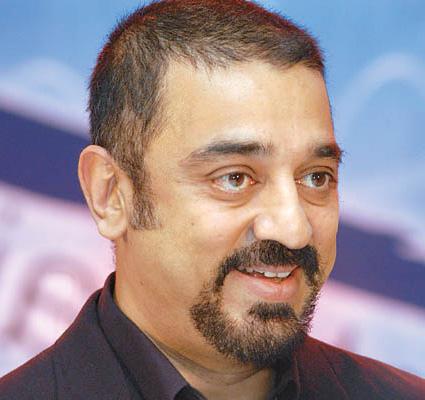
Kamal Haasan: I prefer to be like Steven Spielberg

Vi segnalo l'intervista concessa da Kamal Haasan a Meena Iyer, pubblicata oggi da The Times of India. I prefer to be like Steven Spielberg: Kamal Haasan

'Is Vishwaroop (Hindi) (Vishwaroopam in Tamil) - written, produced and directed by you - your most ambitious project?
I’m borrowing a line from writer-filmmaker Ingmar Bergman here. He said, ‘Every time I do a film, I think this is the last film.’ It could be. We don’t really know. Hypothetically, what would I do if this were my last film? I don’t know if I will be allowed to make another film. Anything unforeseen can happen. So every film that I make, I just put everything I have in it. You see, for the audience it may not be the last film that they are seeing. But for an actor, every film he does, should be done in that spirit, because that’s the only way to approach your work. I will not kill myself over a film. I adopt a very motherly attitude to every film of mine. I want to feed it, nurture it, and give it all the emotion I have. (...) Believe me, if you live, eat, breathe movies like the way I do, then you tend to obsess over your movies. An actor, filmmaker can either be just an actor (...) or he can be right there with the rest of the crew leading from the front. Makers like Steven Spielberg etch every line that goes into making their film. I prefer to be like Spielberg, this keeps me happy and busy. (...)

You were very prolific at one point. Of late you have cut down on assignments as an actor.
That’s because we have no good producers here. A man having money and respect doesn’t qualify as a producer. Production is a technique. It needs a talent, just like acting does. (...) Producing a movie is as important and as much a hands on job as direction. When I say that out of 200 films that I have done, I’ve only 100 perfect producers, it doesn’t mean that as an actor, I wasn’t served my breakfast on time, or that I got my tea in a plastic cup. I’m talking about producers who have done evil to the film. Those who’ve harmed the aesthetics of the film.

So the attitude of callous producers seems to have left a bitter taste in your mouth?
I can’t generalize. For every bad producer that I met, I have also met a good one. However, the dismissive producers and their talks disturb me. I have heard guys saying - ‘these guys are fussing too much over the script.’ Or others suggesting - ‘Sir, take two nice girls, go to a foreign location and shoot the film.’ It’s almost like they are suggesting that I have a picnic. It’s also been suggested that there should be more women on set because it’s fun. This is the wrong attitude. (...)

Will we see Rajinikanth and you in a project again?
If you have Rajini and me on board, the sky is the limit to how much you can sell a film for. But there is also a limit to how much you can pay the two of us as actors. When you finish giving him and me our remunerations, I don’t think there will be much of a budget left to make the movie with'.

14 giugno 2012

Boman Irani: I couldn't look beyond Sharman

Domani verrà distribuito nelle sale indiane Ferrari Ki Sawaari, diretto da Rajesh Mapuskar. Vi segnalo l'intervista concessa dai due interpreti principali, Boman Irani e Sharman Joshi, a Sonil Dedhia, pubblicata oggi da Rediff. Boman Irani: I couldn't look beyond Sharman: '[Irani] My relations with Ferrari go back a couple of years. I have never driven one but I sat in one of them. It was Michael Schumacher's Formula 1 car which was in a showroom in Milan, Italy. They had a promotion offer going where if you buy something from the store they allowed you to take a picture with it. My son told me to sit inside and once I sat I couldn't come out of it!'. Una curiosità: sembra che la Ferrari utilizzata nelle riprese del film sia di proprietà di Sachin Tendulkar.

Aggiornamento del 18 luglio 2023: il sito ufficiale dell'edizione italiana di Vanity Fair ripropone un vecchio articolo pubblicato il 17 dicembre 2011, Mission in-Bollywood, divertente cronaca dell'esperienza vissuta a Mumbai da un giornalista del periodico proprio sul set di Ferrari Ki Sawaari. Di seguito un estratto:

'Siamo stati invitati da Nicoletta, pierre romana da 5 anni a Mumbai (...), sul set di Jannat 2, dove recita il suo amico Randeep Hooda. (...) Jannat 2, sequel di una storia d’amore e gioco d’azzardo, si gira in una vecchia casa coloniale dove è stato ricostruito un commissariato. Sopra una sedia noto un altarino con il solito Ganesh. Quando un gruppo elettrogeno fa un gran botto, subito avvolto da una nuvola di fumo, nessuno si scompone. Sono tutti gentili, ma per me non c’è posto: troppo bianco per fare il poliziotto indiano. (...) Ho quasi perso la speranza, ma sull’iPhone arriva, provvidenziale, l’email di risposta della giornalista indiana Anupama Chopra, grande esperta di Bollywood, che avevo contattato per un aiuto. Dice di chiamarla. (...) Mi dice che «It’s a crazy idea», e che per questo mi aiuterà. Per il giorno dopo (...) mi organizza un incontro con una persona di sua fiducia. Rajev - lui si chiama così - mi porta da uno sfasciacarrozze di South Mumbai, dove si sta girando una scena di Ferrari Ki Sawaari («Una corsa in Ferrari»), scritto e prodotto da Vidhu Vinod Chopra, che è uno dei nomi più importanti di Bollywood, e che soprattutto è il marito della mia «benefattrice ». Rajev mi presenta al regista Rajesh Mapuskar come un amico personale, e quando gli spiego perché sono lì scoppia a ridere, piegato in due: «È venuto dall’Italia per fare la comparsa? Lei è pazzo. Aspetti qui». Torna dopo un’oretta, e mi spiega che ha addirittura cambiato una scena per inserirmi nel film: sarò un turista, e dirò due battute. La troupe mi guarda come un fenomeno da circo. L’attore comico Kadam Bhalchandra, nella scena, è la guida turistica che mi saluta e mi porge il biglietto da visita, pregando di non chiamarlo dopo le 21. Io devo solo dire «Don't worry» e «Thank you», ma quando Mapuskar grida «Action», di fronte a un centinaio di persone, in uno sfasciacarrozze di Mumbai, sul set di una megaproduzione di Bollywood, mi impappino e rimango rigido come una statua in marmo di Carrara. Dovrò rifare la scena otto volte. All’ultima scatta l’applauso (liberatorio), e mi intervistano anche per il Making of.'

13 giugno 2012

Aishwarya Rai: evento Bulgari, Londra

Ieri Aishwarya Rai era a Londra per partecipare all'inaugurazione del Bulgari Hotel.

Aishwarya Rai e Francesco Trapani

Salman Khan: spot Suzuki Hayate

È così che ci piace Salman Khan: baffetto e occhialino alla Dabangg. Irresistibile! Gustiamocelo nel divertente spot della Suzuki Hayate, diretto da Rohan Sippy.


The Copyright (amendment) Bill 2012

L'annosa questione dei diritti d'autore da riconoscere ai compositori indiani sembra sia giunta ad una conclusione positiva, grazie anche all'accorato discorso pronunciato qualche settimana fa in Parlamento dal poeta, sceneggiatore e paroliere Javed Akhtar. Sino ad oggi, i compositori sono stati costretti a vendere ad un prezzo fisso le loro creazioni ai produttori dei film, senza dunque godere dei diritti d'autore. Qualche rara eccezione: Aamir Khan, in veste di produttore, ha preferito adottare una politica diversa. Ora le cose cambieranno: 'The Copyright (Amendment) Bill 2012 has been passed by the Indian Parliament in May 2012. Once signed by the President and notified, it will bring some unprecedented changes in the [Copyright] law that governs the core transactions in the Media & Entertainment Industry. (...) It has been argued for decades that authors and performers should benefit from the commercial success of the works of their creation. Indian industry practice has been to compensate them in advance on a lump-sum basis. (...) The Bill carves out an exception for authors and composers whose works are incorporated in a film that despite being in a contract of service they will be the first owner of copyright. This protects the authors and composers in two ways: firstly, it gives authors and composers bargaining power to trade in the works of their creation, and secondly, it protects them from tricky contracts where they did not intend to create such relationship. Now in-house employed authors and composers will be first copyright owners of their works and can demand royalty for their works. This amendment will have very interesting effect on other sectors. For instance, in the advertising world ad films (...) the creative persons who compose slogans, jingles and tunes for the advertisement film will be the first owner of copyright in their works despite them being employee of the agency of production team and as a consequence will be entitled to royalty every time the advertisement film is exhibited'. (Fonte Box Office India)

12 giugno 2012

Marc Webb: Irrfan Khan has a very commanding presence

Irrfan Khan in The Amazing Spider-Man
The Amazing Spider-Man verrà distribuito nelle sale indiane il 29 giugno 2012, una settimana prima rispetto agli Stati Uniti. Vi segnalo l'articolo Irrfan has a very commanding presence: ‘Spider-Man’ director, pubblicato oggi da The Indian Express, che raccoglie alcune dichiarazioni di Marc Webb: 'I have been an enormous fan of Irrfan for a very long time. I first saw him in The namesake, The warrior and in TV series In treatment. For Dr. Ratha, I needed someone who projected sophistication, had lot of strength and a very commanding presence and Irrfan fit that bill. He is in the first half of the film and in several scenes. (...) I would not call his character a good guy or the bad guy, I would say he has a job to do and he has started about doing it. (...) Dr. Ratha works in Oscorp, the company owned by previous villain Norman Osborn. Irrfan plays the boss of Dr. Curt Conner. He plays an important role in Conner's transformation as villain 'The Lizard'. Irrfan provides the pressure'.
Il 12 marzo 2012 Renuka Vyavahare aveva riportato altre dichiarazioni sull'argomento rilasciate da Webb, pubblicate da The Times of India. Irrfan Khan has wonderful abilities: Mark Webb: 'Irrfan's importance in Hollywood is an interesting thing. A lot of directors are really starting to take notice of him and are looking for roles for Irrfan because he's got such a wonderful reputation. There’s a show he did here [in the US] called “In Treatment” and you really got to see his wonderful abilities. Whether its Danny Boyle or Ang Lee, really very strong directors are starting to take notice of this star who comes from a land that some view as exotic and far away from us. But you realize with actors like Irrfan, how close they really are. (...) Irrfan, it’s good to see you again. I hope you’re doing well and my best to you and your family”.'

MTV Rush

MTV India lancia in luglio un nuovo prodotto televisivo, MTV Rush, un film in tredici episodi che viene annunciato come rivoluzionario. Bejoy Nambiar è il responsabile del progetto e il regista di tre episodi. Molti dei giovani attori coinvolti provengono dalla scena teatrale. Prateik Babbar regala un incandescente cameo nel primo episodio. La colonna sonora includerà brani composti da musicisti alternativi. 


Prateik Babbar in MTV Rush

11 giugno 2012

Asli Naqli : Recensione


[Blog] Recensione di Asli Naqli (1962), di Hrishikesh Mukherjee, con Dev Anand e Sadhana.

Kalki Koechlin: These boots are meant for walkin'

[Archivio] Riporto di seguito un'intervista concessa da Kalki Koechlin a Vivek Bhatia, pubblicata da iDiva il 25 novembre 2011. These Boots Are Meant For Walkin’: Kalki:

'It’s that smile. It makes you listen to her with rapt attention. Topics pelt you like a hailstorm. She begins with an outsider’s account of the film industry. Then she speaks eloquently about her love for theatre and how she wouldn’t stop trying to make it big in films. Top that with her being Caucasian. She’s aware of strangers ogling at her, while she walks down the street. “They don’t know anything about me. This is my home. I belong here,” she says emphatically. Recently, she married a certain Mr. Kashyap - a divorcee with a 10-year-old daughter named Aaliyah. He’s known to be mercurial and doesn’t hold a pleasant reputation in the industry. “I think he’s quite sorted,” she takes up for her director husband.
We make ourselves comfortable in her new duplex apartment. “It’s an awesome den,” she says, referring to the new house the couple has bought for a steal. “Whenever I need a break, I switch my phone off and sit here in peace. I’ve got one room filled with DVDs and the other with books. It’s like a holiday destination,” she beams. We’re accompanied by her cat. His name is Dosa. “I had another one by the name of Masala, but she went absconding,” she tells me, while caressing her pet. She’s under the weather and gingerly sips on her green tea as we chat.

Kalki’s film That Girl In Yellow Boots (TGIYB) has been a late bloomer. The film premiered at the Venice Film Festival and Toronto International Film Festival last year, where it garnered great reviews. Back home the film saw the light of day quite late. All thanks to its offbeat subject and dark treatment. (...) “Ruth’s character has been the most difficult role for me,” she exclaims. “Apart from Ruth being Caucasian, we have nothing in common. Ruth is very dark.” TGIYB is her career’s first solo film. She considers herself lucky to have got this film. She also expresses her interest in doing a biopic someday. “You get to play a real person, dig deep into the character’s persona and do in-depth research,” she explains her excitement about doing a biopic. 

With TGIYB she also makes a debut of sorts as a film writer. “Anurag first asked me to play the main lead and I readily agreed. A few months later, he asked me to write the film and I refused,” she laughs. Having written for theatre in the past, she knows that film writing is a different ballgame. “But Anurag wanted to narrate the story through a woman’s perspective. So after a lot of prodding, I did give it a shot.” 
She’s extremely ‘lazy’ when it comes to writing. She goes into full-throttle melodrama, points towards the ceiling and jokes, “I need some kind of inspiration to fall on me.” She adds cheekily, “Even Anurag is damn lazy. He occasionally needs a hard kick on the butt.” Kalki says that a deadline is her worst nightmare. She doesn’t believe in locking herself in a room and writing. “Even in school if we had to submit an essay, I’d be staying up all night and submitting it at the very last moment.” Her ideal place to write is Ooty. “My mom stays there. There is no cell network and it’s extremely peaceful.” (...)

Kalki has portrayed characters that belong to a foreign origin. This surely has limited her avenues as an actor. She agrees her appearance is a ‘realistic drawback’. “I look like a foreigner. (...) As an actor, I want to push my boundaries. But I can’t change the way I look.” Considering that she looks like a foreigner, a lot of people have advised Kalki to work in Hollywood. “I’d love to do French cinema. They have amazing filmmakers there. But I always want to be here, even if I get work abroad,” she states empathically. She believes Indian cinema is growing by leaps and bounds. “There is a distinct change. There are mainstream films being made for the masses but there are new filmmakers who are making a difference.” She adds she’d never be able to sign an out-and-out brainless, commercial caper. “I’d love to do a film like Band Baaja Baaraat. That was a commercial film too but it wasn’t nonsensical. I’d never do a brainless film even if it’s opposite Aamir Khan.” 
But being a Rajinikanth fan, Kalki confesses she’d blindly sign a film opposite him. “I’ve grown up watching his films and even if you know it’s wrong in every way, you still like it. I’d do pretty much anything with Rajinikanth, except a porn film,” she laughs. Jokes apart, Kalki states that the reason why masala films don’t come her way is because she isn’t a commercially saleable actor. “Today, either it’s a new face or a face that is saleable at the box office. Acting isn’t the priority,” she points out. 

Among her contemporaries she thinks Priyanka Chopra has really evolved. “She may not have stood out in the beginning but Priyanka pushed the boundaries with Kaminey and 7 Khoon Maaf. People may not like her movies but her performances have been brilliant,” she says. “And now she’s coming out with a music album. That’s awesome.”
Theatre has always been Kalki’s first love. “It makes you shed all your inhibitions. Also, there’s a live audience, you can’t lie to them, they’re right there,” she explains. Kalki recalls her school days where she was always part of the drama team. Later, in college, she studied theatre and completely submitted herself to the art form. Terming the process as ‘humbling’ she says, “I’ve seen people do other work to afford doing theatre because they don’t make enough money just acting in plays. They rehearse three months prior to the show. This kind of discipline I don’t see in people working in films.” Having said that she’s high on filmmaking. “I’m discovering more and more about filmmaking. It’s a lot subtler. In the end you don’t need to have the histrionics like plays do,” says she.

Talk about Anurag and Kalki becomes a different person altogether. She can’t stop blushing and seems more excited than ever. The couple recently got married with just close family and friends attending. Kalki didn’t want the marriage to turn into a social event. “Everyone had an awesome time at the wedding. There was absolutely no pressure. I was having breakfast with my pajamas on and then I changed into a saree and got married,” she laughs. She claims marriage hasn’t changed anything. “I've lived long enough with him to know his terrible habits. I haven’t found anything new to crib about,” she jokes.
But there are a few things about Anurag which bother Kalki. One of them being Anurag not taking out time for his daughter. “I told him that she would grow up in no time and show you the finger when she becomes a teenager,” she states. Kalki adds that Anurag isolated himself at a point when he was going through a traumatic phase fighting the norms of the industry. “I told him to take a step back, show what he’s got by shutting up and doing his work,” says she. Anurag seems to have followed his wife’s advise and he clearly is in a much happier space.
“I took him windsurfing and it was hilarious. He was in the water more than he was on the board,” she laughs. “We also go for treks to different places. He has been opening up. There has been a positive change in him. And it’s not forced.” She recalls Anurag’s sister warning her about how difficult it was to live with the man. “She told me, ‘He’s an impossible person to be with’,” she laughs. She admits that Anurag is a difficult person but adds, “If I had to take him seriously, I’d go nuts. But I wouldn’t claim that I have changed him. I just give him a nice slap occasionally,” she jokes. “He was always a positive person. But everyone saw the other side. So he conveniently played on that,” she reasons. “I think he just woke up to the reality that, ‘Oh yeah I was a normal person and I used to have fun.’”
The 10-year age gap between them doesn’t seem to bother Kalki. She thinks it works in favour of their relationship. “He’s lived more than I have and he’s gone through so much that he appreciates what he has with me,” she says. “I’ve been with many boyfriends who’ve been half-hearted. He’s wholehearted. That’s what I love about him”.'

Irrfan Khan in un film di Marco Amenta?

Irrfan Khan interpreterà un film tratto dal saggio Il banchiere dei poveri di Muhammad Yunus, premio Nobel per la pace nel 2006. La pellicola, diretta dal regista Marco Amenta, è una coproduzione fra Italia (Eurofilm), Francia, Germania e India. La sceneggiatura è redatta da Massimo Gaudioso, Sergio Donati e Marco Amenta. Vi segnalo l'articolo Irrfan turns nobel laureate for next film, di Subhash K. Jha, pubblicato oggi da The Times of India: 'Apparently, the makers of the film zeroed in on Irrfan as the real-life hero of the downtrodden after they saw him play (...) in Mira Nair’s The Namesake. Irrfan confirmed the news and said, "I have been in talks for that film for a long time. I have already given my consent." However, he did not divulge any further details for contractual reasons. A friend of the actor said, "The challenge here is to recreate a living character of such distinguished achievement. Irrfan will meet Muhammad Yunus and spend as much time with him as possible. When he played Paan Singh Tomar, he relied on his imagination. But playing Prof. Yunus is a far bigger challenge since he is a much revered living personality. Irrfan will take a few months to get into the character".' Conoscete un modo migliore per rallegrare un piovoso lunedì?
Aggiornamento del 14 giugno 2012: ho contattato l'Eurofilm via email. Niccolò Stazzi conferma la notizia: 'Il film è in fase di pre-produzione. Il regista sarà Marco Amenta e gli sceneggiatori sono Massimo Gaudioso e Sergio Donati. Lo script ha vinto un premio al Tribeca Film Festival. Maggiori dettegli potrò darglieli tra circa un mese'.
Aggiornamento del 10 maggio 2022: purtroppo il progetto non si è concretizzato.

10 giugno 2012

Aishwarya Rai: spot Coca-Cola

Superfluo precisarlo: Aishwarya Rai manca a tutti noi, e la sua partecipazione al Festival di Cannes 2012 non ci ha appagato. In questi giorni si vocifera che la diva stia leggendo delle sceneggiature, e che una in particolare abbia attirato il suo interesse. Bah, sarà vero? In attesa del suo ritorno sul set, godiamoci questo vecchio spot commissionato da Coca-Cola. 

9 giugno 2012

Peddlers a Roma

Domani 10 giugno 2012 Peddlers verrà proiettato a Roma all'Eden Film Center alle ore 18.15, nell'ambito dell'evento Le vie del cinema da Cannes a Roma.

8 giugno 2012

Vishwaroopam: locandine e trailer

Kamal Haasan collabora alla sceneggiatura e alla produzione, dirige e interpreta Vishwaroopam, film tamil d'azione. Nel cast anche Rahul Bose. Il regista Shekhar Kapur regala un cameo. La colonna sonora è composta dal trio Shankar-Ehsaan-Loy. La pellicola viene realizzata simultaneamente in lingua hindi, col titolo Vishwaroop, e ad oggi è una delle più costose nella storia del cinema indiano. Molte le location straniere, fra cui il Canada e gli Stati Uniti. Trailer.

5 giugno 2012

Southscope Giugno 2012: Karthi Sivakumar

Il numero di Southscope di giugno di regala un sorridente, e sempre adorabile, Karthi Sivakumar. Il fratello minore della star Surya  in pochi anni è riuscito a collezionare un'invidiabile lista di successi tra cui Naan Mahaan Alla, ParutiVeeran e Paiyaa. Nel 2011 Karthi ha interpretato il primo remake del telugu Vikramarkudu (Siruthai) nuovamente portato sullo schermo da Akshay Kumar  (Rowdy Rathore). Dopo un lunghissimo anno sabbatico finalmente il pubblico può festeggiare il ritorno di uno degli volti più amati del cinema tamil, sta infatti uscendo il suo nuovo lavoro, Saguni, il cartellone per il prossimo 06 luglio.

4 giugno 2012

Le prime dell'8 giugno 2012: Shanghai

Shanghai si preannuncia uno dei film più interessanti del 2012. Diretto dal talentuoso Dibakar Banerjee, è un thriller a sfondo politico, adattamento cinematografico di Z, romanzo del 1966 dello scrittore greco Vassilis Vassilikos. Dibakar ha lavorato per un anno e mezzo al progetto. I produttori hanno incontrato Vassilikos, il quale si è mostrato molto sorpreso ma soddisfatto della sceneggiatura. Il cast è di quelli da perderci il sonno. Abhay Deol, Kalki Koechlin, Emraan Hashmi e la superstar bengali Prosenjit Chatterjee, insieme sul grande schermo, costituiscono una golosità per veri appassionati di cinema indiano. Vishal-Shekhar firmano l'intrigante colonna sonora, che include anche un'item song, Imported Kamariya, visualizzata dalla modella britannica Scarlett Mellish Wilson. Il brano Bharat Mata Ki Jai vanta un testo redatto dallo stesso Banerjee, e in India ha suscitato un vespaio. Vi segnalo inoltre Khudaaya, Duaa, e Morcha. Trailer.

Aggiornamenti dell'8 giugno 2012:
- recensione di Raja Sen, Rediff, ****: 'At first glance, the irony is staggering. A country pretending to be another, brighter country, being shown up by a film that itself borrows form and content from another country. Yet so strident is Dibakar Banerjee's voice as a filmmaker that even this adaptation (...) is turned into a strikingly relevant story of our times and our crimes. (...) Banerjee's genius has always been most visible in his meticulous detailing, and this latest film is expectedly crammed with beautiful nuance. (...) The little touches are smashing, fleshing out most of the characters and making them into more than words and actors. Yet what words, what actors. Emraan Hashmi (...) delivers a knockout punch as he masters a complicated role. From his infuriatingly goofy laugh to poor attempts at making conversation, Hashmi proves himself the best of a very fine ensemble. (...) It's one of the best performances from one of our leading men in quite some time. (...) Bravo. (...) Banerjee must be lauded for not dumbing things down and creating a mature, serious film that engages, thrills and amuses. (...) Shanghai is all Dibakar, who we must lift on our shoulders with grateful pride. And we must exult in the fact that this D is never silent'.
- recensione di Mayank Shekhar: 'A picture that strikingly captures the chaos and curfews of middle India, (...) exposing the rule of the mob where democracy is merely centred on state-craft and elections, as against statesmanship or equality. (...) The first Indian mainstream film (...) to dig into the protocols and plotting that greases the wheels of Indian civil services. (...) We complain about the system quite often. Well, this is the system. Civil servants over time become minor mimics of the looting political masters they salute to. (...) A gritty drama, just as amusing as it is disturbing. Between artistry and analysis, Dibakar Bannerjee, without doubt the most exciting filmmaker around, chooses to entertain first. (...) Still, in its breathless pace, the narrative either skims over or completely overlooks several nuances and facets of Indian democracy that would play key roles in a high-profile case such as this. (...) Banerjee smartly finds in the book the compelling central conflict of rising India: displacement of poor locals versus development for richer millions; people’s empowerment versus nation’s economic growth. Neither side can be ignored. India, at present, houses the world’s largest number of people displaced for development projects. Not all of this movement could’ve been fair. (...) This is that important, universal story of modern India, interestingly told, enticingly captured. It must be watched, and relished, for sure'.

Aggiornamento del 12 giugno 2012 - Meet the spanking new Emraan Hashmi!, Shelly Walia, Rediff:
'"The film gives you a goodbye gift. One gets engaged and entertained while watching it, but in retrospect, you realise you are carrying with you a meaning, a message, a reality," says Banerjee. (...) "Abhay's role as a typical Tamilian bureaucrat did not come easy. The character is the voice of the establishment and has power, but is conservative. His character has shades of grey, which keep the audience guessing. To get the accent right, he had to undergo a month-long language workshop where he learnt to speak English and Hindi with a Tamil twang," says Banerjee. Deol also trained himself with the IAS [Indian Administrative Service] machinery to get the body language and the stern expression correct. "He plays a character much older than his real self. He needed to walk with a slight stoop, as someone who has led a sedentary life of working on the laptop for long hours," Banerjee adds.
For Hashmi's character, Banerjee needed an actor with whom the audience would connect. "Jogi is a street-smart cameraperson and part-time porn filmmaker. We researched quite a bit on porn filmmaking. The character had to appear dirty and sleazy, so we made him gain 10 kg. He had to have a paunch, blackened teeth and a darker complexion. He also took dancing lessons. Everything about him is in stark contrast to his earlier image," Banerjee says. (...)
Like Banerjee, Hashmi too steps into unexplored territory with Shanghai. A step away from the Mahesh Bhatt camp (most of his successful films have so far been with Bhatt) and in the midst of an offbeat cast, the actor outshines everybody else. But experts don't think this will do much to change his "lover boy" image. Hashmi today is the example of a successful actor with several box office hits, but one who has not been offered any brands to endorse. Brand strategy specialist Harish Bijoor says, "The movie will not help Hashmi in an image makeover, despite this being an out-of-the-box role for him. Brand advertisements are all related to happy stars." (...) John Abraham's happy-go-lucky image works well for him in the advertising space, though he is not as successful at the box office, Bijoor says. Brand expert Gullu Sen says that the Indian consumer is still very conservative. "It took Salman Khan years to rebuild his image. For Hashmi this must be a beginning, but there is a long way to go before he starts endorsing brands".'

Aggiornamento del 16 luglio 2012: ieri Shanghai è stato proiettato a Baghdad, alla presenza di Safia Taleb Ali al-Suhail, membro del parlamento iracheno, e del politico indiano Suresh Reddy. L'evento è stato organizzato a ridosso  della zona internazionale della città. La corrente elettrica è mancata un paio di volte, ma pare che il pubblico presente in sala - soldati compresi - abbia comunque apprezzato la pellicola. Shanghai è il primo film indiano proiettato in Iraq negli ultimi vent'anni.

Vedi anche:
The Dibakarian way of life, 18 aprile 2022

Bollywood su Rai Movie: ciclo 2012

Da domani 5 giugno e sino al 4 settembre 2012, ogni martedì sera alle ore 21.00 Rai Movie proporrà un film hindi. Si parte con Kuch Naa Kaho (Un padre per mio figlio). Fra gli altri titoli: Aap Ki Khatir (Un fidanzato in affitto) il 12 giugno, Swades (Una luce dal passato) il 19 giugno, Thoda Pyaar Thoda Magic (Un pizzico d'amore e di magia) il 26 giugno, Kabhi Alvida Naa Kehna (Non dire mai addio) il 3 luglio. In programma anche Jodhaa Akbar (La sposa dell'imperatore) e Nanhe Jaisalmer (È tempo di sognare). Preciso che sono tutti titoli proposti da Rai 1 negli ultimi quattro anni. In prima visione sono in programma Rab Ne Bana Di Jodi (Un incontro voluto dal cielo) e Guru. Vi segnalo inoltre Nirakazhcha (La strada dei colori), in lingua malayalam, di Anish J. Karrinad, con Vincenzo Bocciarelli; nonché La maga delle spezie, produzione internazionale con Aishwarya Rai. Vi ricordo che lo scorso febbraio e lo scorso marzo Rai 4 aveva sorprendentemente presentato - in versione direi integrale - il mitico Dabangg.
Vedi anche:
- Bollywood: 100 di questi anni, 8 giugno 2013, ciclo 2013 su Rai 1 e su Rai Movie.